A small entryway can feel like one of the hardest spaces to decorate. It collects shoes, bags, keys, and daily clutter while also being the first thing people see when they enter your home.
But size does not have to limit style.
With the right decor choices, even a narrow hallway or compact foyer can feel brighter, more open, and surprisingly functional. The secret is not adding more—it is choosing pieces that visually expand the space and make every inch work harder.
Here are 15 small entryway decor ideas that can make your space feel noticeably bigger.
1. Add a Large Mirror to Reflect Light and Depth
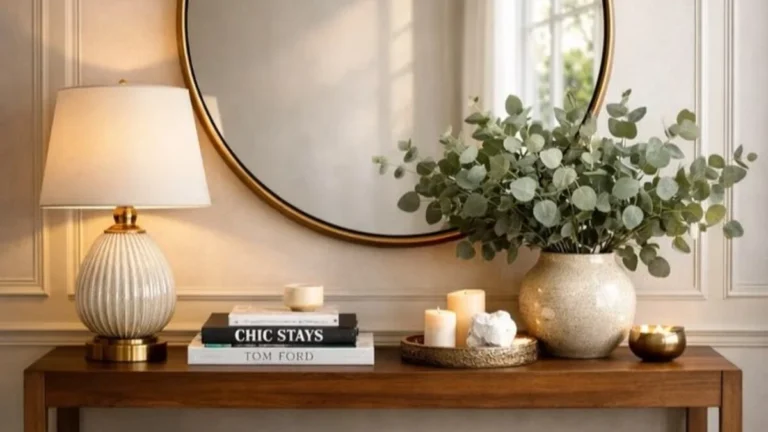
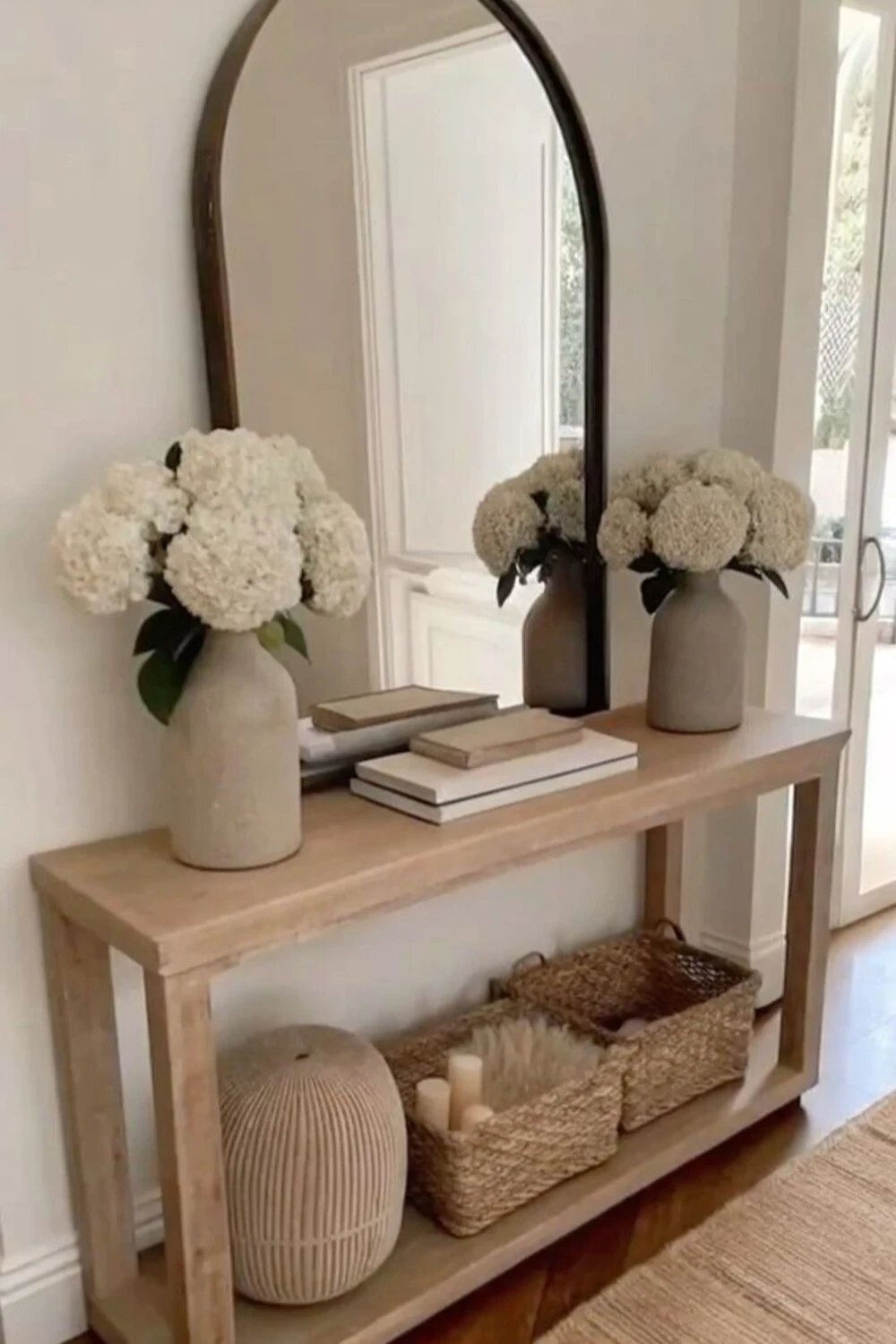
If there is one decorating trick that consistently works in small spaces, it is using mirrors.
A large mirror reflects both natural and artificial light, making the entryway appear wider and deeper than it actually is. Even in homes with limited windows, a mirror can instantly brighten the area.
Instead of filling the wall with multiple small decorative items, choose one substantial mirror and let it become the focal point. Round and arched shapes tend to soften narrow spaces, while rectangular mirrors create a cleaner, modern look.
2. Use a Slim Console Table Instead of Bulky Furniture
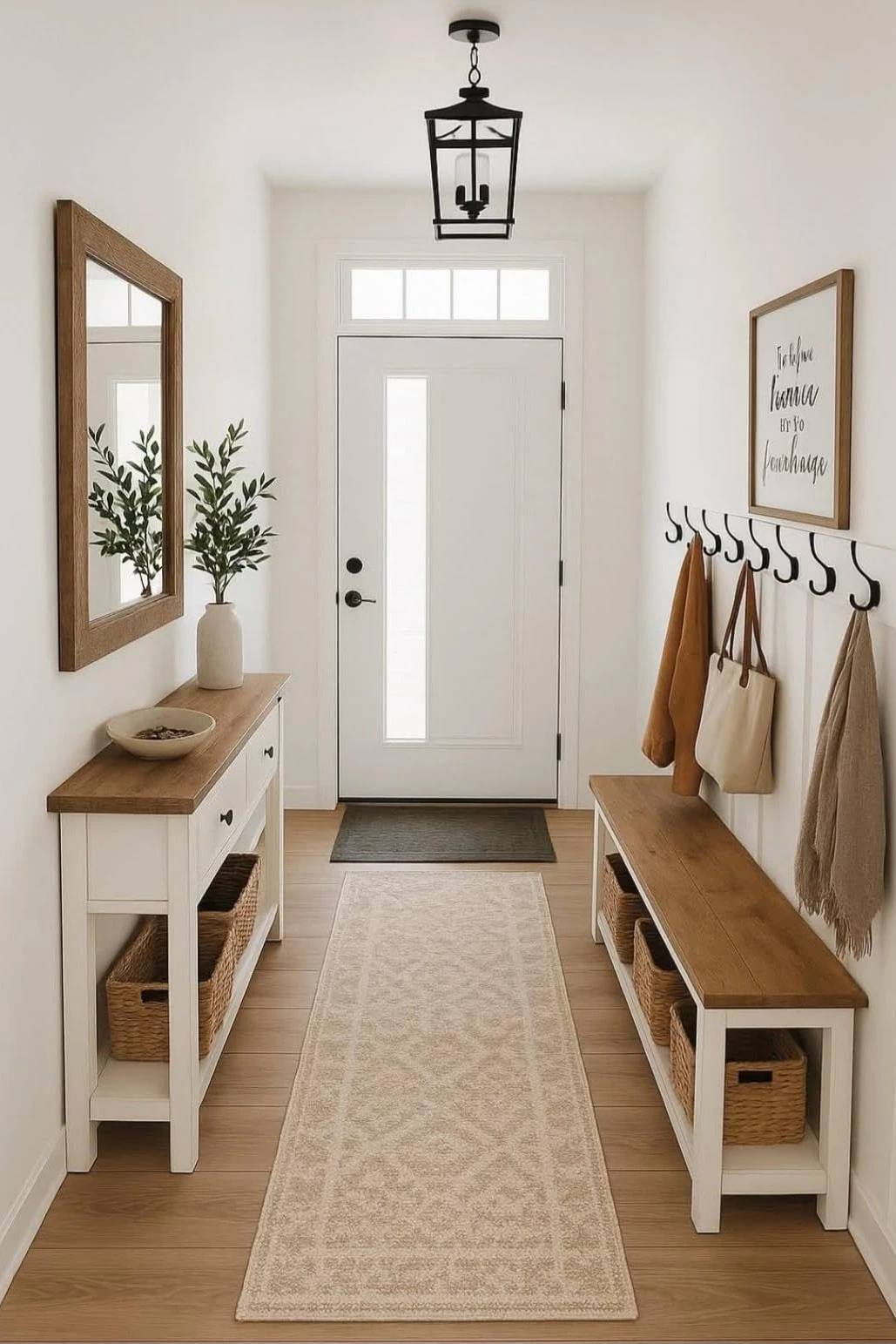
Entry furniture should support the space—not dominate it.
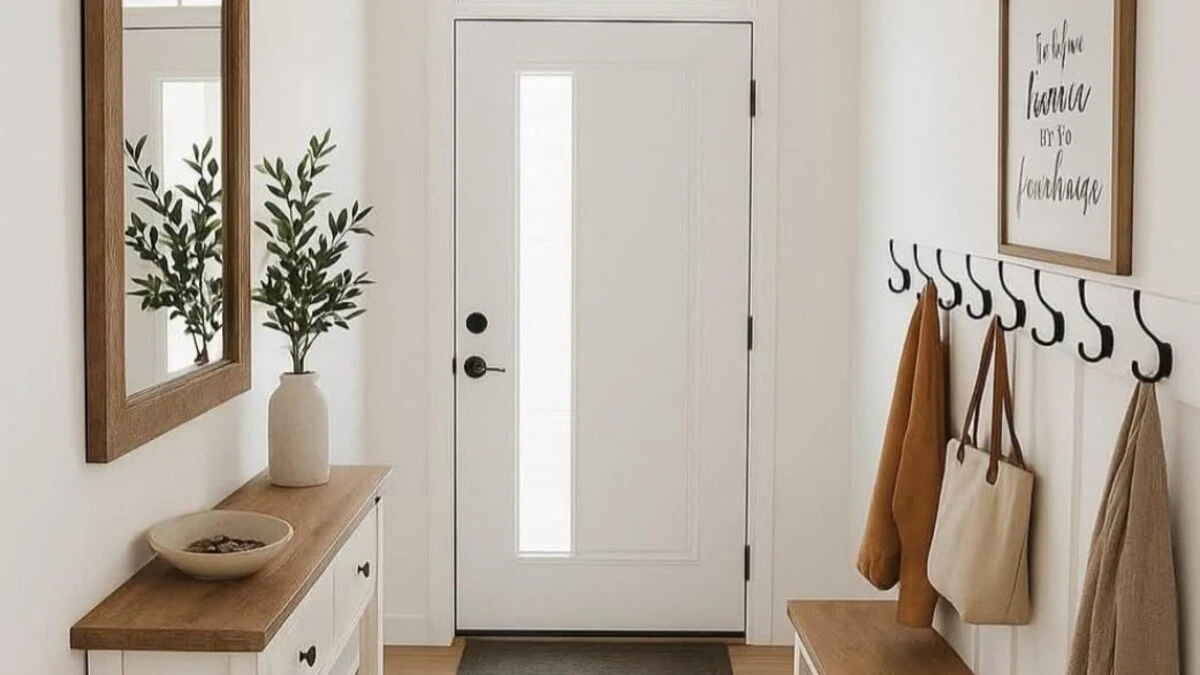
Deep cabinets and oversized benches can quickly make a narrow entrance feel crowded. A slim console table offers enough surface area for essentials while maintaining an open flow.
Style it lightly with only a few pieces. Leaving visible empty space on the tabletop actually helps the room feel larger.
3. Keep the Color Palette Light and Airy
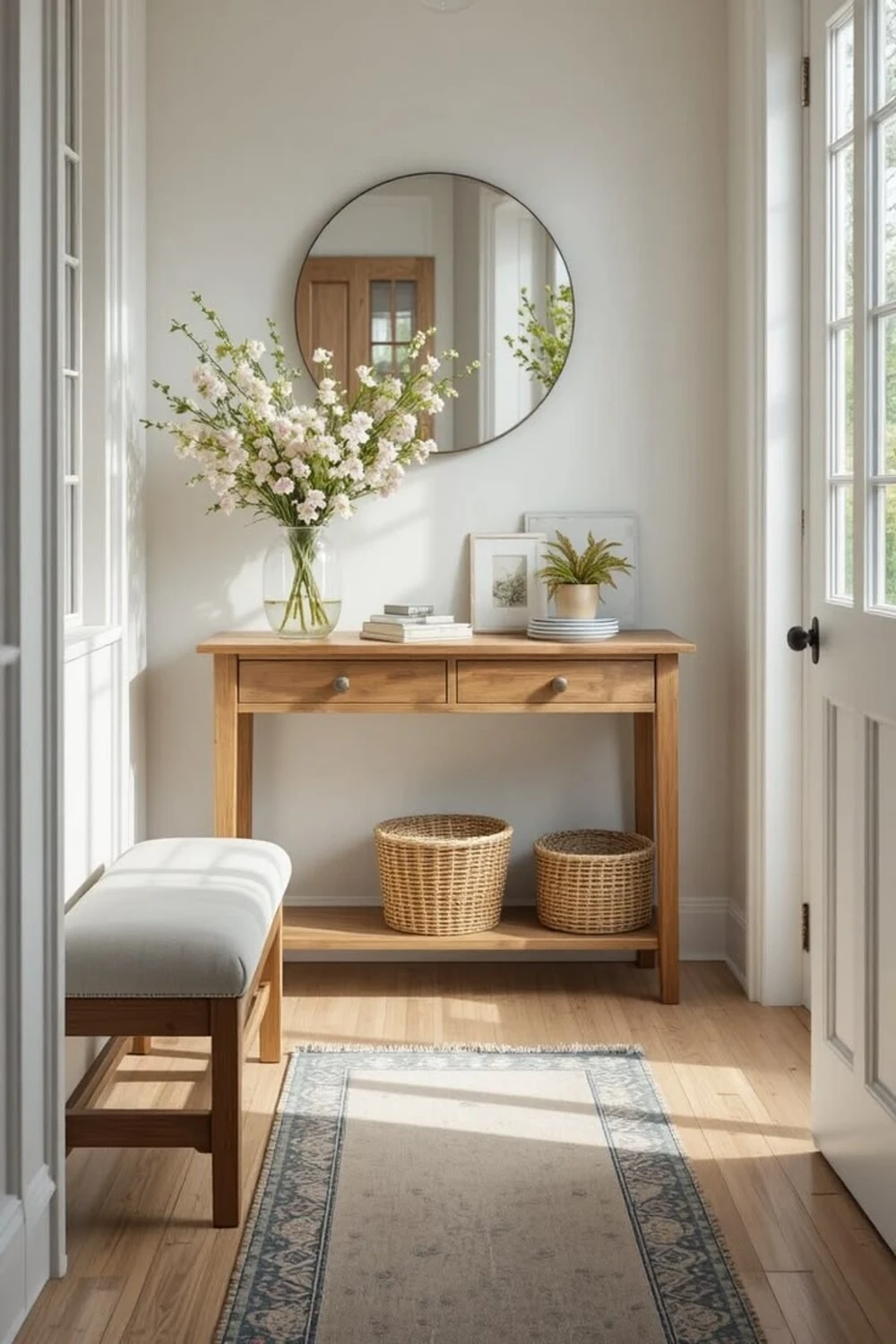
Color changes how we perceive size.
Lighter tones reflect more light and reduce visual heaviness, which makes compact entryways appear larger. Soft whites, warm neutrals, pale taupes, and muted earth tones all work well.
That does not mean the space needs to feel plain. Texture can create warmth through woven baskets, natural wood finishes, linen accents, and subtle layered materials.
4. Install Floating Shelves to Free Up Floor Space
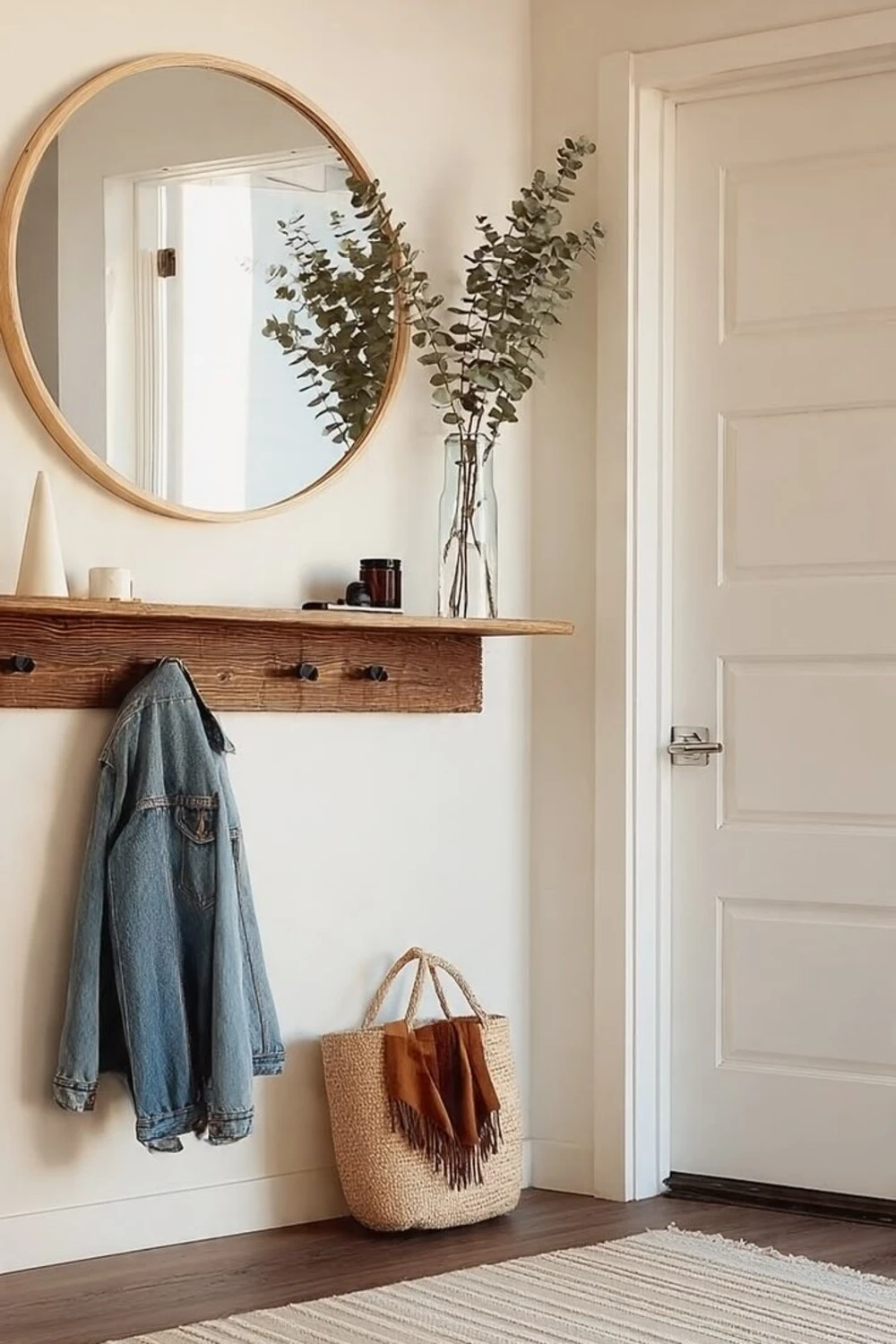
Floor space is valuable in a small entryway, so moving storage upward can make a noticeable difference.
Floating shelves provide room for practical items while keeping the ground visually open. They also create opportunities to decorate vertically, drawing attention upward and making ceilings feel taller.
The key is restraint. A shelf with a few intentional objects feels airy, while overcrowded shelves can quickly create visual clutter.
5. Create a Simple Drop Zone for Daily Essentials
One reason small entryways feel chaotic is that everyday items end up scattered across multiple surfaces.
Creating a designated drop zone immediately makes the space feel calmer and more organized.
A decorative tray or bowl can collect keys, sunglasses, mail, and other essentials without turning the console into a catch-all area. When everything has a place, the entire entry feels larger.
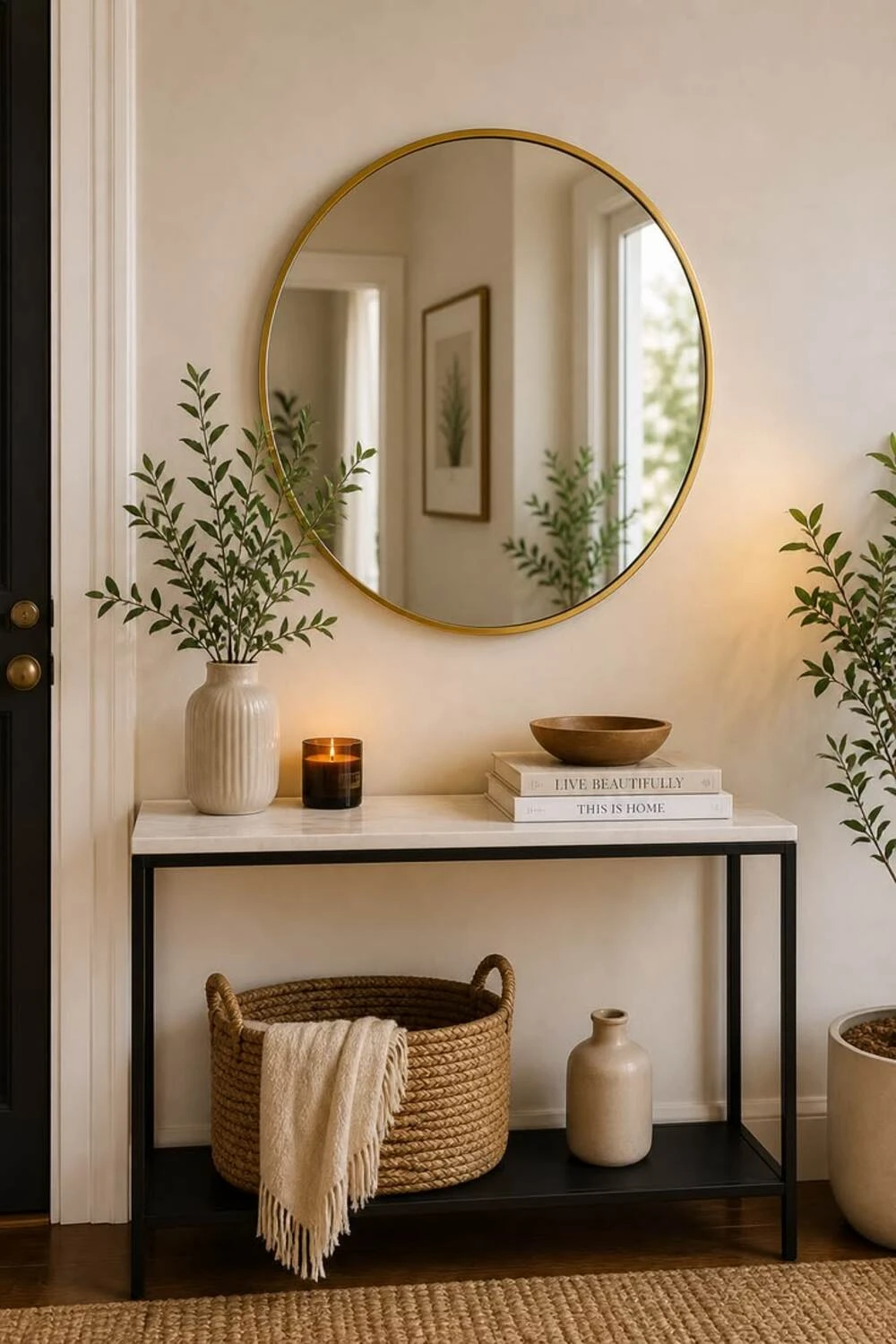
6. Choose Furniture with Visible Legs
Furniture that allows you to see more floor creates the illusion of openness.
Closed cabinets and blocky furniture pieces visually interrupt the room, while furniture with exposed legs feels lighter and less crowded.
This small detail often makes more impact than people expect, especially in narrow apartment entryway.
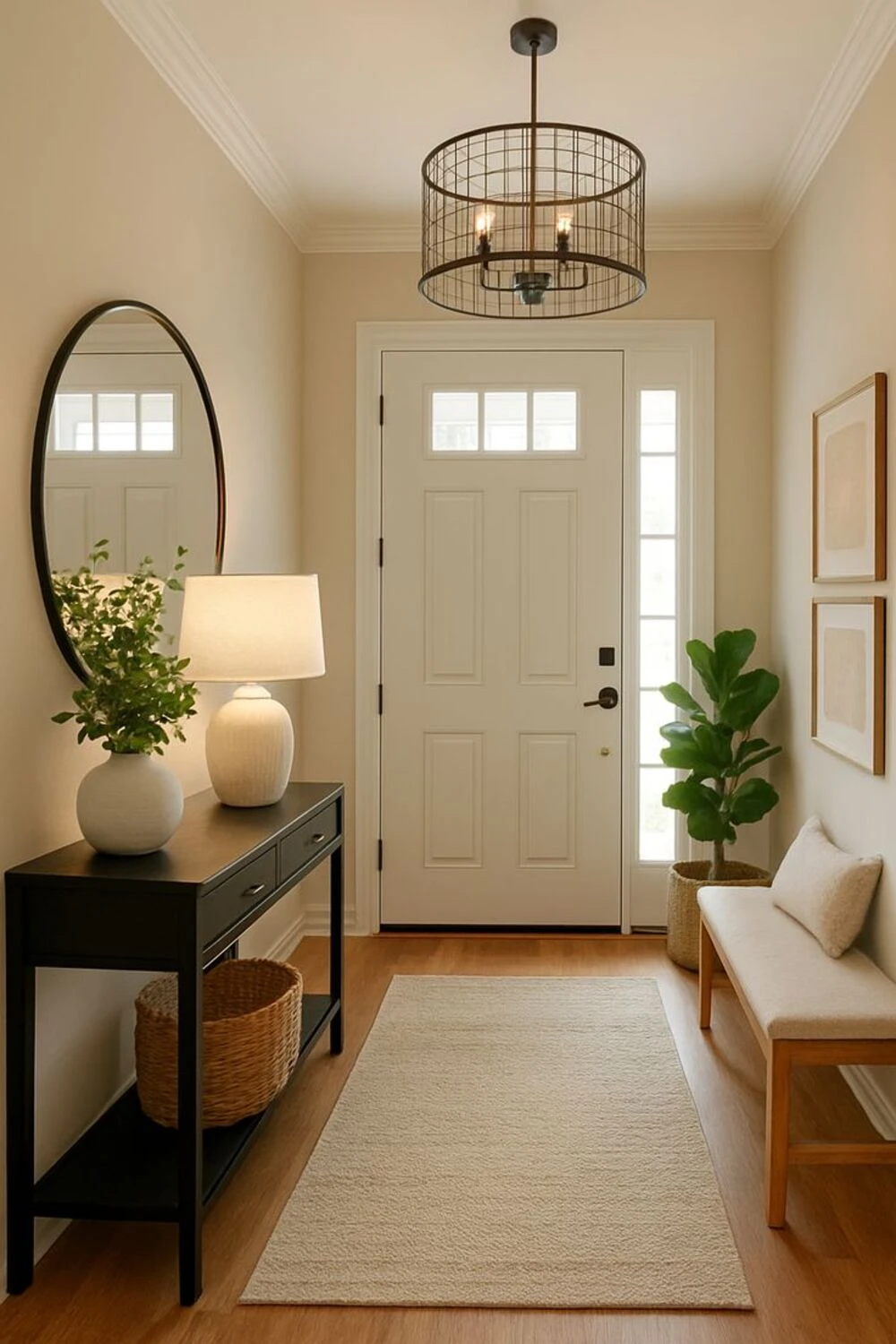
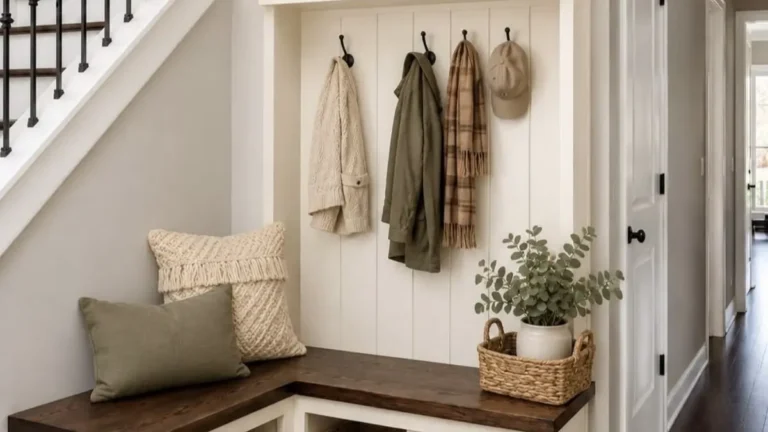
7. Replace Freestanding Coat Racks with Wall Hooks
Traditional coat racks can occupy valuable floor space.
Wall-mounted hooks solve the same problem while keeping the footprint minimal. They also create cleaner lines and can make the entryway look more custom.
Keep the number of visible coats limited so the hooks remain decorative instead of becoming visual clutter.
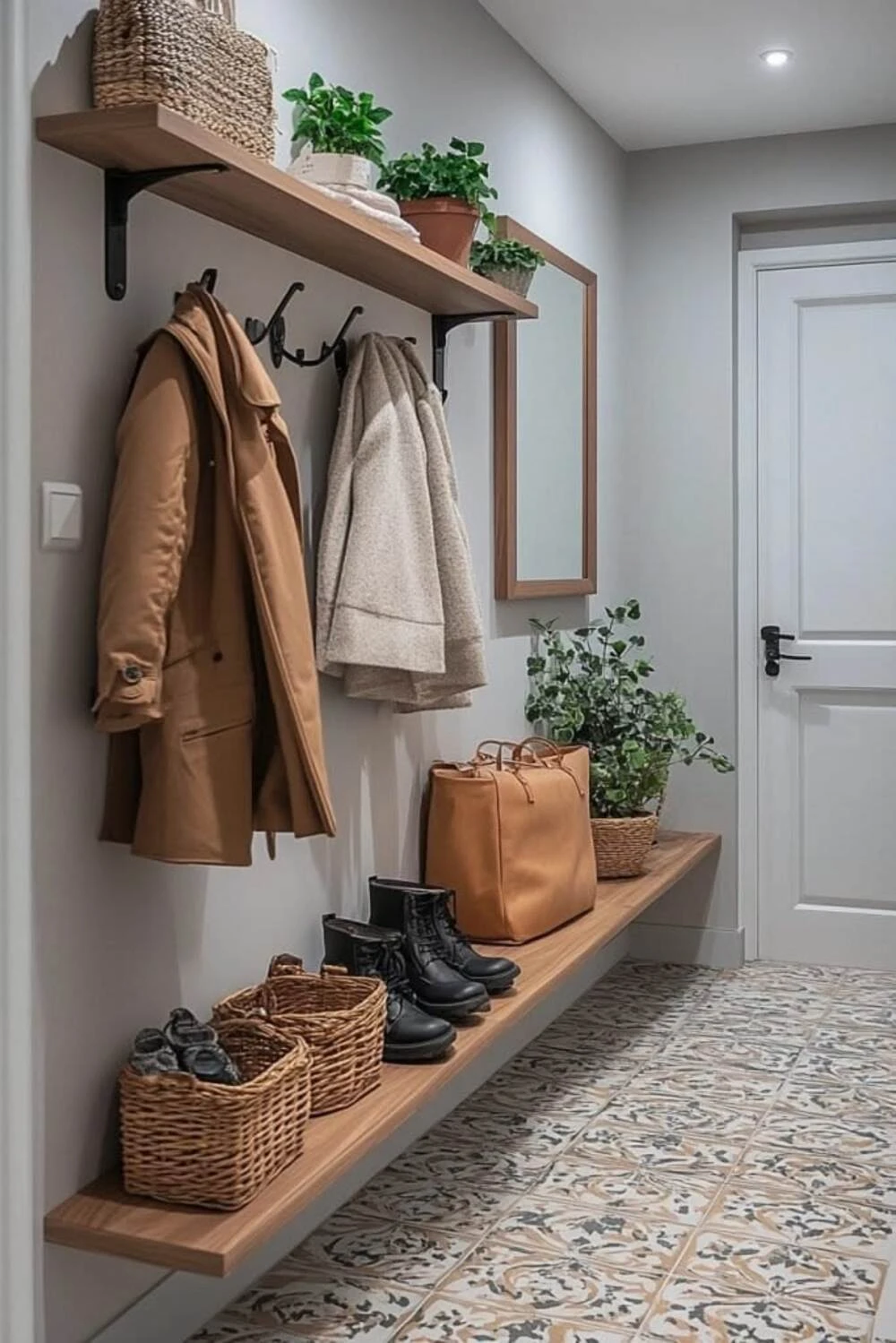
8. Add a Storage Bench That Works Double Duty
Small spaces benefit from furniture that serves multiple purposes.
A compact bench provides seating while also offering concealed storage underneath. Shoes, reusable bags, umbrellas, and seasonal accessories can stay hidden while remaining easy to access.
Adding practical storage often makes a room feel bigger because fewer items remain visible.
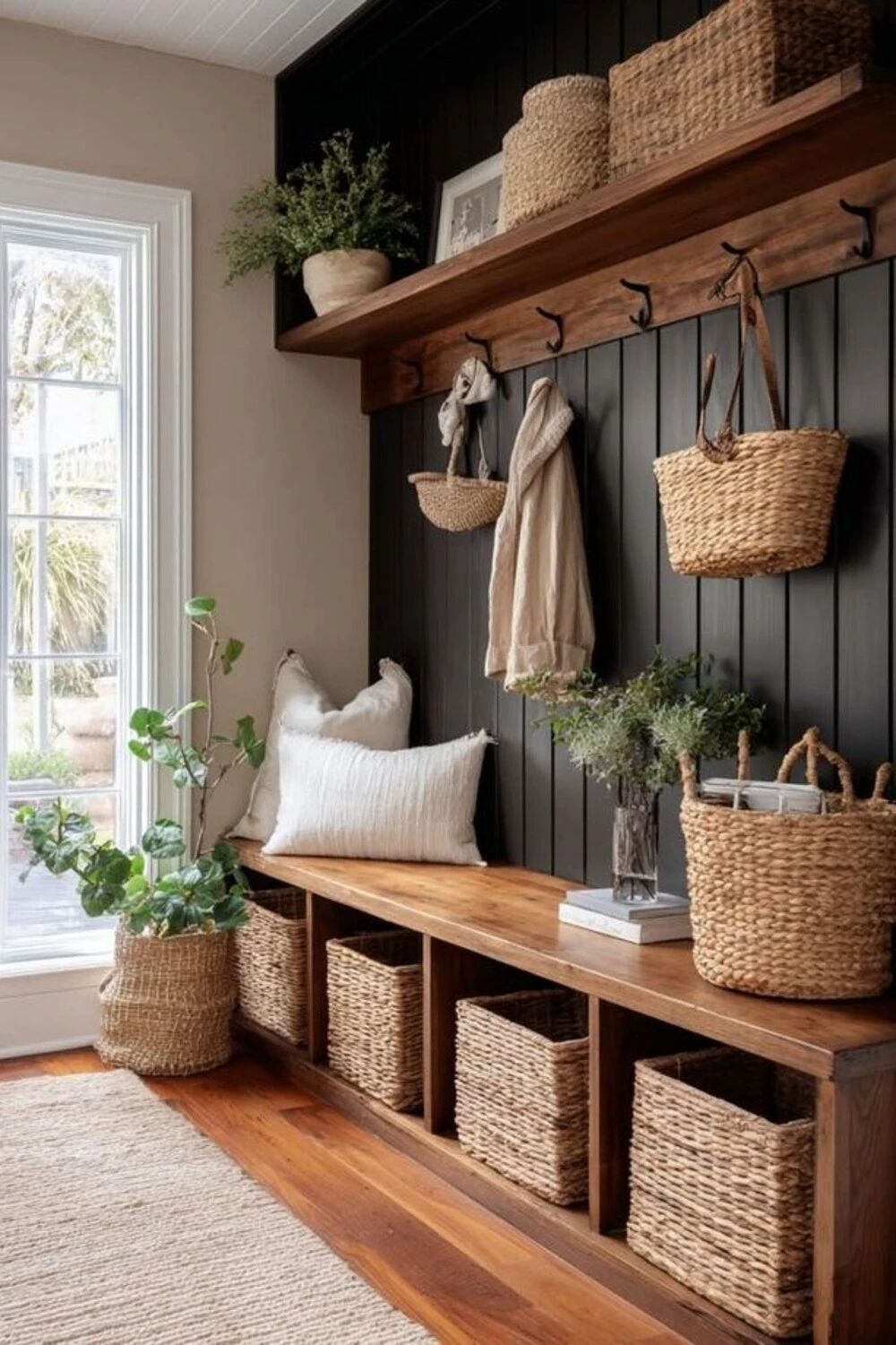
9. Improve Lighting to Open Up the Space
Lighting is often overlooked in entryway design.
Dark corners naturally feel smaller and more enclosed, while well-lit spaces appear larger and more welcoming.
If possible, layer light sources instead of relying only on one overhead fixture. A small lamp or wall lighting can soften shadows and improve the atmosphere immediately.
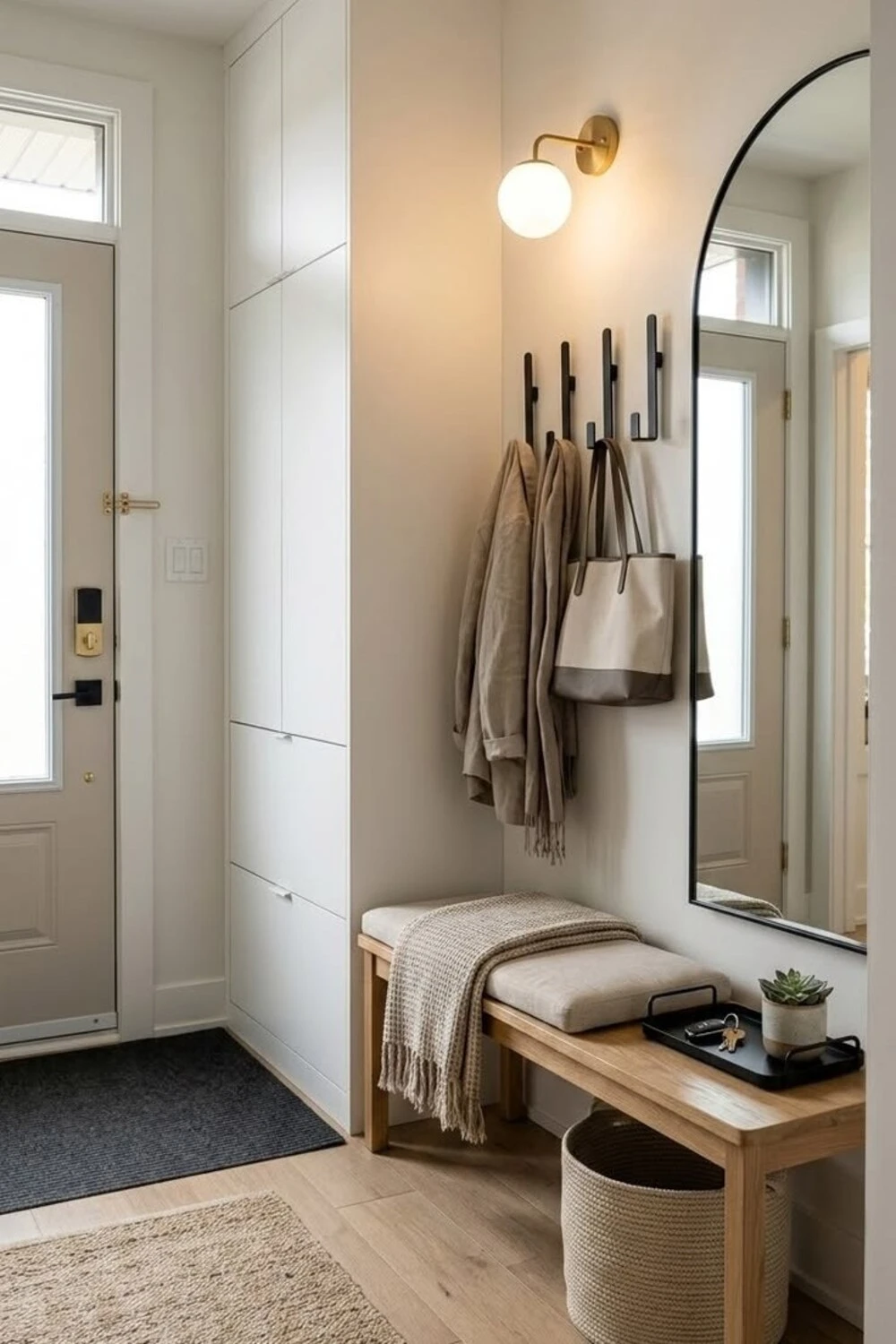
10. Use a Runner Rug to Extend Visual Length
Rugs influence how we experience dimensions.
A runner rug encourages the eye to travel through the space, making an entryway appear longer and more connected.
Choose a rug proportionate to the hallway and avoid designs that feel visually heavy. Light patterns and subtle textures tend to work best.
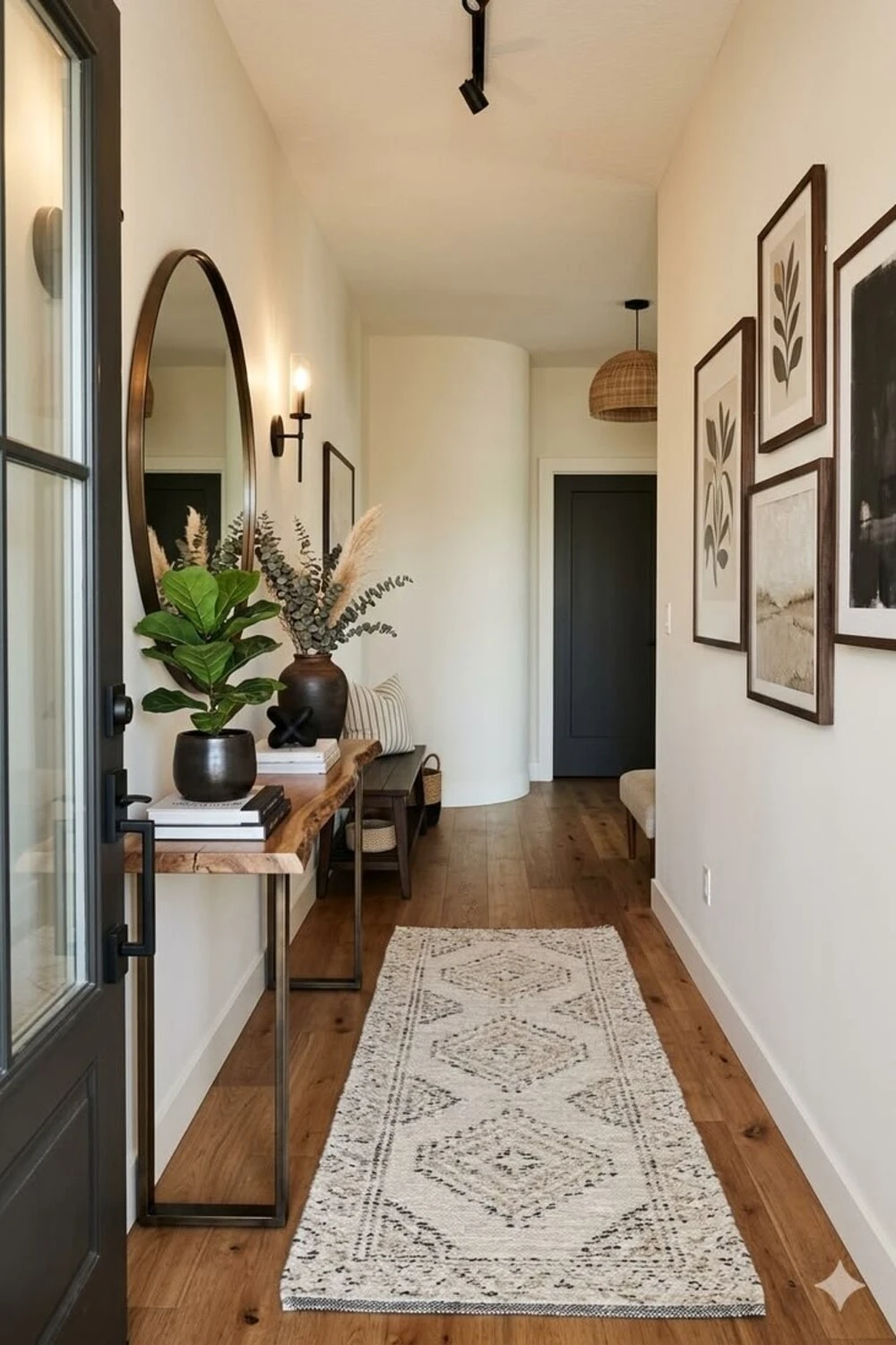
11. Decorate with One Statement Piece
Small spaces do not need more decor—they need better decor.
Rather than filling every wall and surface, select one standout element that draws attention.
This could be a large piece of artwork, a sculptural vase, a dramatic mirror, or a distinctive light fixture. One strong focal point often creates a more spacious feeling than multiple decorative accents.
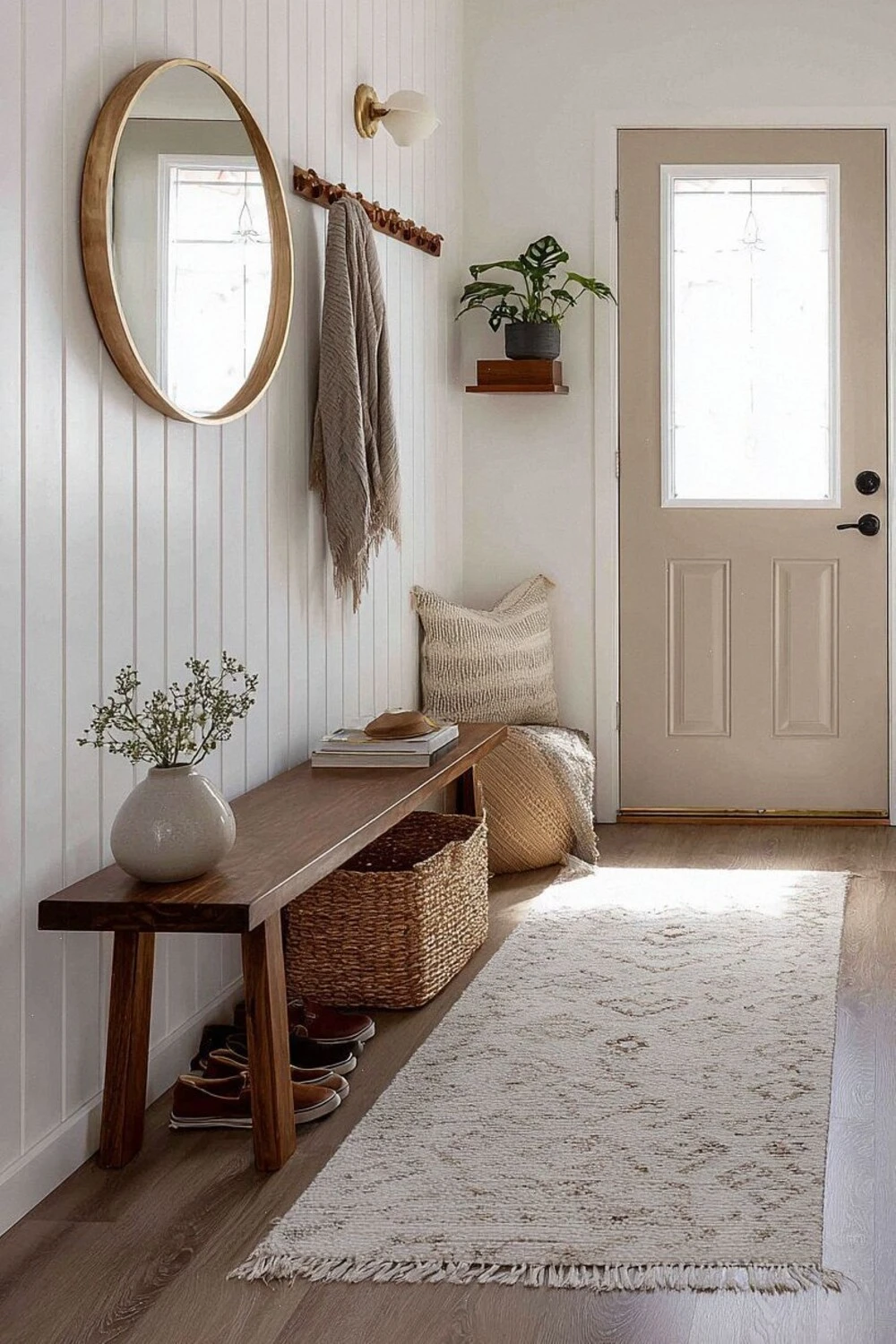
12. Incorporate Glass and Reflective Materials
Visual weight matters.
Glass, acrylic, mirrored finishes, and reflective accents allow light to move more freely through the room, reducing the feeling of heaviness.
Even subtle additions such as a glass lamp base or reflective tray can contribute to a more open appearance.
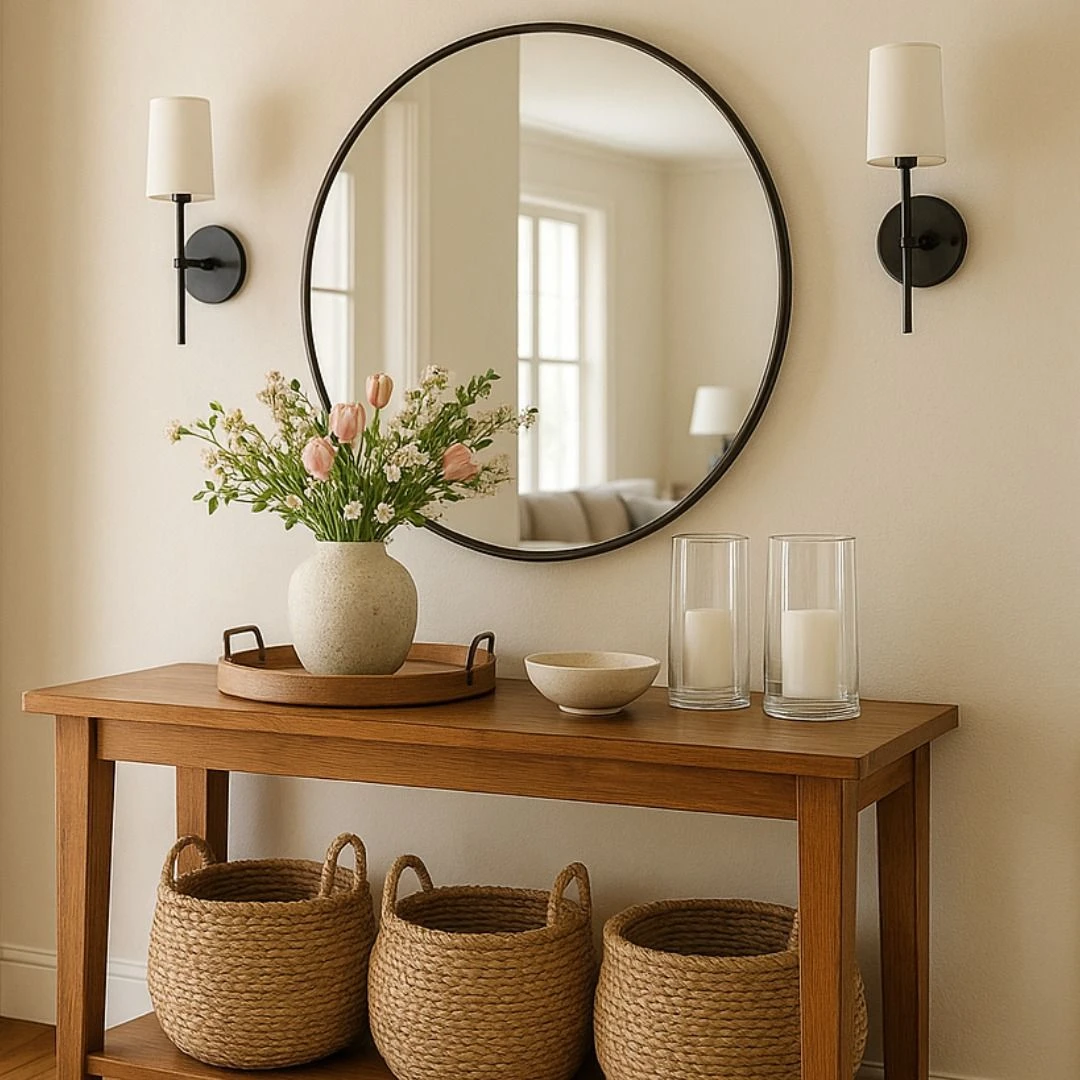
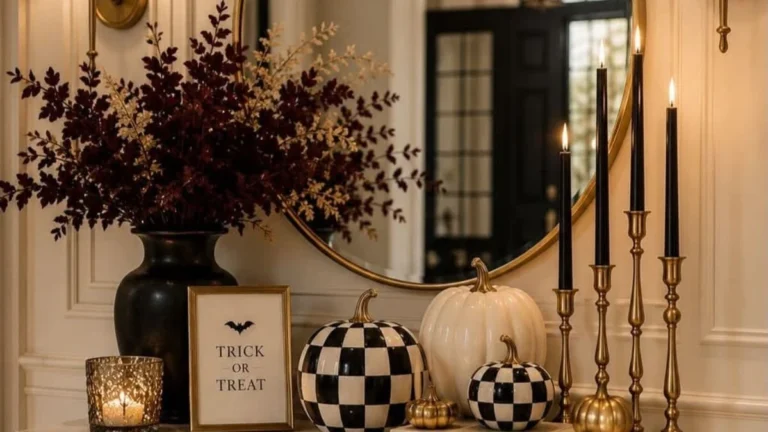
13. Keep Seasonal Decor Minimal
Seasonal decorating becomes challenging in smaller spaces because extra items accumulate quickly.
Instead of redesigning the entire entryway each season, update only one feature. Swap greenery, change decorative textures, or add a seasonal accent.
Small updates maintain freshness without sacrificing openness.
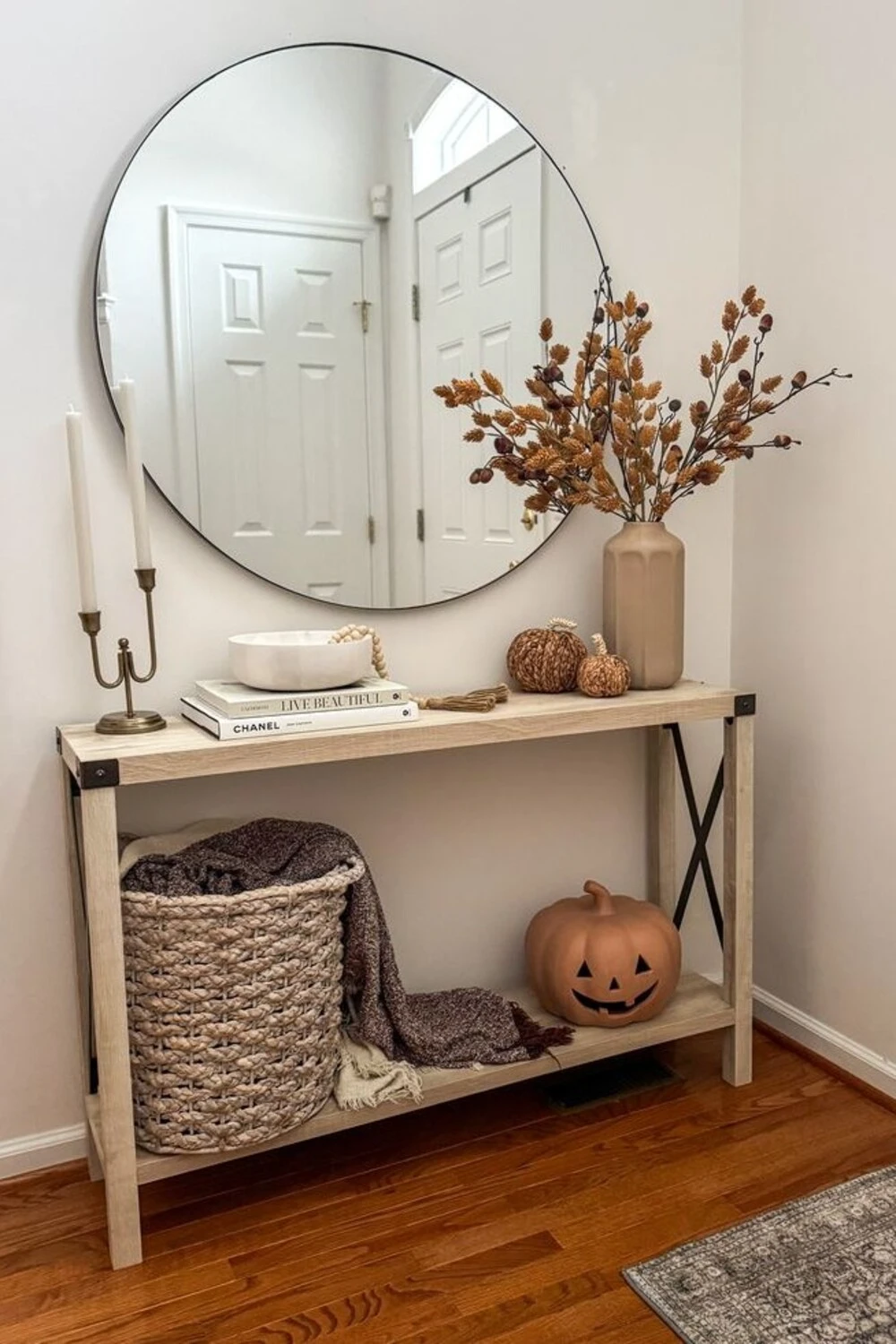
14. Use Closed Storage to Reduce Visual Clutter
Open storage looks beautiful when perfectly organized—but everyday life rarely stays that way.
Closed storage helps conceal the items that make an entryway feel messy. Cabinets, baskets with lids, and storage furniture create cleaner visual lines and make the room appear larger.
A tidy space almost always feels more spacious.
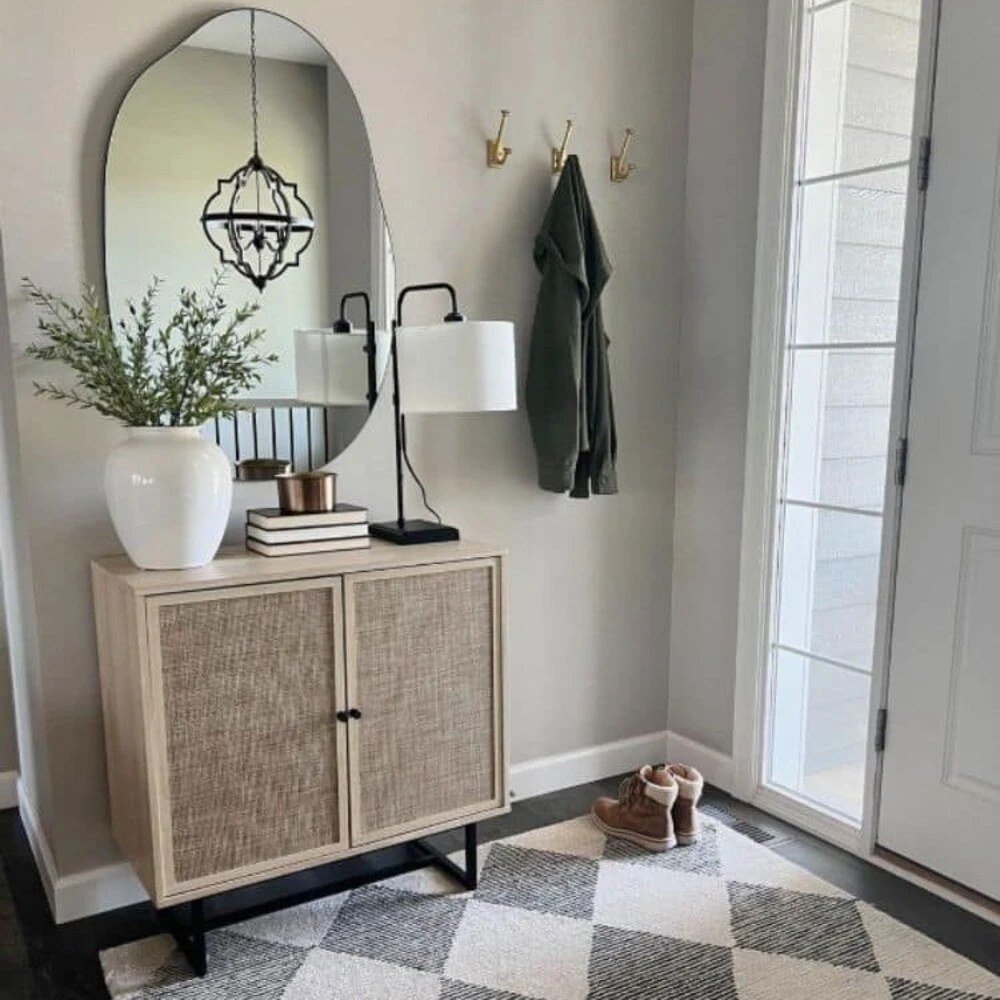
15. Add Greenery Without Taking Up Floor Space
Plants instantly make an entryway feel more welcoming, but oversized planters can overwhelm small areas.
Instead, think vertically.
Wall-mounted planters, hanging greenery, or a simple vase with fresh branches can introduce life without reducing usable space.
A touch of greenery also softens hard surfaces and makes the entrance feel more intentional.
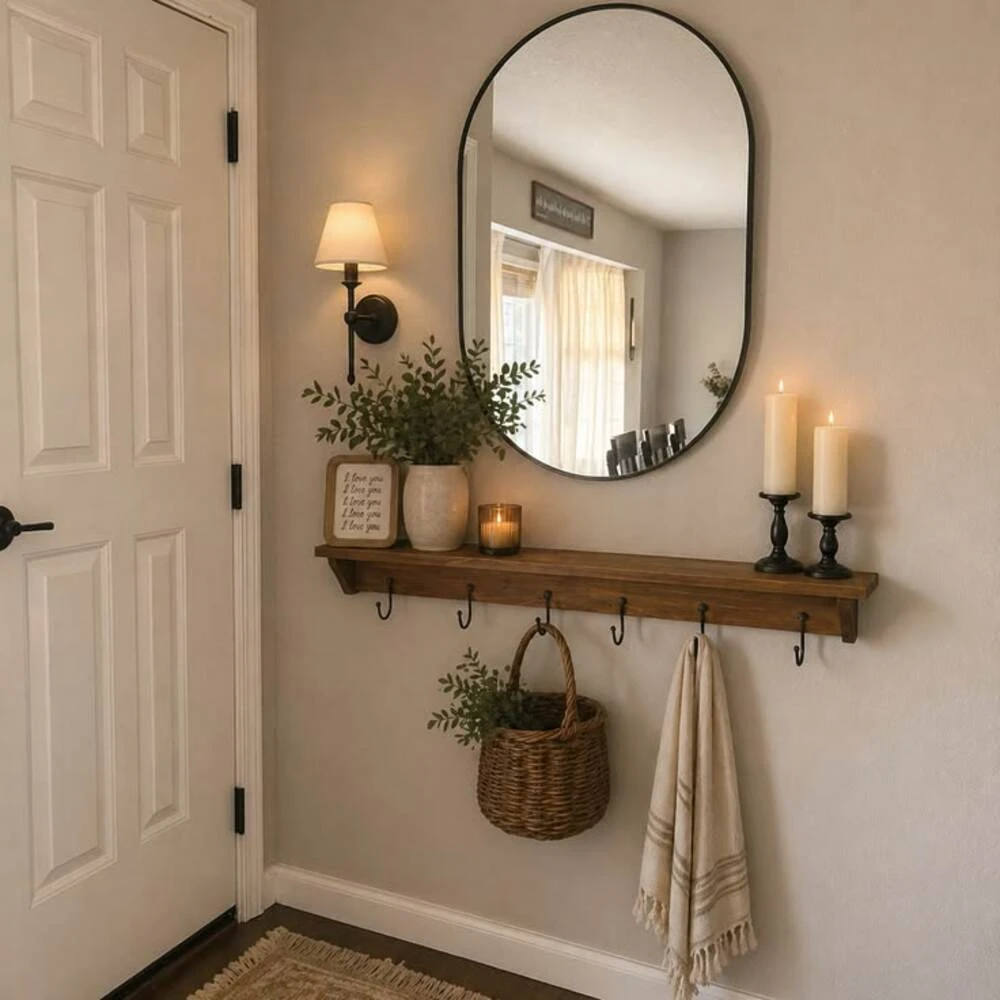
Common Small Entryway Decorating Mistakes to Avoid
Many small entryways feel crowded not because they are too small, but because they contain too much.
Avoid oversized furniture, too many decorative accessories, and storage that leaves everyday items exposed. Focus on balance, clear surfaces, and pieces that serve more than one purpose.
Final Thoughts
Decorating a small entryway is less about adding more and more about choosing intentionally.
By using light colors, reflective surfaces, multifunctional furniture, and cleaner styling, you can make even the smallest entrance feel larger and more inviting.
Start with one or two changes and build gradually. Often, the simplest updates create the biggest visual impact.