I’ve always believed that the entryway deserves more attention than it usually gets. It’s the first space we see when we come home, yet it often becomes a place where shoes pile up, coats get tossed onto chairs, and keys mysteriously disappear.
As an interior designer, I believe a well-designed entryway should be both beautiful and practical. The right storage can make everyday routines easier while creating a welcoming first impression. Whether you live in a spacious house or a small apartment, these 15 entryway storage ideas can help you create a space that feels organized, comfortable, and stylish.
1. Add a Storage Bench
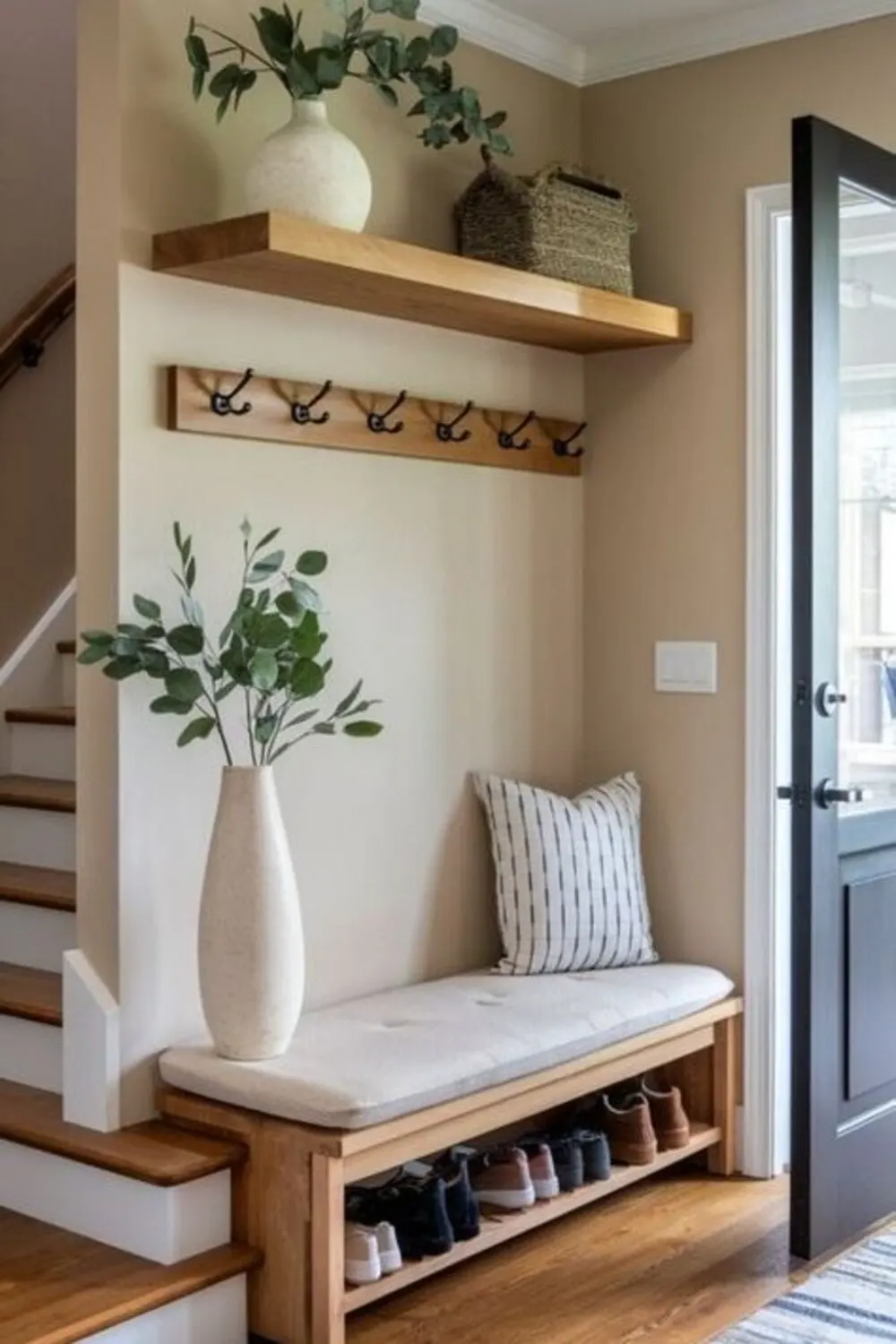
I love using storage benches because they serve two purposes: providing a place to sit and keeping everyday essentials organized. A bench with built-in drawers or shoe cubbies is particularly useful for busy households.
For a warm, inviting look, I’d choose a natural wood bench with a neutral cushion. If space is limited, a slim design can provide practical storage without blocking the walkway.
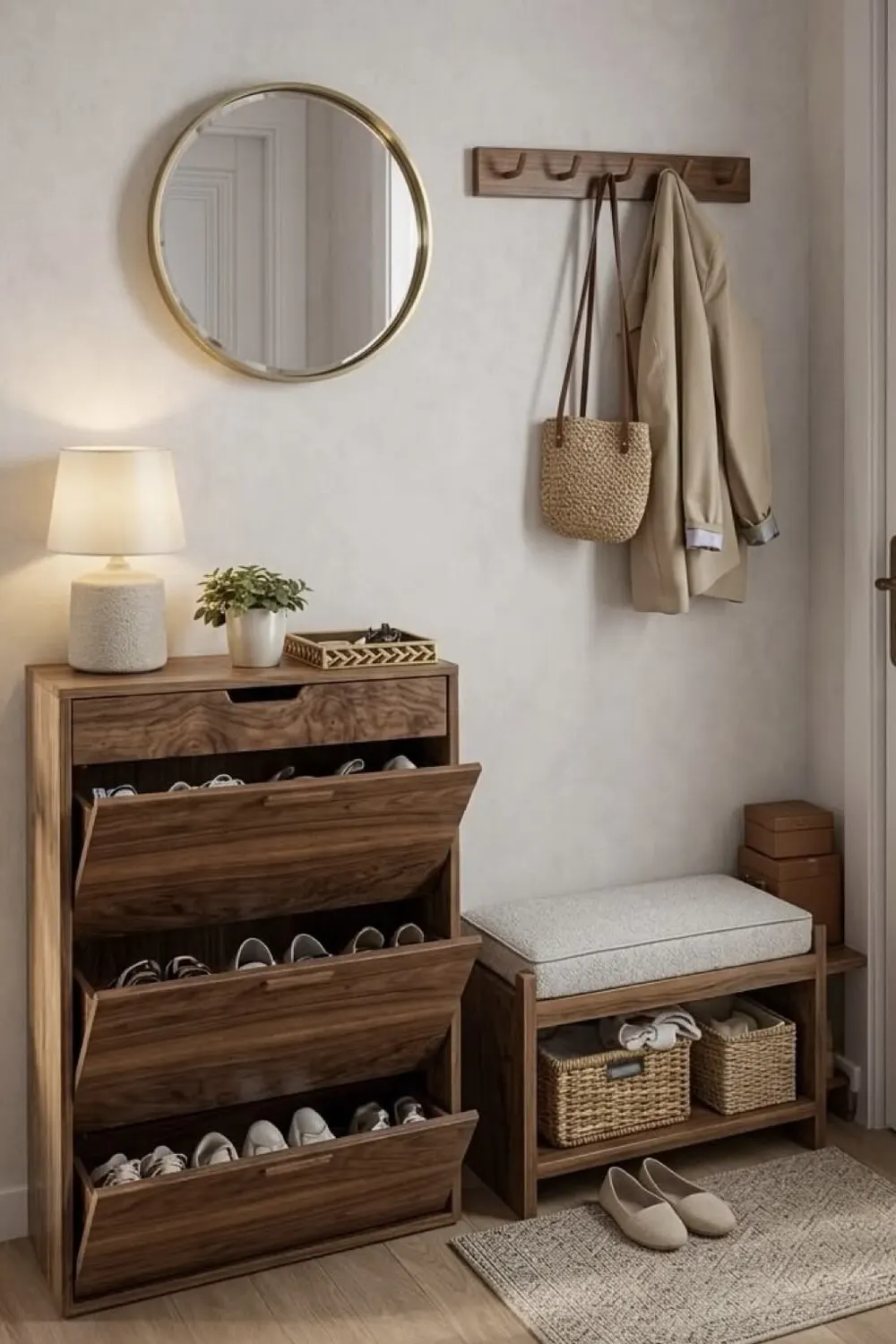
2. Choose a Slim Shoe Cabinet
Shoes can make an entryway look messy surprisingly quickly. I often recommend a slim shoe cabinet to keep footwear neatly tucked away without taking up too much floor space.
Light oak and warm white finishes are my favorites for creating a calm, timeless look. I also suggest keeping frequently worn shoes within easy reach so the cabinet remains convenient for everyday use.
3. Install Wall Hooks
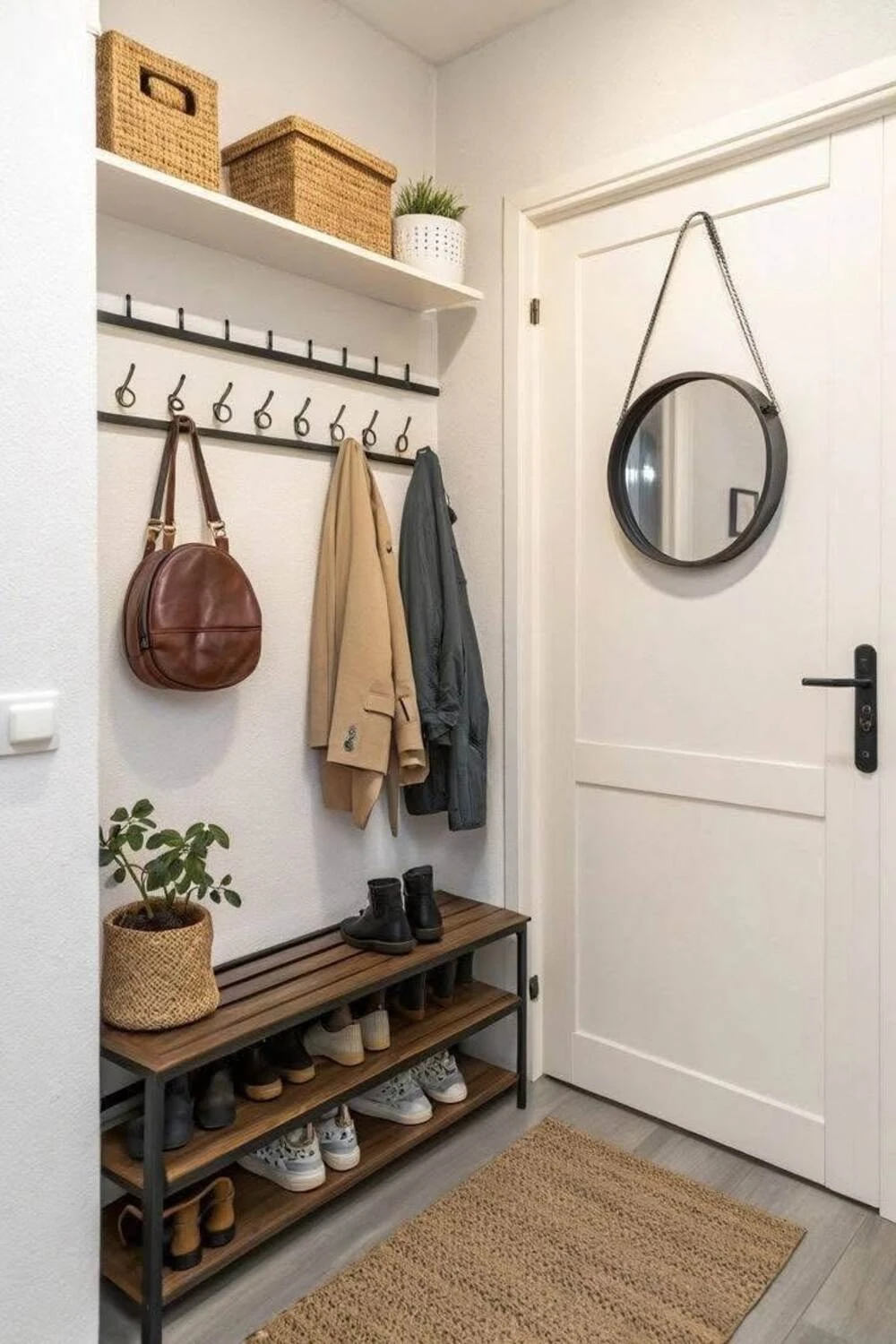
Sometimes, the simplest solutions work best. I like wall hooks because they provide an easy place for coats, handbags, and backpacks without requiring additional furniture.
For a cohesive design, I’d choose hooks that complement the home’s existing finishes. Brass adds warmth, while matte black creates a more contemporary feel. If you have children, installing a lower row of hooks can help them keep their belongings organized independently.
4. Make Use of Vertical Space
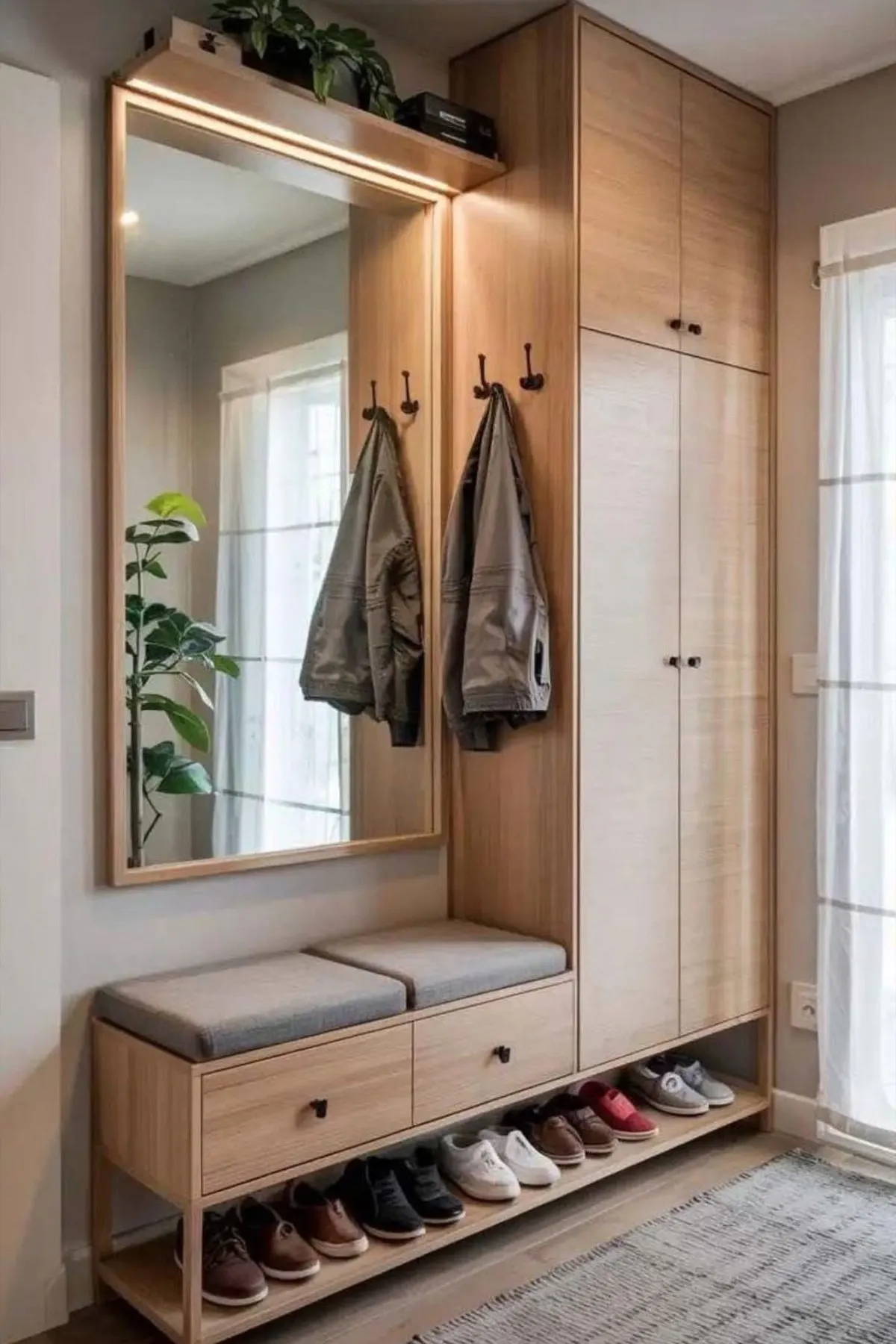
When designing a small entryway, I always look beyond the floor. Tall cabinets, vertical shelving, and wall-mounted organizers can provide valuable storage without crowding the room.
I particularly like tall, narrow cabinets that make use of otherwise wasted wall space. Keep everyday essentials at eye level and store seasonal accessories on higher shelves.
5. Create an Everyday Drop Zone
I’ve found that keys, sunglasses, and mail often create unnecessary clutter near the front door. A small drop zone can solve this problem.
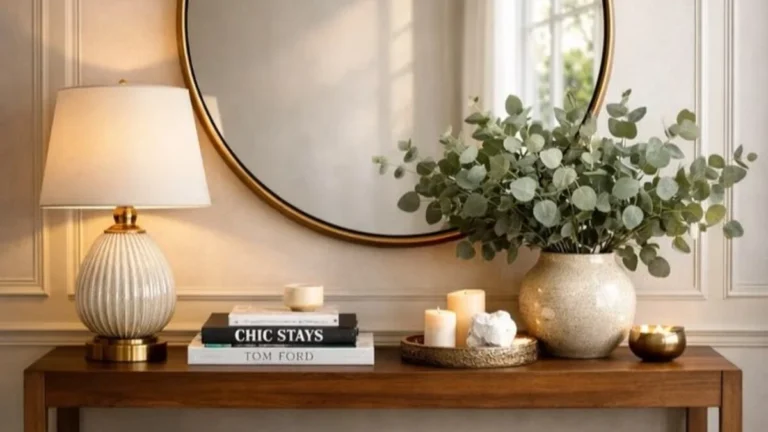
A narrow console table or floating shelf is usually enough. I’d add a tray for keys, a small bowl for loose change, and a container for mail. Keeping everything in a designated place makes it easier to maintain an organized entryway.

6. Use Baskets for Extra Storage
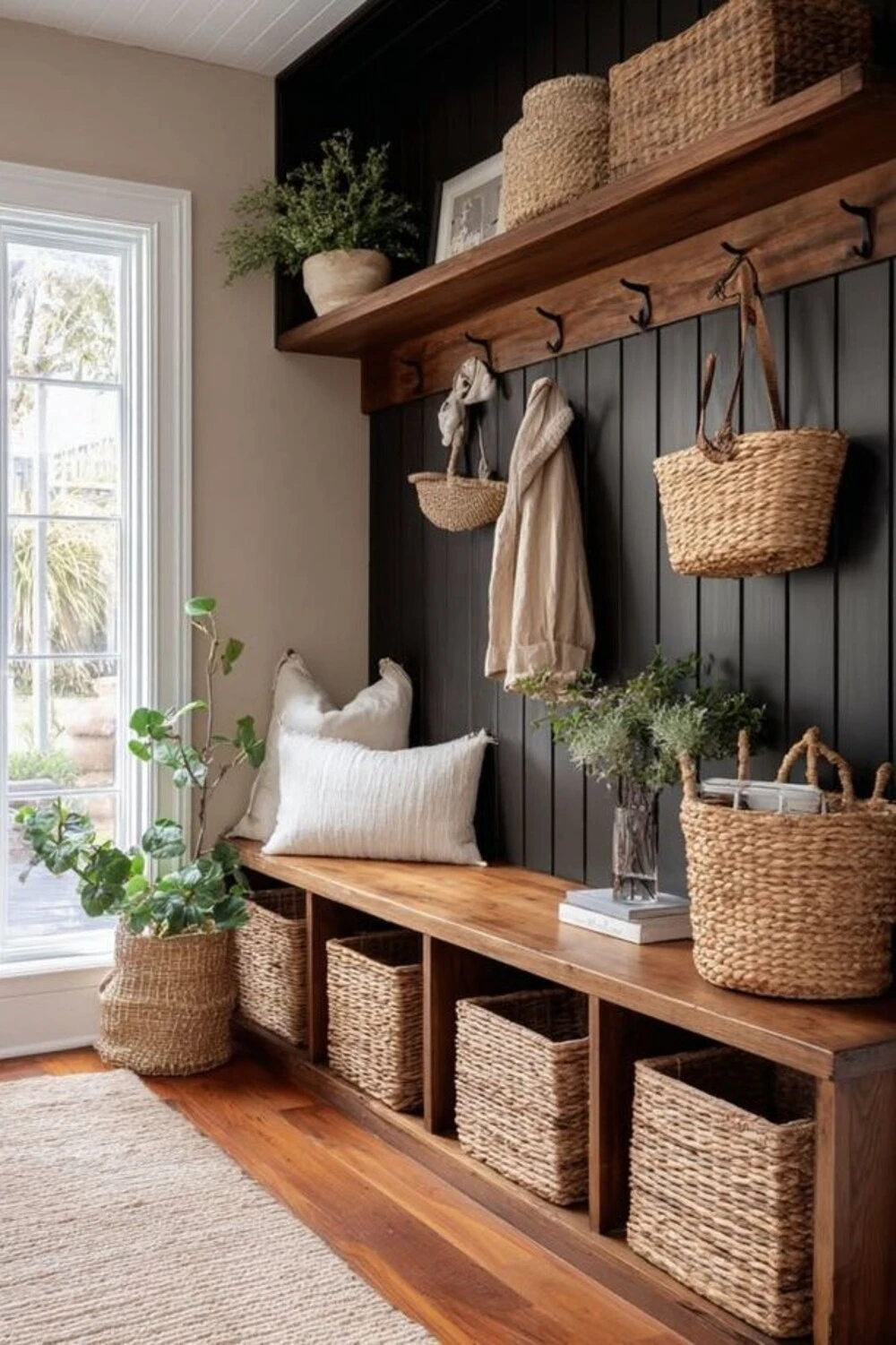
Baskets are one of my favorite ways to combine organization with texture. They work beautifully beneath benches, inside open shelving, or beside a shoe cabinet.
I would use them for scarves, reusable shopping bags, pet accessories, and children’s belongings. Natural woven baskets add warmth, while fabric bins suit a more minimalist interior.
My tip is to assign each basket a specific purpose. Otherwise, they can quickly become another place to collect clutter.
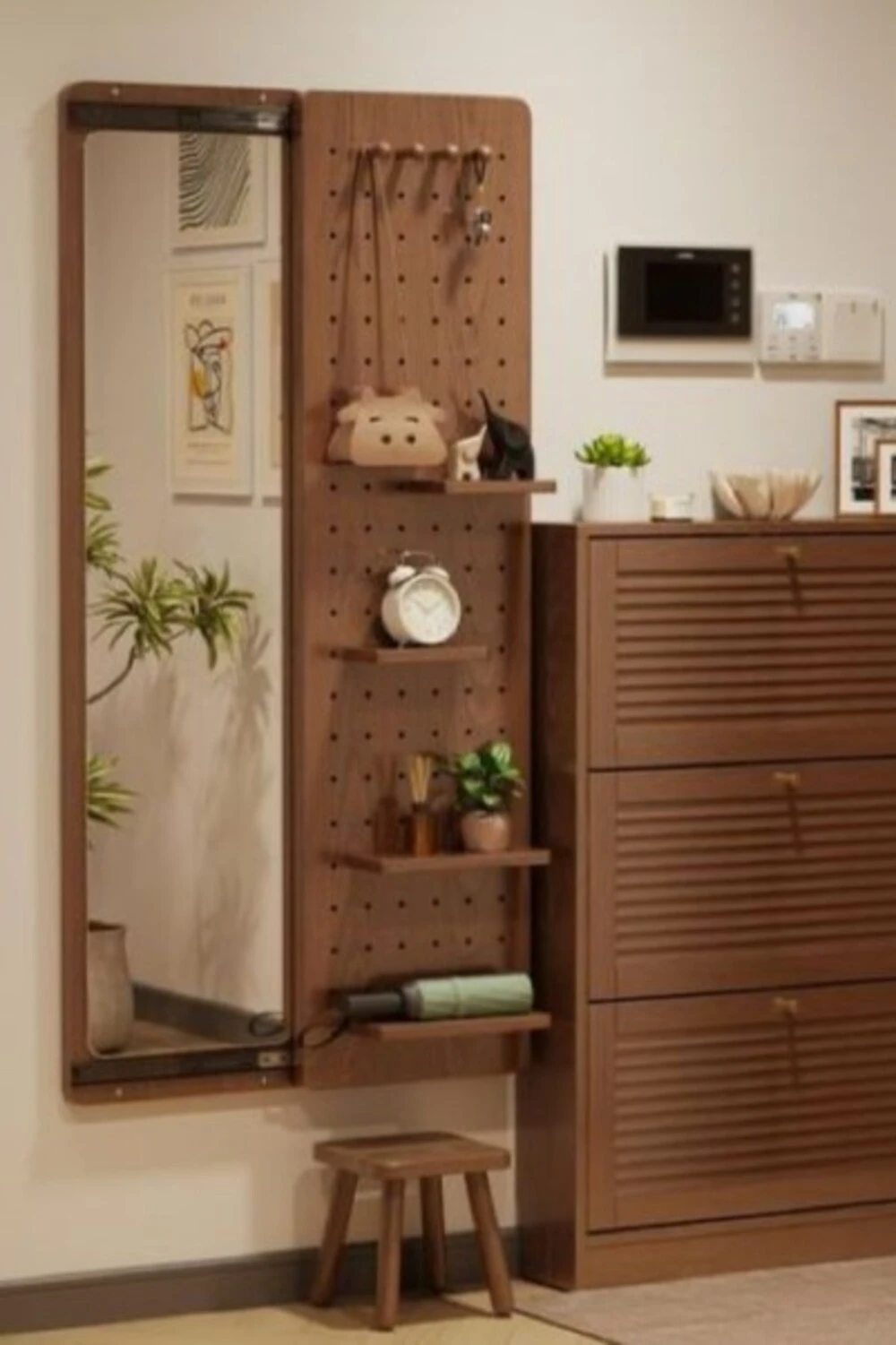
7. Add a Mirror With Storage
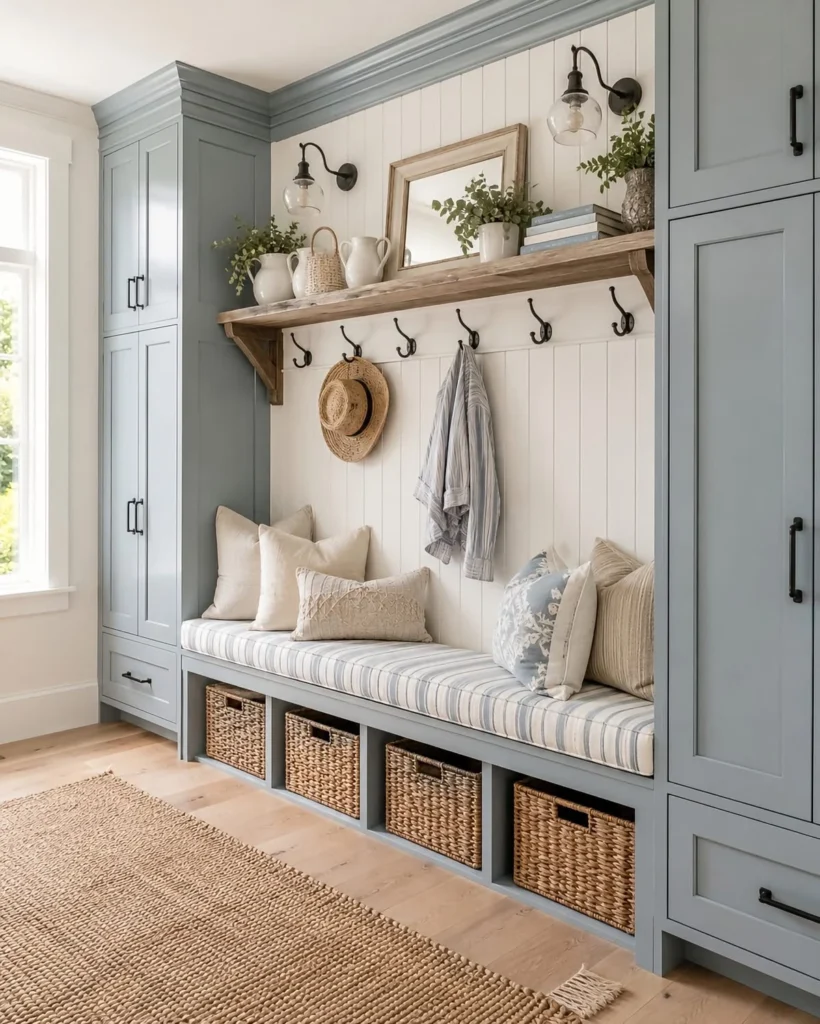
I almost always consider a mirror when designing an entryway. It provides a convenient place for a final appearance check and can make a small space feel brighter and more open.
For extra functionality, I’d pair a mirror with a narrow shelf or choose a design with built-in hooks. I prefer round mirrors for softening a space filled with straight lines, while rectangular mirrors can emphasize height.
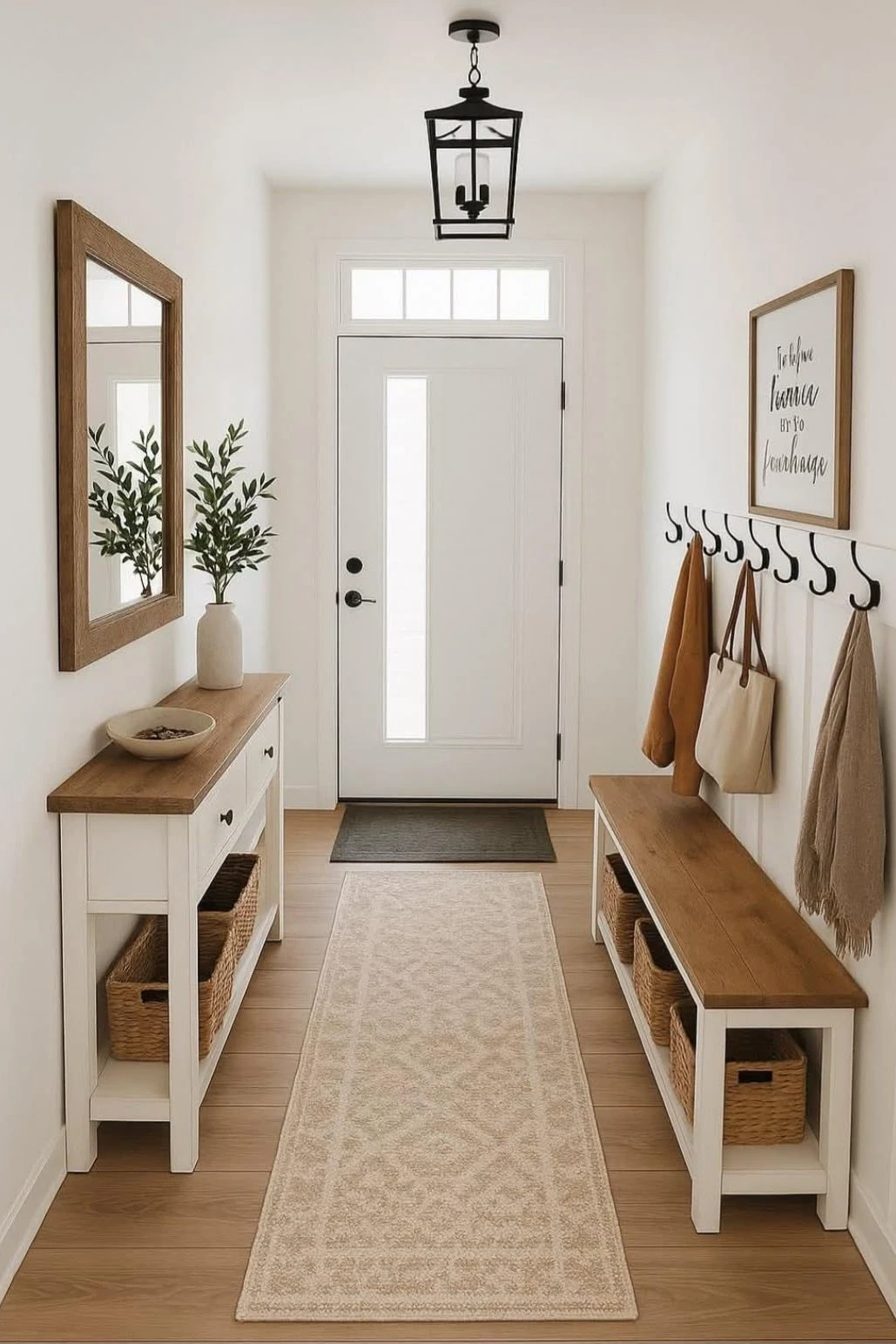
8. Choose a Console Table With Drawers
A console table can make an entryway feel more finished while providing useful storage. I prefer designs with drawers because they keep small essentials hidden and leave the tabletop free for decorative touches.
A lamp, a small vase, or a decorative bowl can make the arrangement feel personal. I’d also consider the table’s depth carefully, especially in narrow hallways where maintaining a comfortable walking path is essential.
9. Install Floating Shelves
When there’s no room for another piece of furniture, I often turn to floating shelves. They keep the floor clear while providing a convenient place for keys, sunglasses, and small accessories.
For a natural look, I’d choose wood shelves against a light-colored wall. Keep the styling simple, with a small tray and perhaps one decorative object. In my experience, leaving some empty space makes a small entryway feel much less crowded.

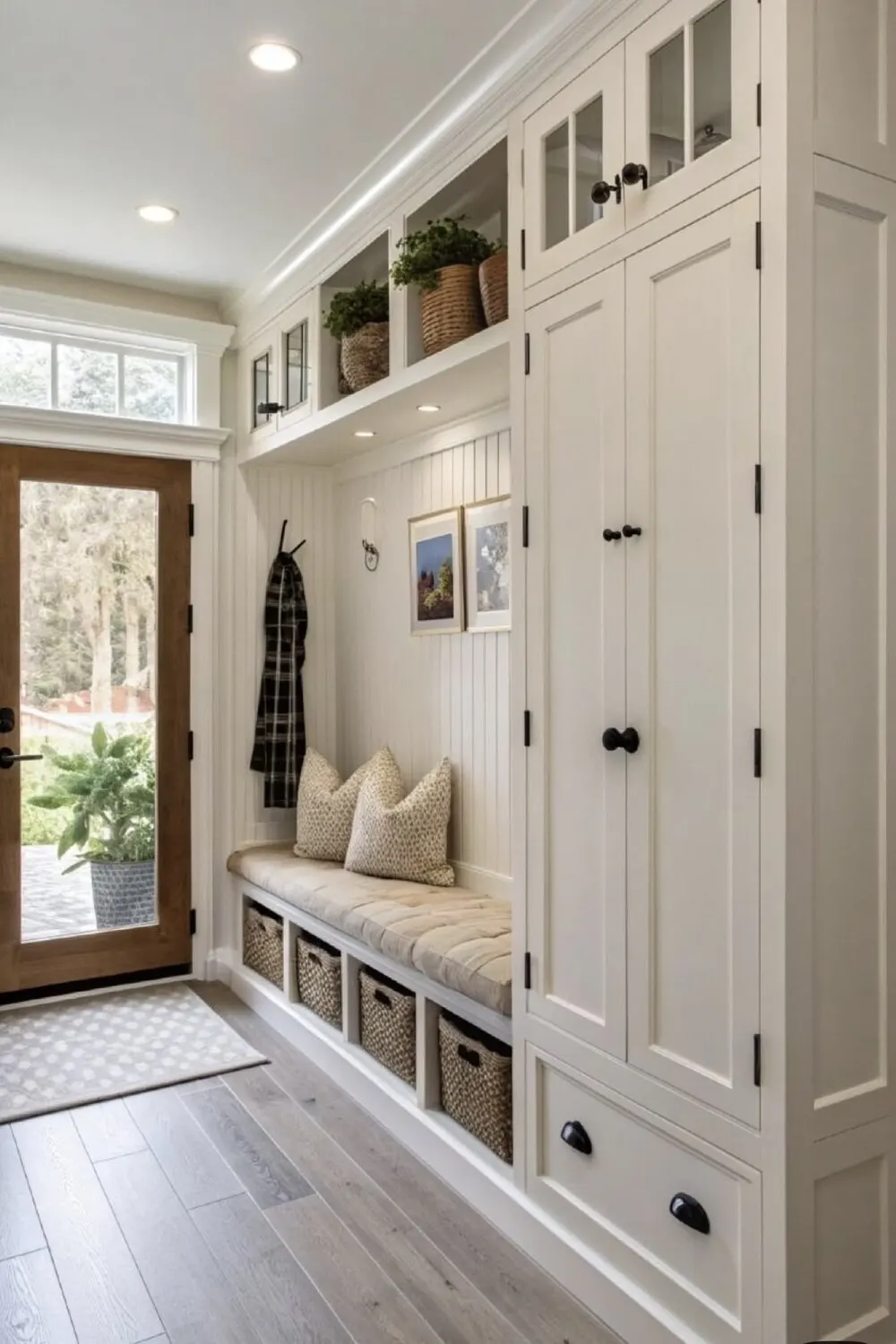
10. Consider Built-In Storage
If the budget and layout allow, I’d consider built-in entryway storage. A custom unit can combine a bench, shoe compartments, coat hooks, and overhead cabinets in one cohesive design.
I like this approach because the storage can be tailored to a household’s specific needs. Before choosing finishes, I’d first decide what needs to fit inside, from everyday shoes to coats and backpacks.
Warm white cabinetry paired with natural wood is one combination I particularly like because it feels inviting without being overly trendy.
11. Use the Back of the Door
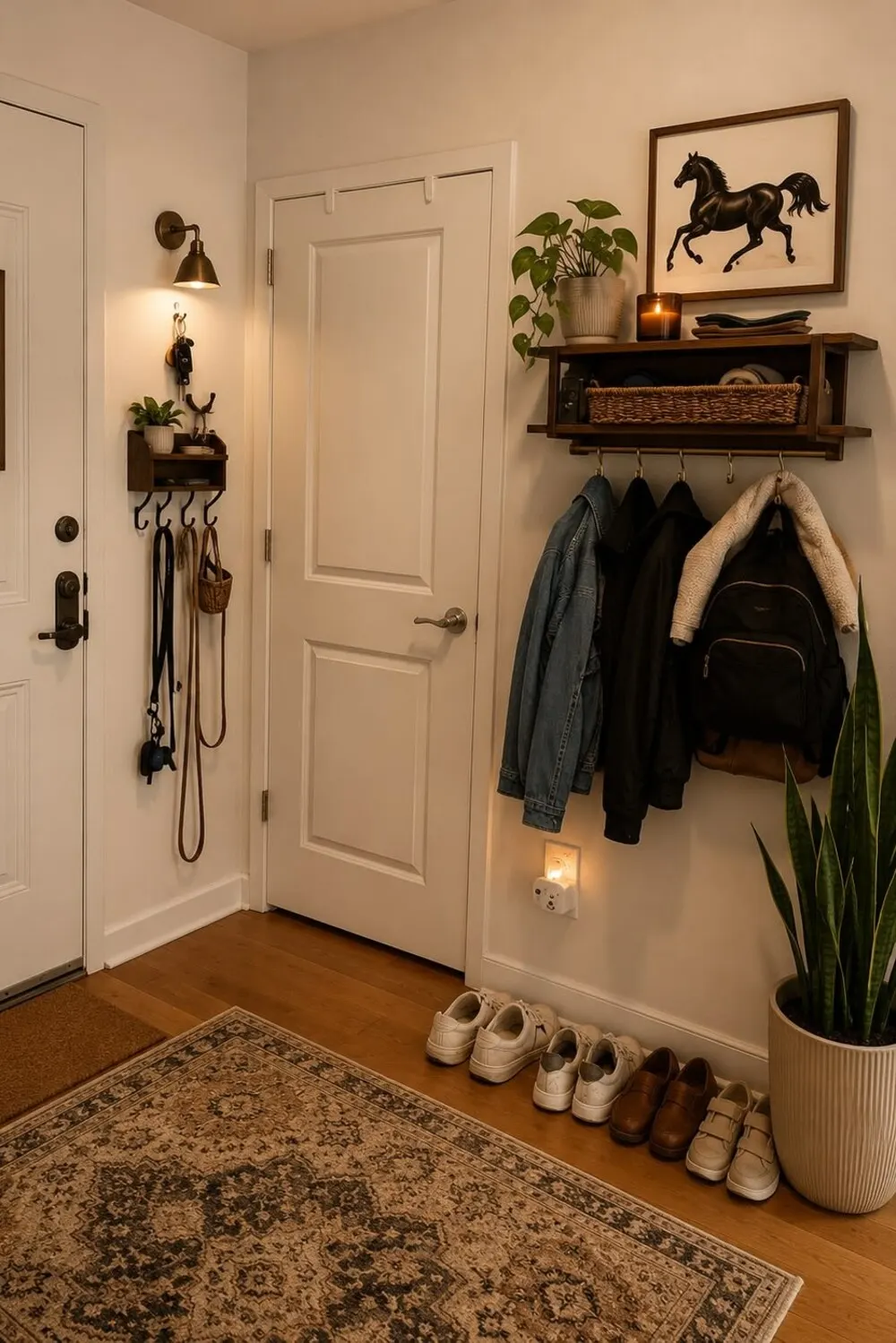
In a small home, every inch matters. I’ve found that the back of a door can offer useful storage space that might otherwise go unnoticed.
An over-the-door organizer can hold lightweight accessories such as hats, scarves, and gloves. I especially like this option for renters because it often requires minimal installation.
Just make sure the organizer fits securely and doesn’t interfere with opening or closing the door.
12. Create a Dedicated Shoe Storage Wall
For households with larger shoe collections, a dedicated storage wall can make a real difference. Depending on the available space, I’d use shallow shelves, closed cabinets, or a combination of both.
Personally, I prefer keeping most shoes behind closed doors for a cleaner appearance while leaving a small section for everyday footwear.
Grouping shoes by frequency of use also makes mornings easier. There’s no need to search through the entire collection just to find your favorite pair.

13. Add a Small Storage Cabinet
I love decorative furniture, but I also believe some household essentials are better kept out of sight. A compact cabinet can hold umbrellas, shopping bags, pet supplies, and other items that tend to accumulate near the entrance.
I’d choose a simple design that complements the surrounding furniture. If the entryway is small, a wall-mounted cabinet or a piece with slender legs can help maintain a lighter appearance.
14. Transform Awkward Corners
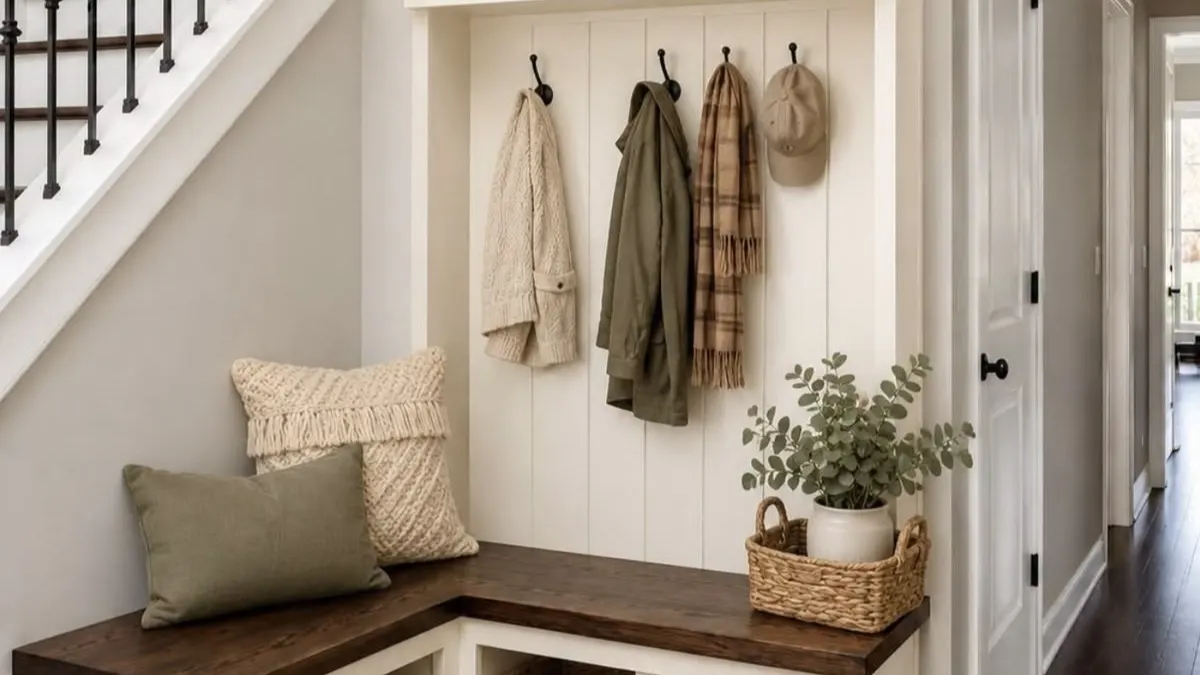
Awkward corners and recessed walls can be surprisingly useful when planned thoughtfully. I often see these areas as opportunities for additional storage rather than wasted space.
A narrow corner might accommodate a coat rack, while a recessed wall could hold floating shelves or a small cabinet. If there’s unused space beneath a staircase, built-in drawers may be worth considering.
I’d always measure carefully before purchasing furniture. The goal is to improve storage without making the entryway difficult to move through.
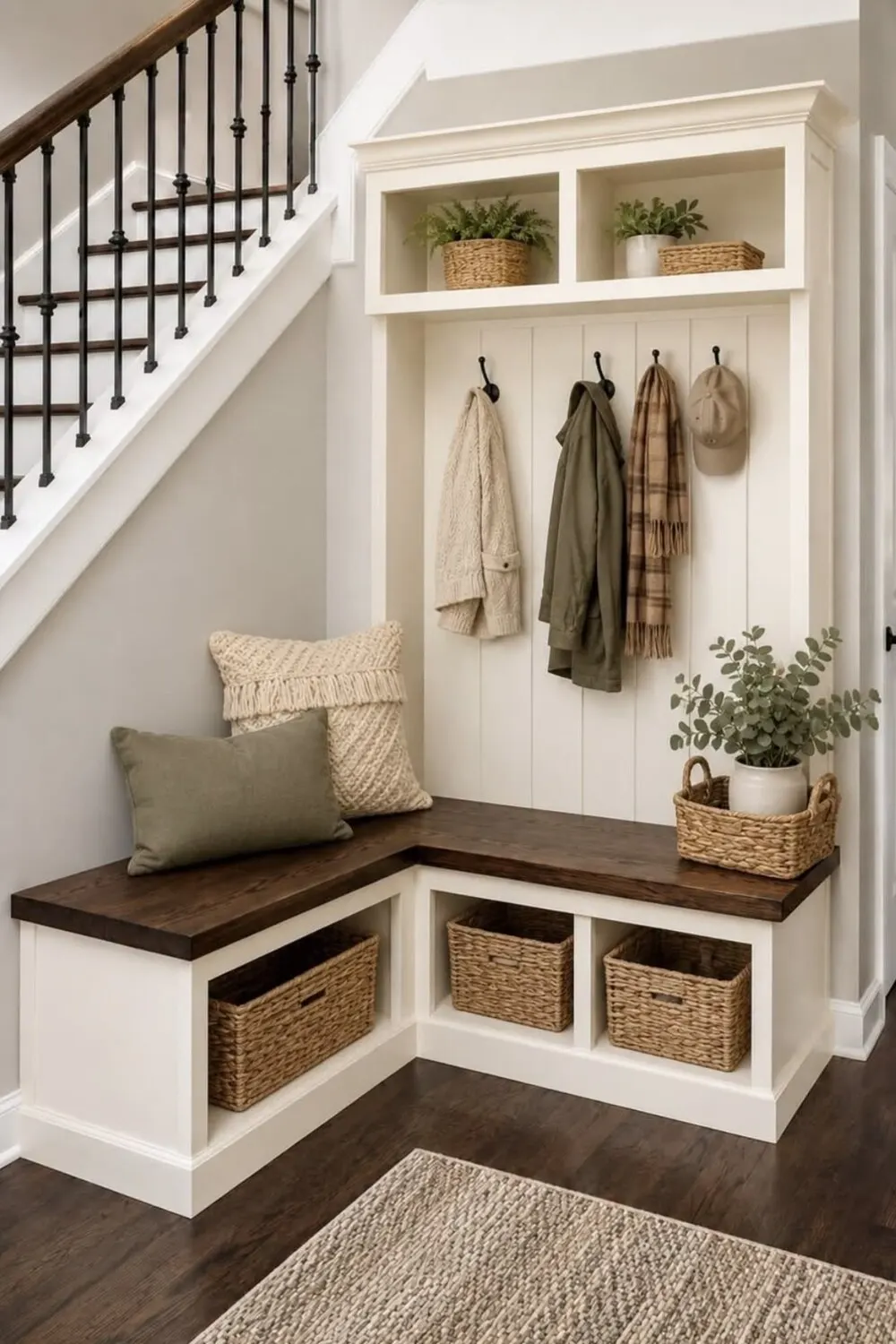
15. Combine Open and Closed Storage
If there’s one approach I recommend most often, it’s combining open and closed storage. Open shelves and hooks make everyday essentials easy to reach, while cabinets conceal items that don’t need to be on display.
For example, I’d pair a slim shoe cabinet with wall hooks and a small shelf for keys. If space permits, a storage bench can complete the arrangement.
I find this balance creates an entryway that feels practical without looking cluttered. Every item has a place, but the room still feels welcoming.
How I Choose the Right Entryway Storage
Before buying anything, I always consider three things.
First, identify the main source of clutter. If shoes are the problem, prioritize a shoe cabinet. If coats and bags pile up, start with wall hooks.
Second, measure carefully. I pay attention to walking paths, door swings, and available wall space to ensure the furniture fits comfortably.
Finally, choose storage that suits your lifestyle. I believe the best organizational system is one that’s easy to maintain. Frequently used items should be accessible, while seasonal belongings can be stored away.
Final Thoughts
I believe a beautiful entryway starts with understanding how you use the space every day. You don’t need expensive furniture or a major renovation to make it work better.
I’d start with one or two practical changes, such as adding a shoe cabinet, installing wall hooks, or creating a small drop zone. Then I’d introduce personal touches, like a mirror, natural wood, or a favorite decorative piece.
For me, good interior design isn’t just about creating a space that looks beautiful. It’s about making everyday life easier while helping your home feel welcoming from the moment you walk through the door.