I’m an interior designer. For the last 8 years, I’ve worked on 137 residential projects—from 280-square-foot studios to sprawling country houses.
And if there’s one space that’s given me and my clients the most headache, it’s the entryway wall.
Too narrow for furniture. Too blank to ignore. Often positioned at an angle that makes hanging anything feel like a geometry test. I’ve seen it all.
These 30 ideas aren’t mood board fantasies. They’re real solutions I’ve specified, measured, and installed in actual homes. I’ve grouped them by the wall’s “personality”—not by style. Find the one that matches your space, your light, your budget, and your patience level. Then copy it.
The hard part’s already done for you.
Category 1: The Classic & Timeless (Ideas 1–6)
For those who love elegance, tradition, and pieces that never go out of style.
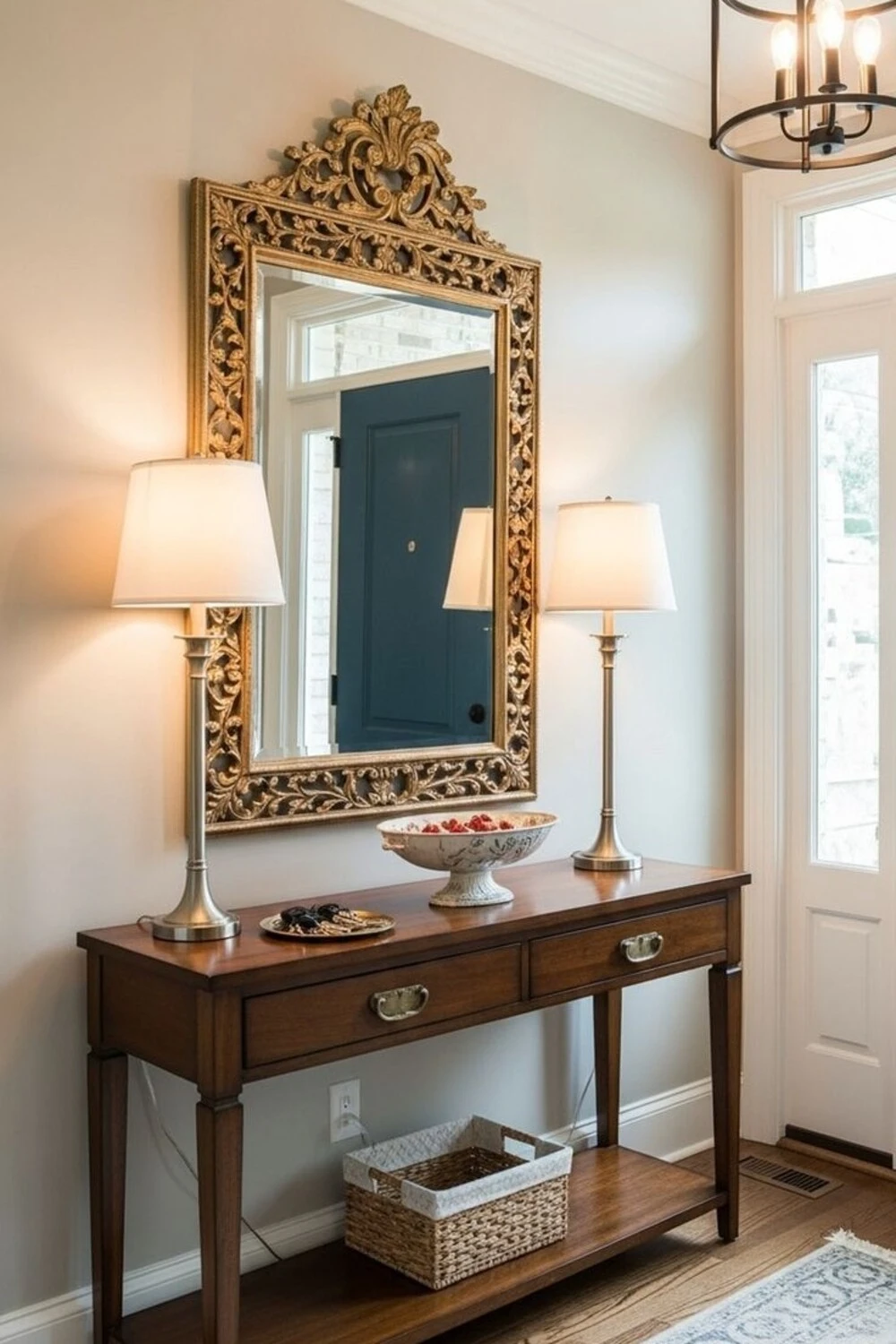
Idea 1: The Oversized Gilded Mirror
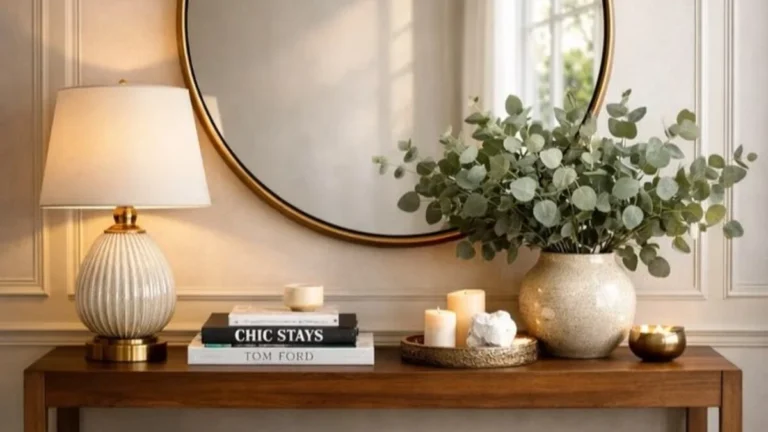
Nothing says “grand entrance” quite like a large, ornate mirror with a gold, silver, or antique bronze frame. Beyond the obvious aesthetic appeal, this is a brilliant design trick. Place it opposite a window to bounce natural light around the room, instantly making a cramped, dark entryway feel twice as large.
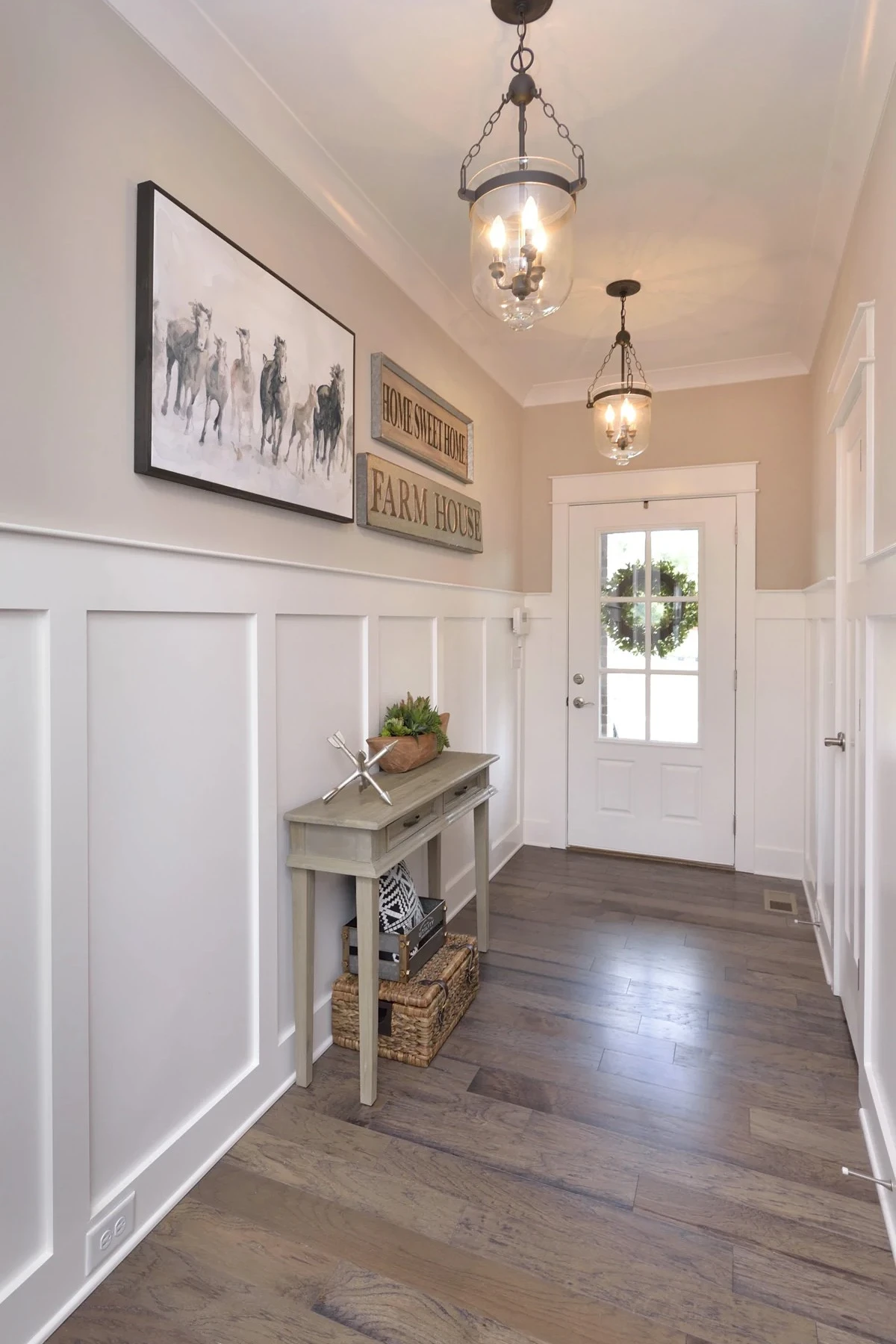
Idea 2: Classic Wainscoting & Board and Batten
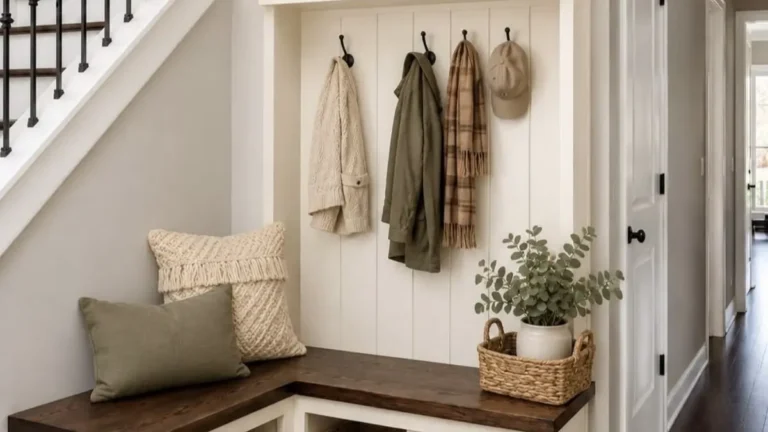
Who says you need “art” to decorate a wall? Adding architectural millwork—like board and batten, shiplap, or beadboard—creates instant texture and visual interest. Paint it white for a crisp, clean look, or go bold with a deep navy or forest green for a dramatic, moody foyer.
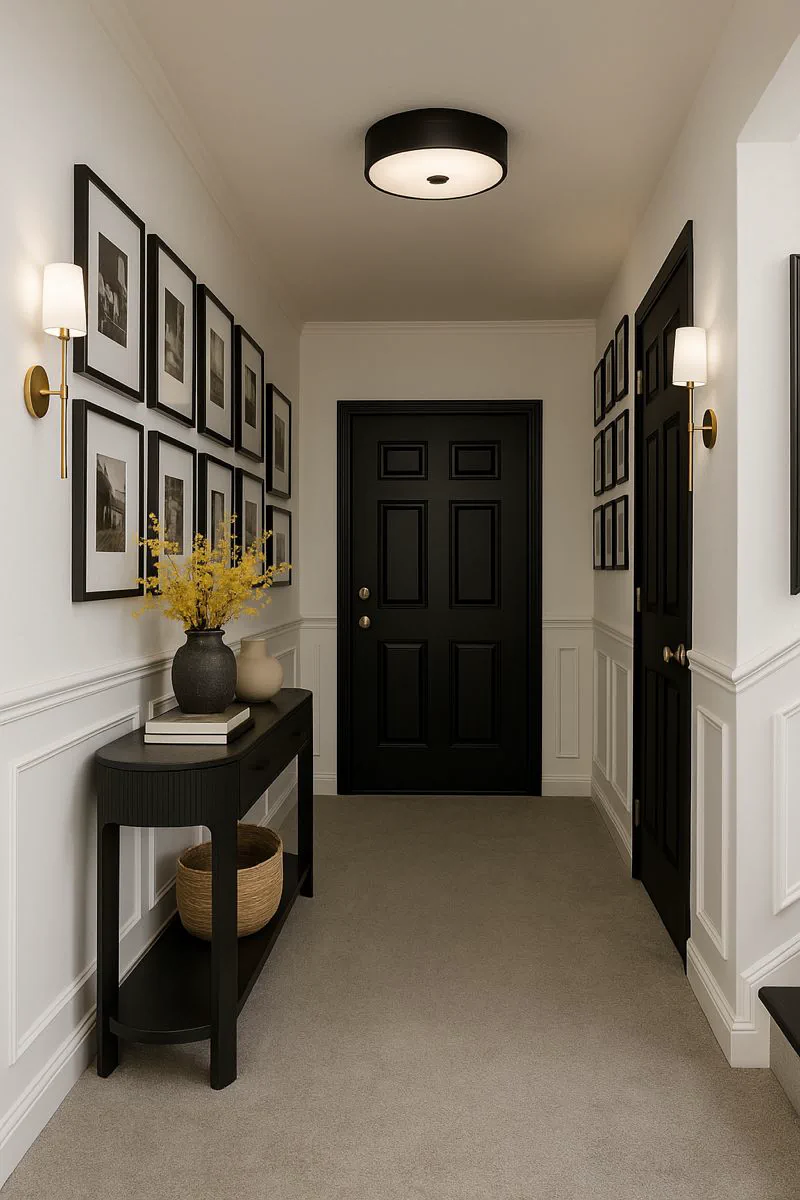
Idea 3: Black-and-White Photography Gallery
For a high-end hotel vibe, curate a gallery wall of large, matted black-and-white photographs. Choose images that feel personal to you (cityscapes, nature, or family candids) but keep the frames identical and sleek (think thin silver or black metal) to maintain a sense of high-end order.
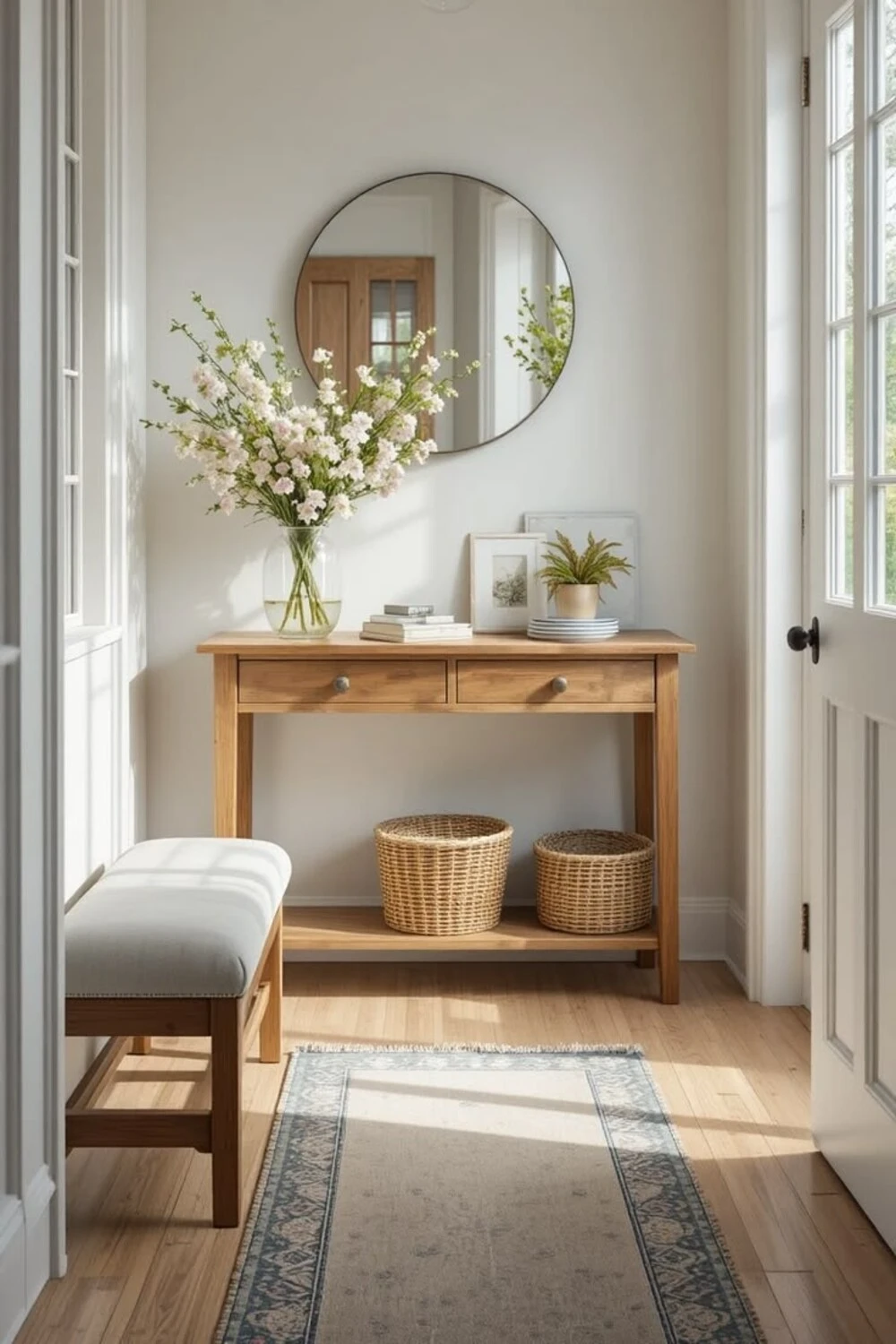
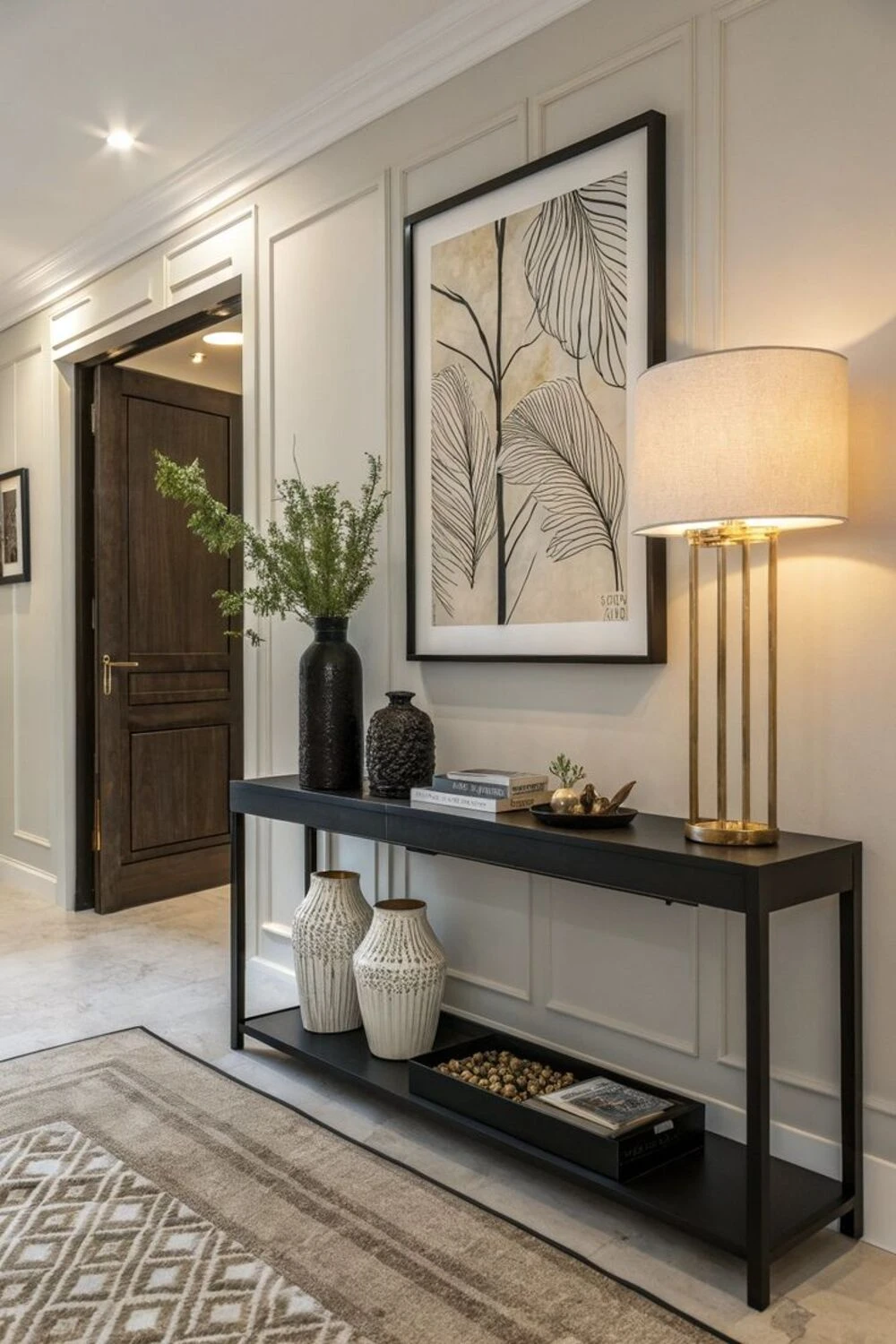
Idea 4: The Console Table Styling Combo
This is the “one-two punch” of entryway design. Place a slim console table against the wall, hang a large piece of art (or a mirror) directly above it, and then style the tabletop. Add a table lamp, a stack of coffee table books, and a small vase with fresh greenery. The layering adds depth and makes the wall feel curated rather than just “decorated.”
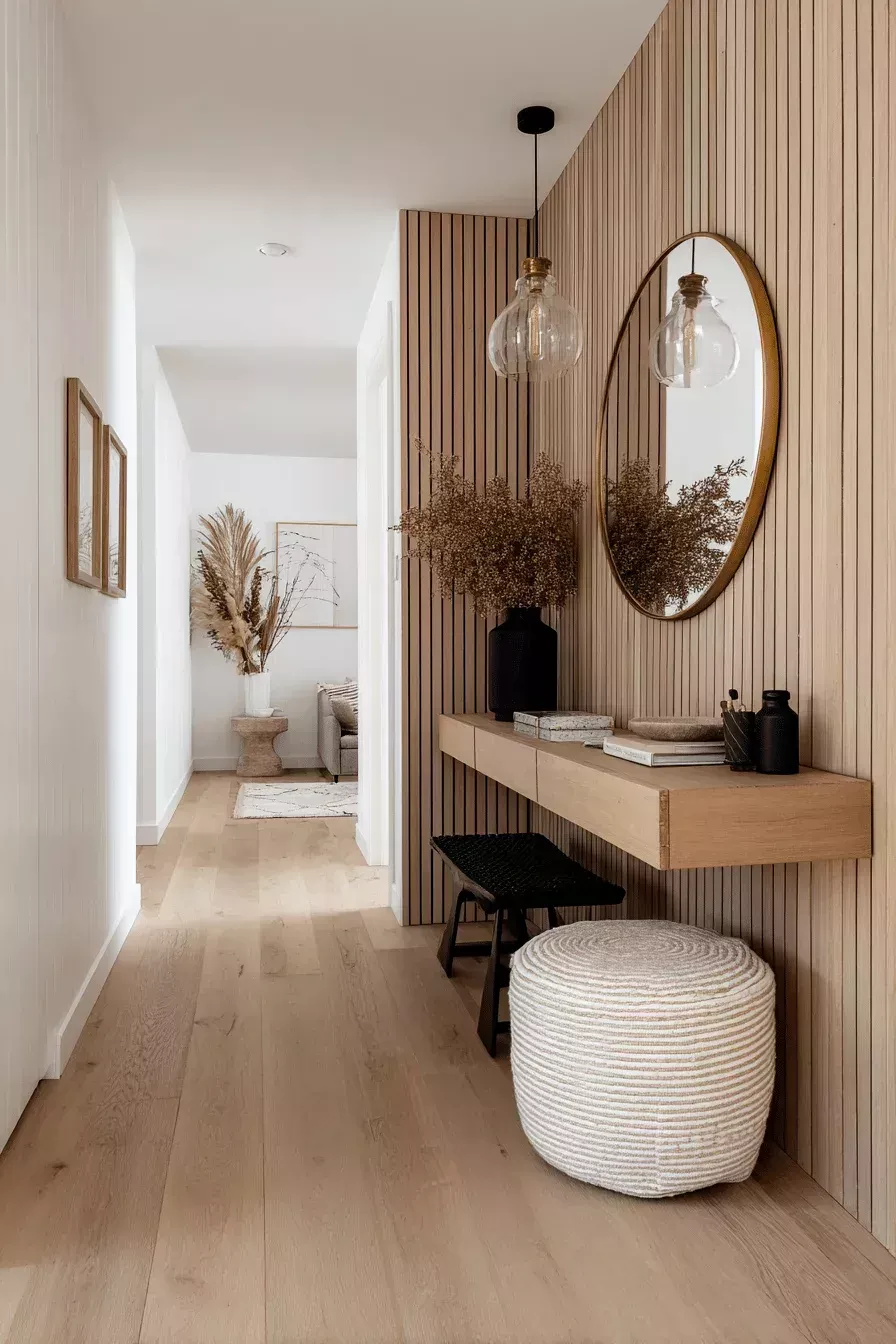
Idea 5: Fluted Wall Panels
Texture is having a massive moment in interior design. Fluted wall panels—made of 3D wooden slats or MDF—add a ribbed texture that catches shadows beautifully. Paint them the same color as your wall for a subtle, sophisticated look, or use a contrasting color to make them pop like a sculpture.
Idea 6: A Single Oversized Canvas
If you have a large, open wall, resist the urge to fill it with a dozen little pieces. Instead, go big. A single, oversized canvas abstract painting acts as a powerful focal point. Keep the colors neutral (beiges, taupes, and blush pinks) to ensure it stays timeless.
Category 2: Small-Space & Narrow Hallway Solutions (Ideas 7–12)
Practical, space-saving tricks for tight areas where you can barely fit a shoe rack, let alone a table.
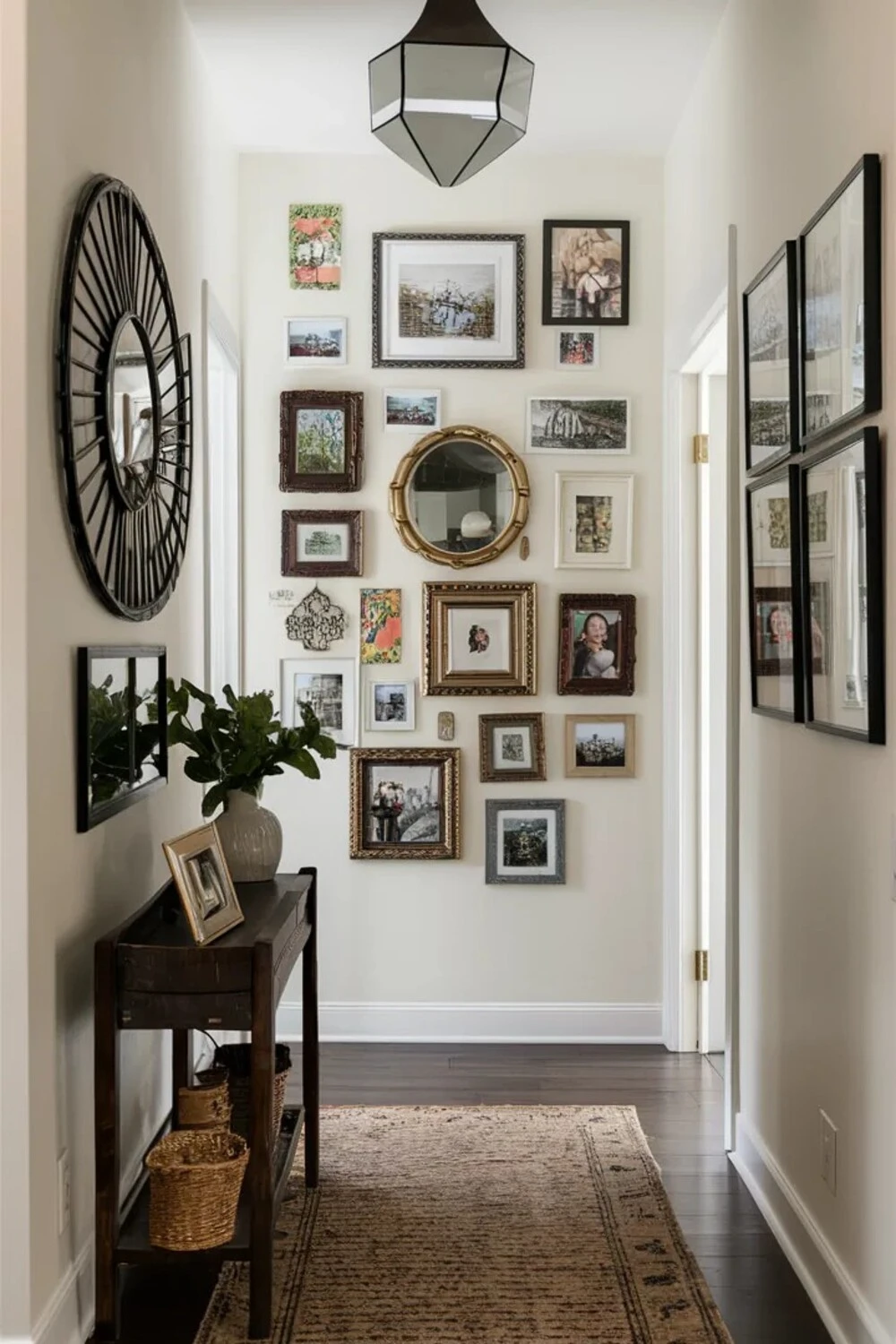
Idea 7: The Vertical Gallery Wall
When floor space is limited, look up. Instead of spreading your art horizontally, stack your frames in a vertical line. This draws the eye upward, tricking the brain into thinking your ceiling is much higher than it actually is. Pair this with a tall, slim floor mirror for extra elongation.
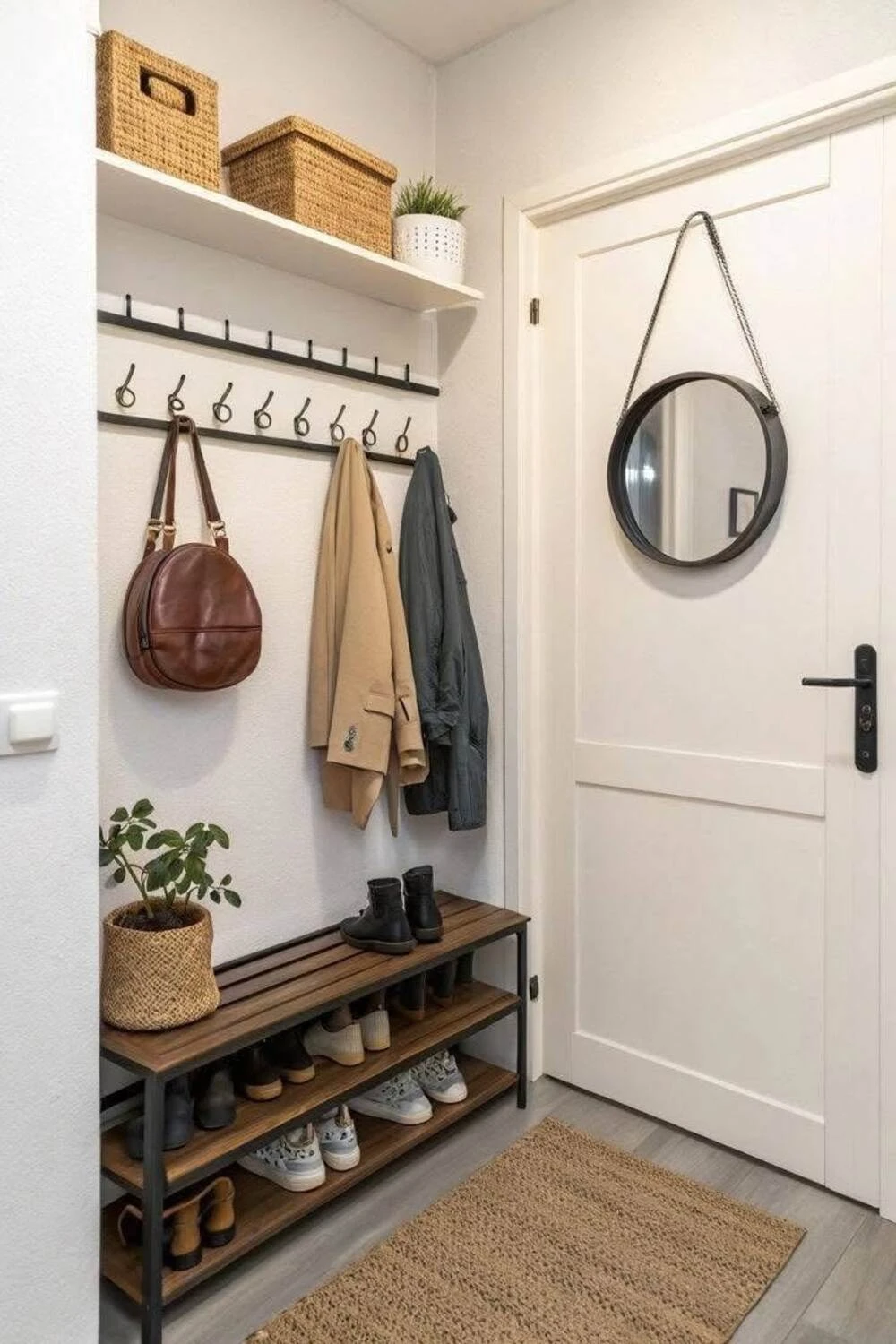
Idea 8: Flat Wall Hooks with Art Integration
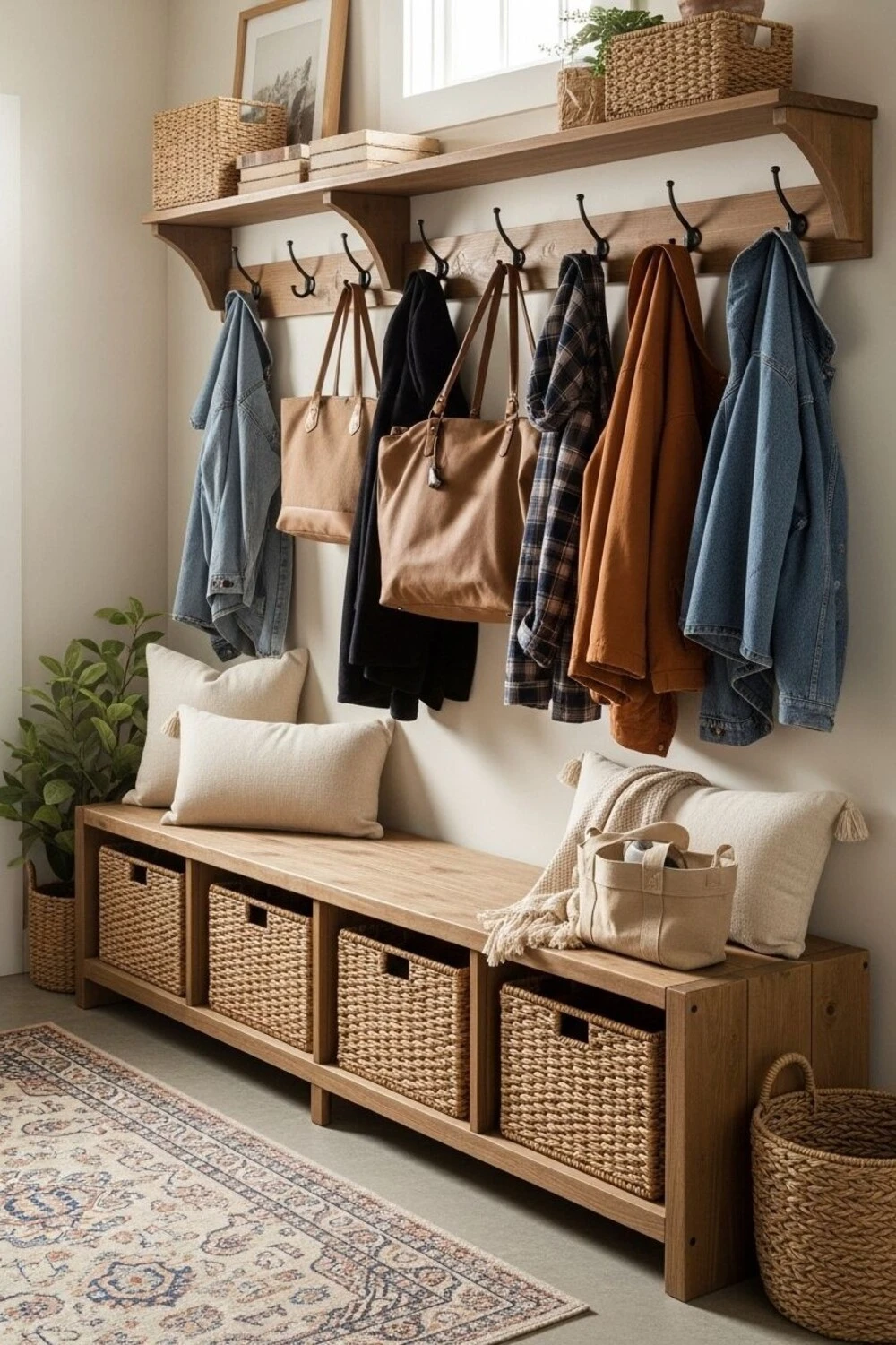
In a narrow hallway, bulky coat racks are a hazard. Opt for sleek, flat wall hooks (like brass or matte black single hooks) and mount them underneath a floating shelf. You can hang your coats and bags on the bottom, and place a small framed quote or a succulent on the shelf above. It’s art meets utility.
Idea 9: Peel-and-Stick Wallpaper Accent Walls
Wallpaper doesn’t take up physical space, but it adds immense psychological depth. Cover the wall at the end of a narrow hallway with a peel-and-stick grasscloth or a bold geometric print. It acts as a “destination” for the eye and makes the walk down the hall feel intentional.
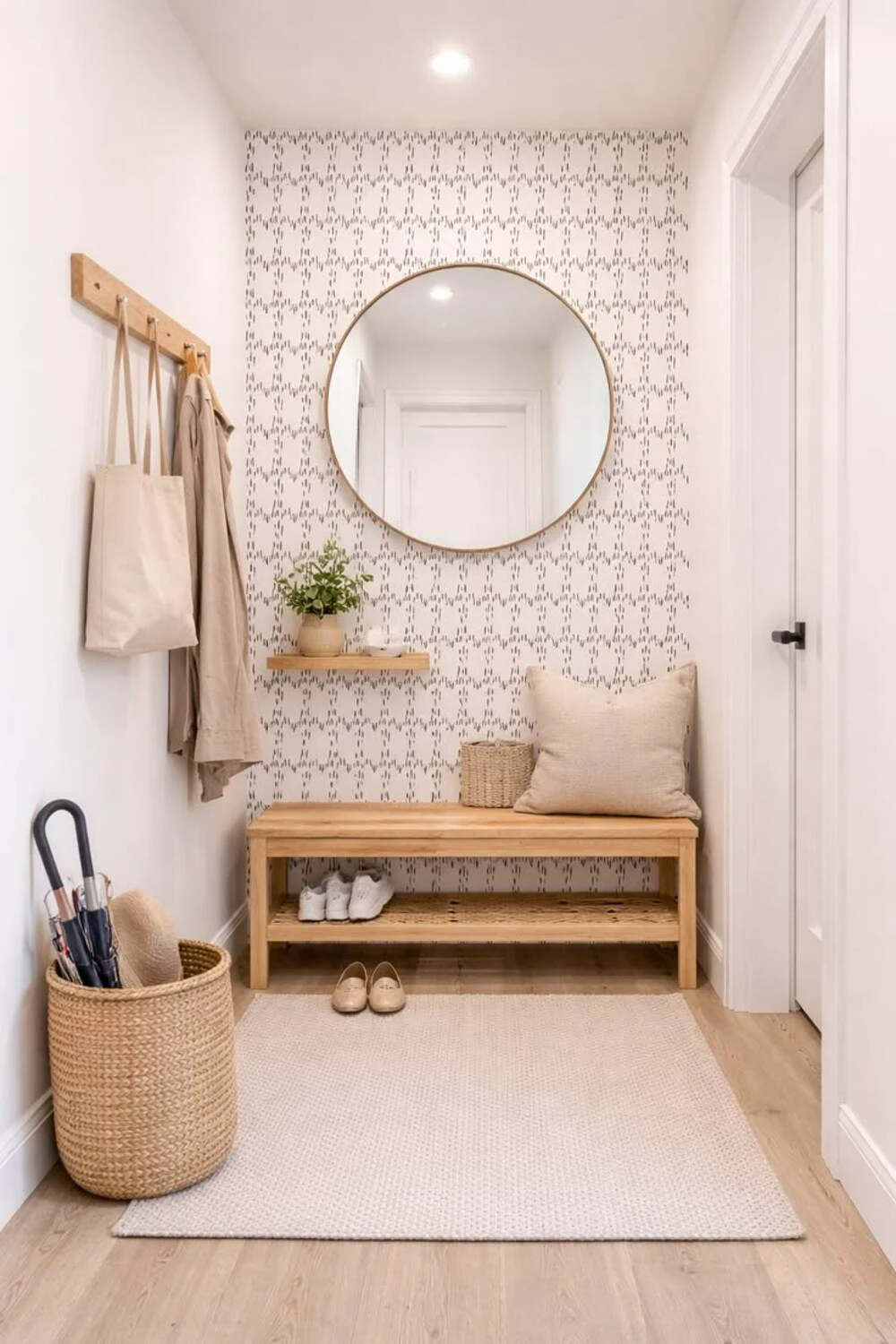
Idea 10: Narrow Floating Shelves with Greenery
You can’t fit a console table, but you can fit a 4-inch deep floating shelf. Style it with small framed photos, a tiny stack of books, and a trailing plant (like a Pothos) that hangs down over the edge of the shelf, softening the sharp angles of the wall.
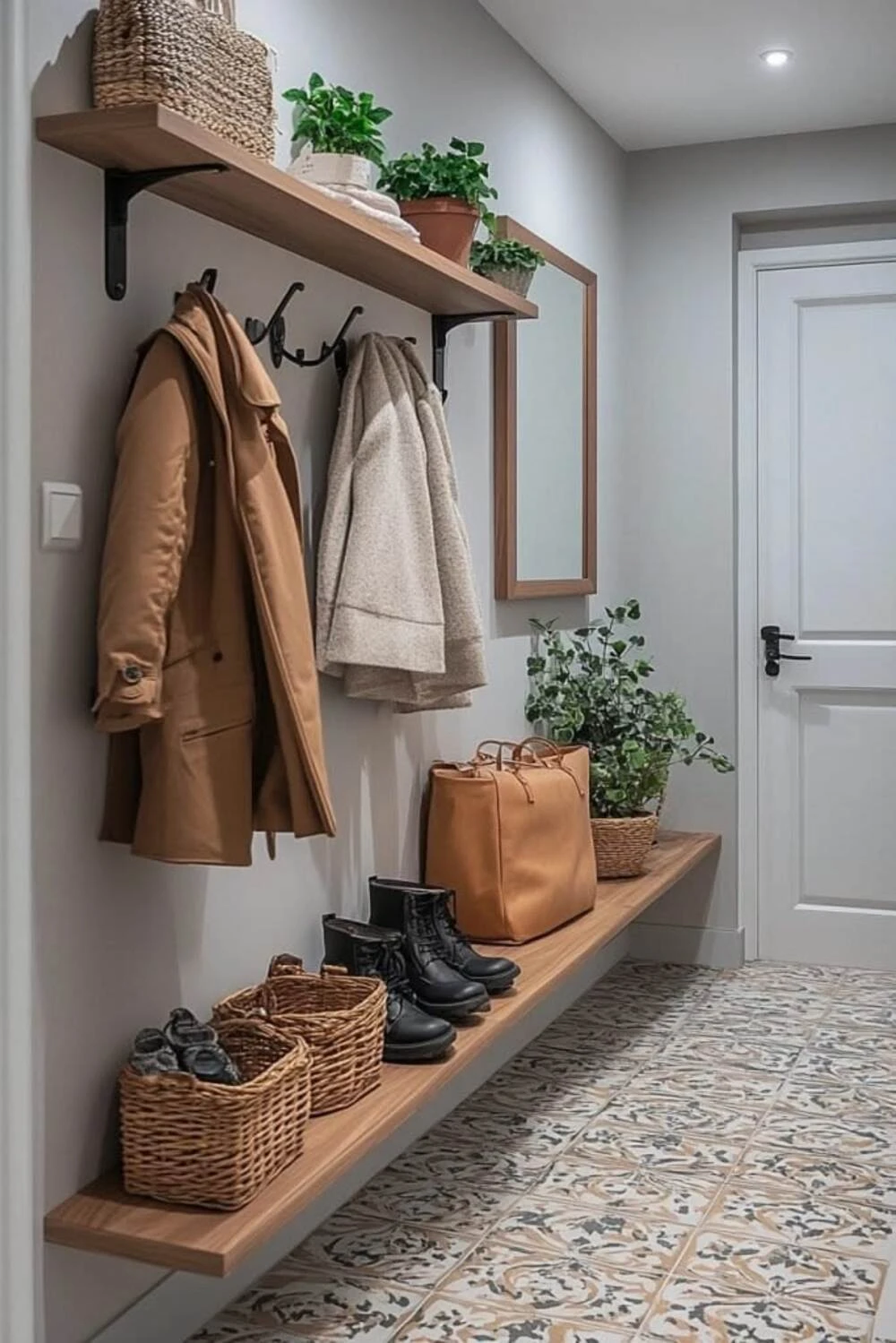
Idea 11: The “Leaning” Full-Length Mirror
In a tight entry, a leaning floor mirror propped against the wall is a lifesaver. It doesn’t require drilling, it gives you a last-minute outfit check, and its reflective surface essentially doubles the visual square footage of your hallway. Opt for a thin, arched frame to add a touch of elegance.
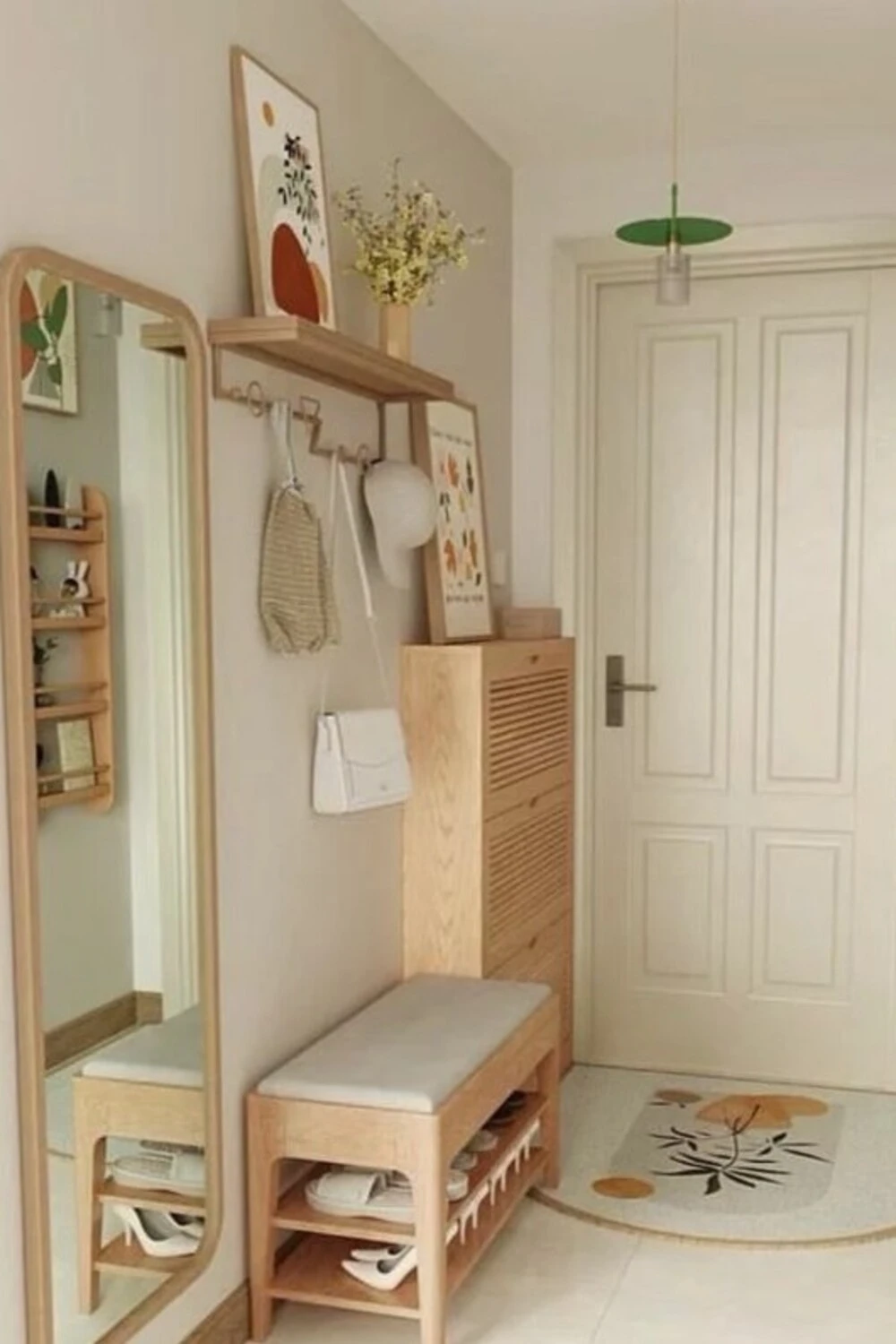
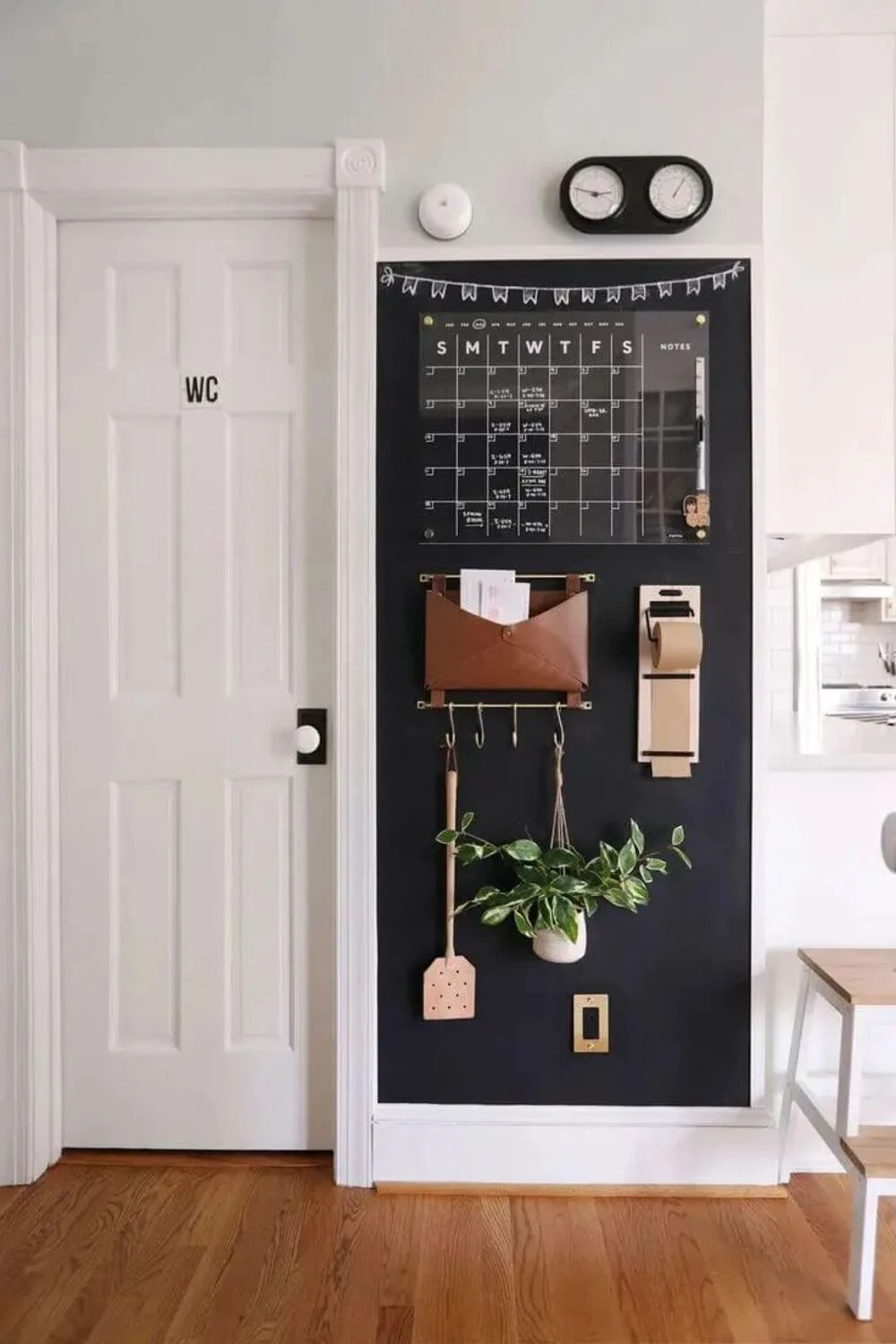
Idea 12: Magnetic or Chalkboard Paint Sections
If you have kids (or just love leaving notes for your partner), paint a section of your narrow entry wall with magnetic or chalkboard paint. Frame it out with trim to make it look like a “piece of art.” This turns a dead wall into a functional, ever-changing canvas.
Category 3: Modern Farmhouse & Rustic Charm (Ideas 13–18)
Warm, cozy, and full of texture. Perfect for homeowners who want a lived-in, welcoming vibe.
Idea 13: Reclaimed Wood Statement Wall
Cover an entire wall (or just a large section) with salvaged barn wood planks. The natural grain, knots, and varying tones act as a beautiful backdrop without needing a single frame. If real wood is too pricey, peel-and-stick wood plank wallpaper is a fantastic alternative.
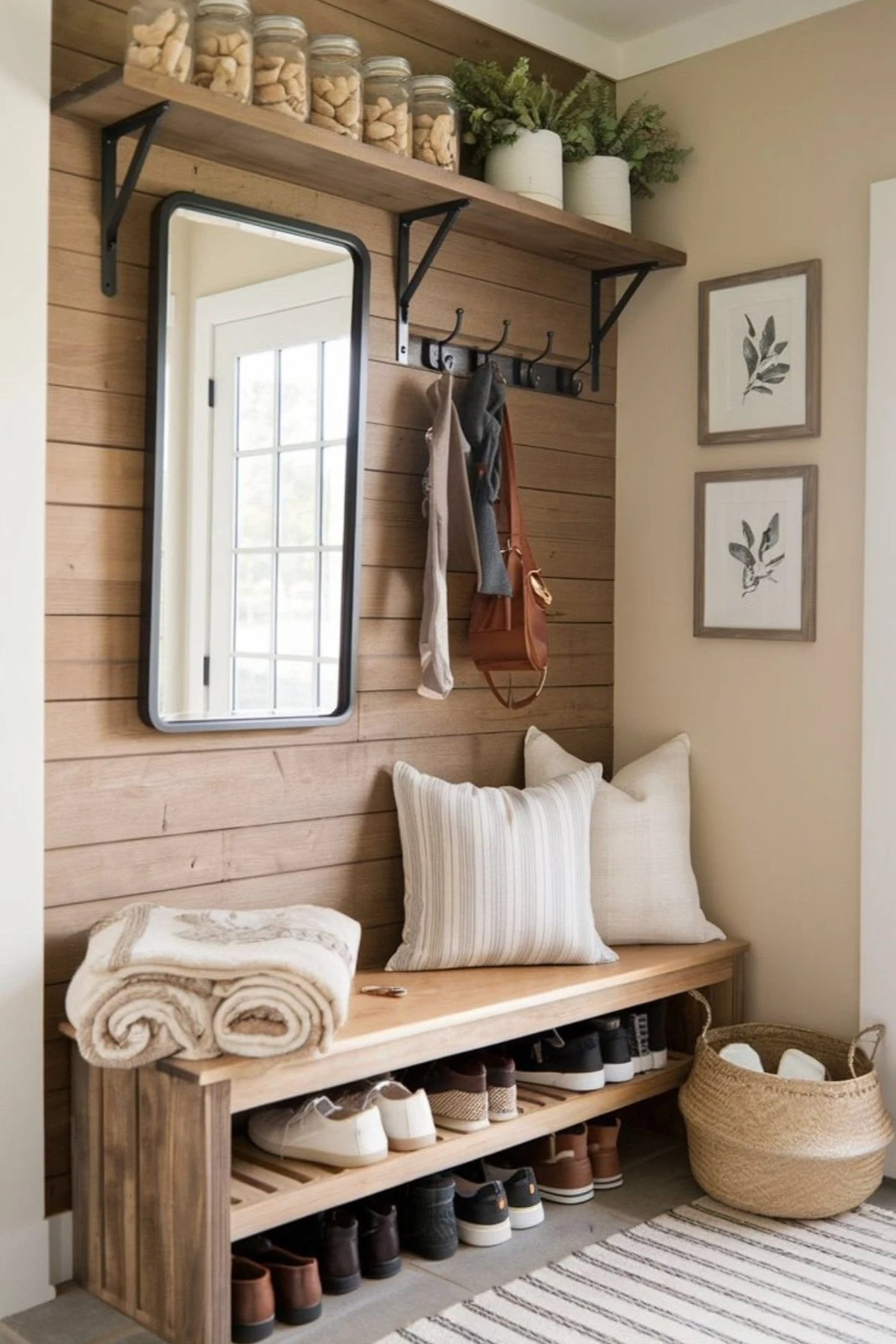
Idea 14: Large Typography Signs (“Welcome” or “Gather”)
Farmhouse style loves a good word sign. Instead of the cheap, mass-produced versions, invest in a high-quality, hand-painted wooden sign. Keep the font clean and the background white-washed to pair nicely with other rustic elements.
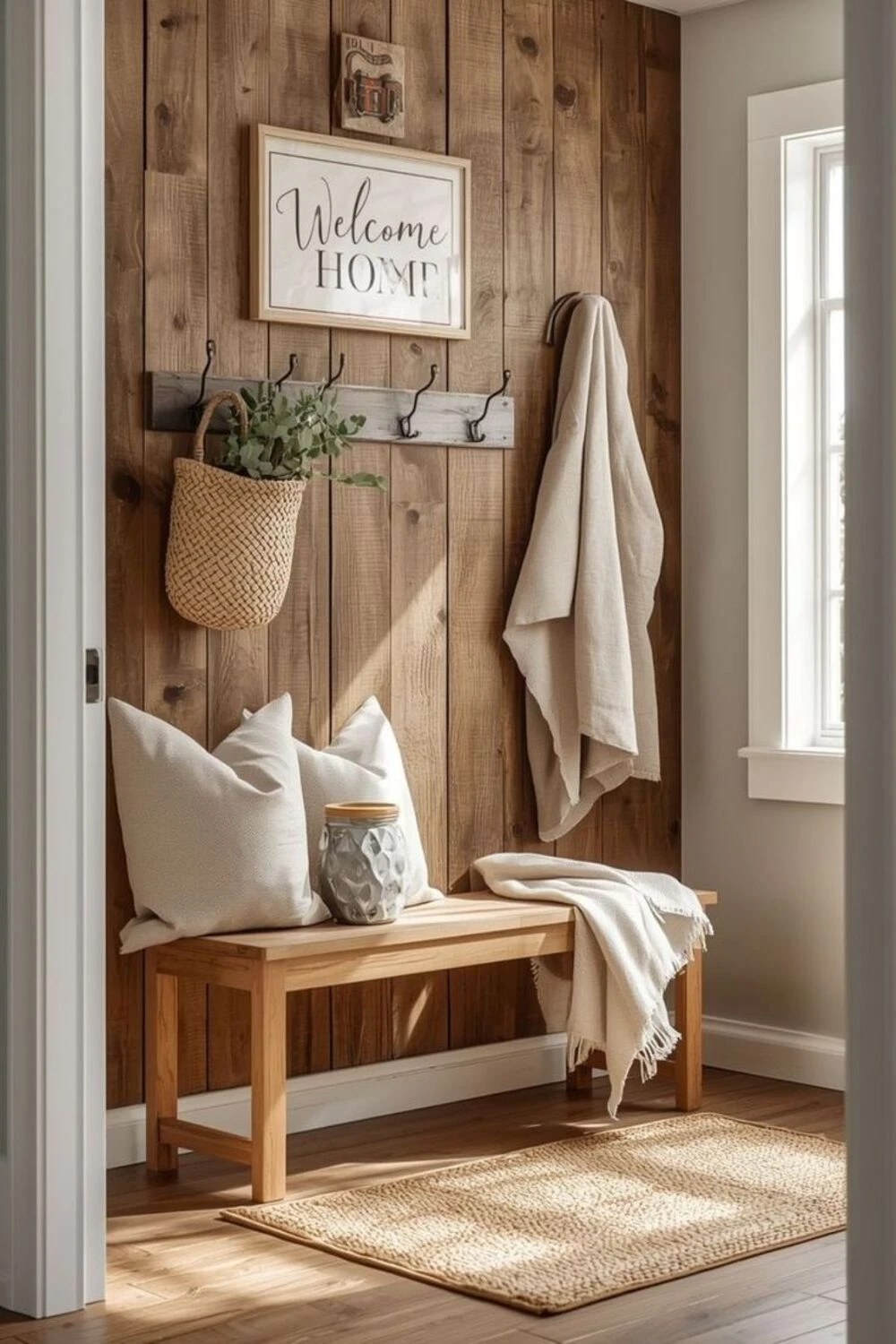
Idea 15: Macrame Wall Hangings
Add a soft, boho touch to your rustic wood and shiplap by hanging a large macrame piece. The knotted cotton brings warmth and texture to the wall, softening the hard edges of any wood or metal elements in your entryway.
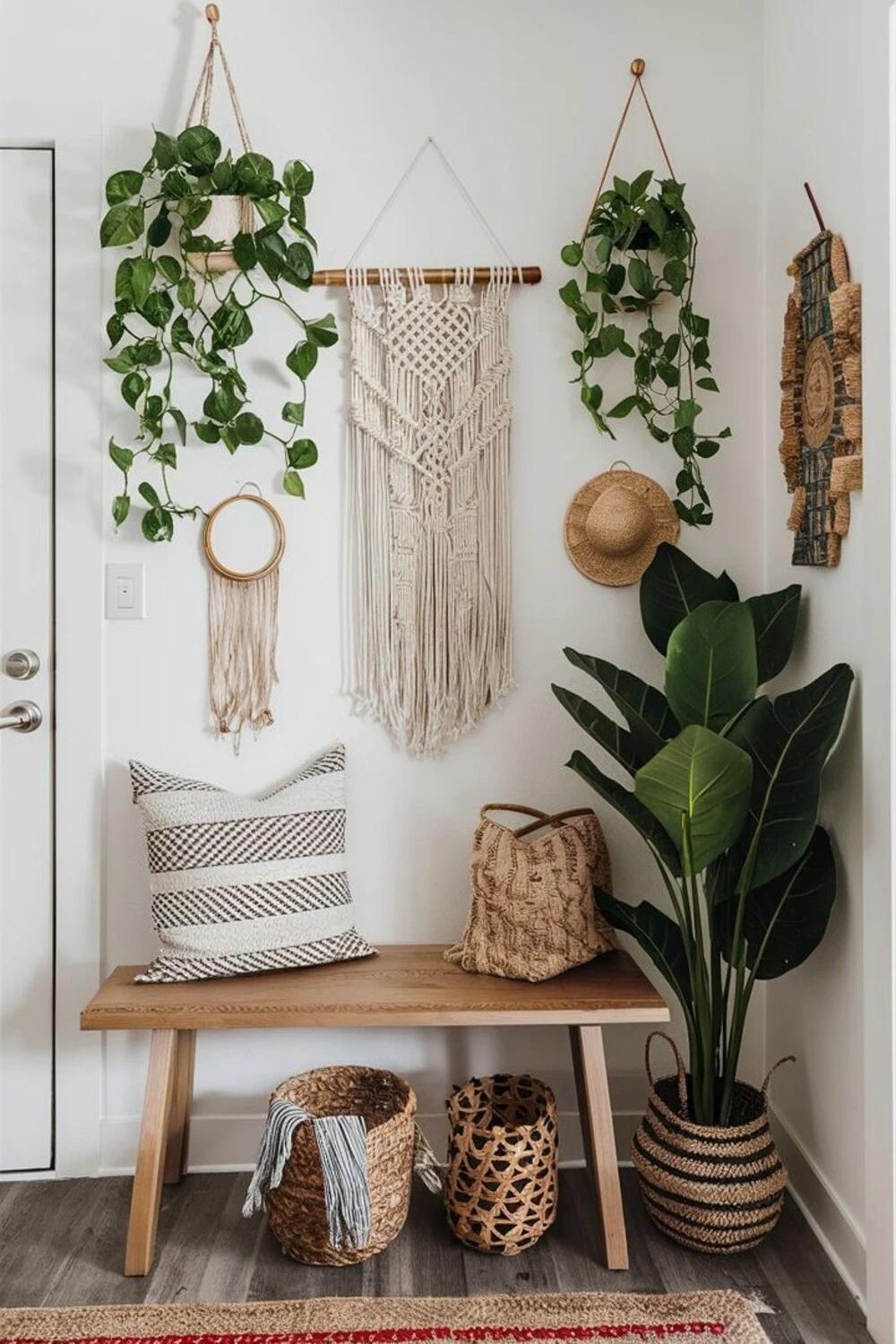
Idea 16: Woven Basket Wall Collection
This is a genius way to add texture while staying neutral. Collect three to five woven baskets of varying sizes and weaves (think seagrass, water hyacinth, and rattan) and mount them directly onto the wall as a sculptural gallery. No nails showing—just weave!
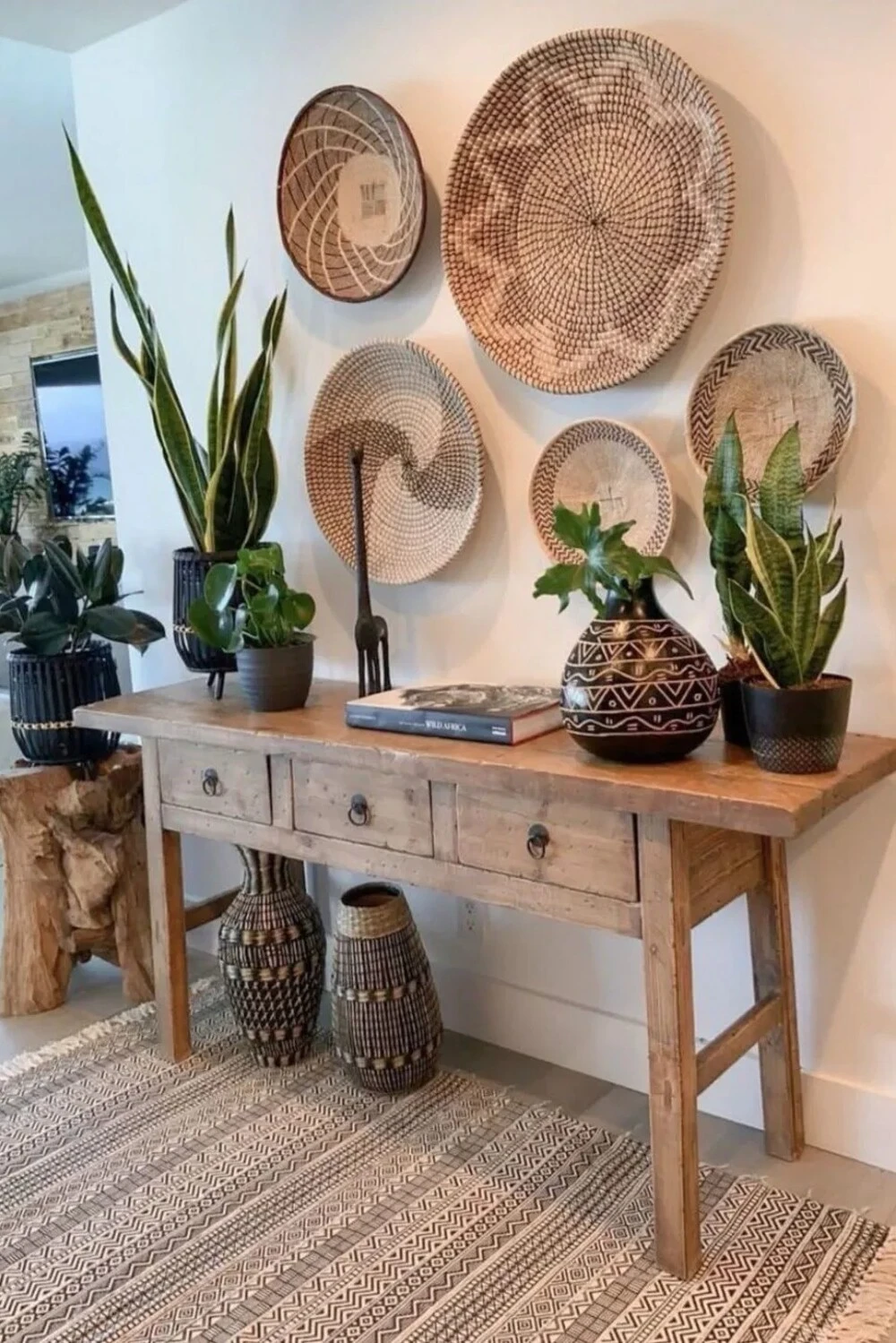
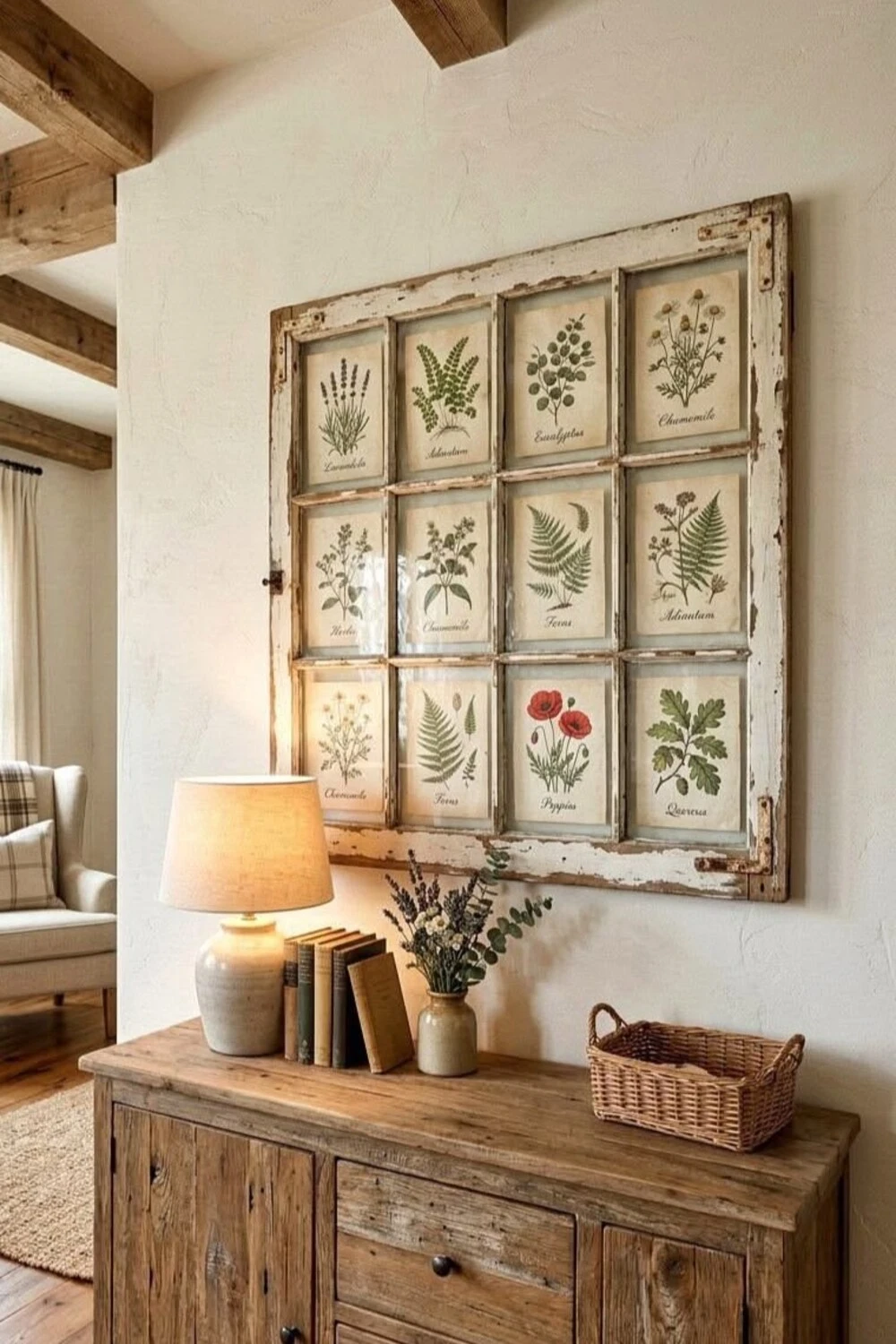
Idea 17: Antique Window Frames as Art
Hit up your local flea market or architectural salvage store. Find an old wooden window frame, leave the paint chipped and rustic, and hang it on the wall as-is. For a twist, paint the “glass” panels with chalkboard paint or leave them empty to reflect the light.
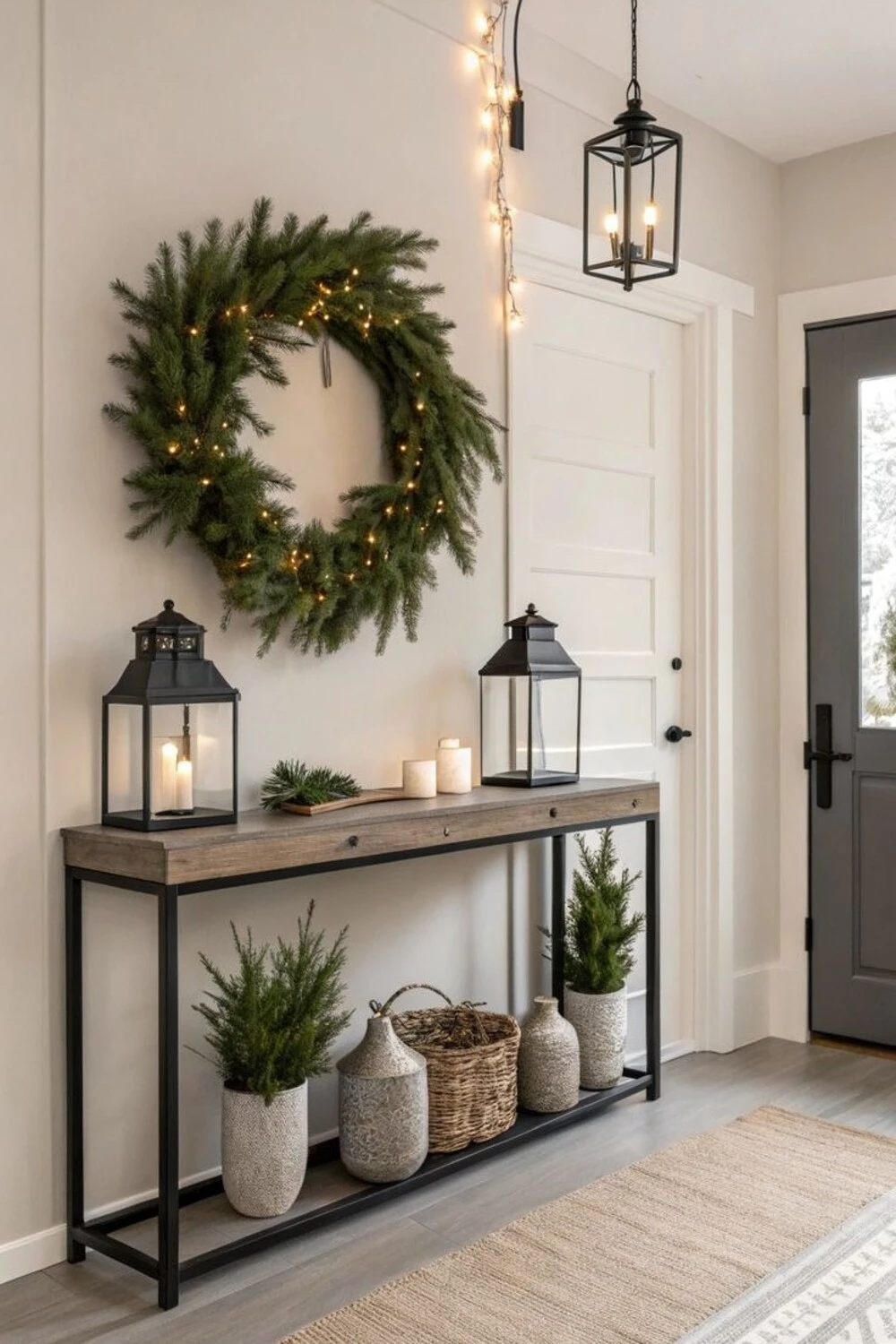
Idea 18: Seasonal Greenery Wreaths
Who says wreaths are just for the front door? Hang a large, dried eucalyptus or lavender wreath directly on your interior wall. It adds a subtle, natural fragrance and a pop of organic color that changes beautifully with the light.
Category 4: Modern, Minimalist & Contemporary (Ideas 19–24)
Clean lines, monochromatic palettes, and sculptural shapes for the modern eye.
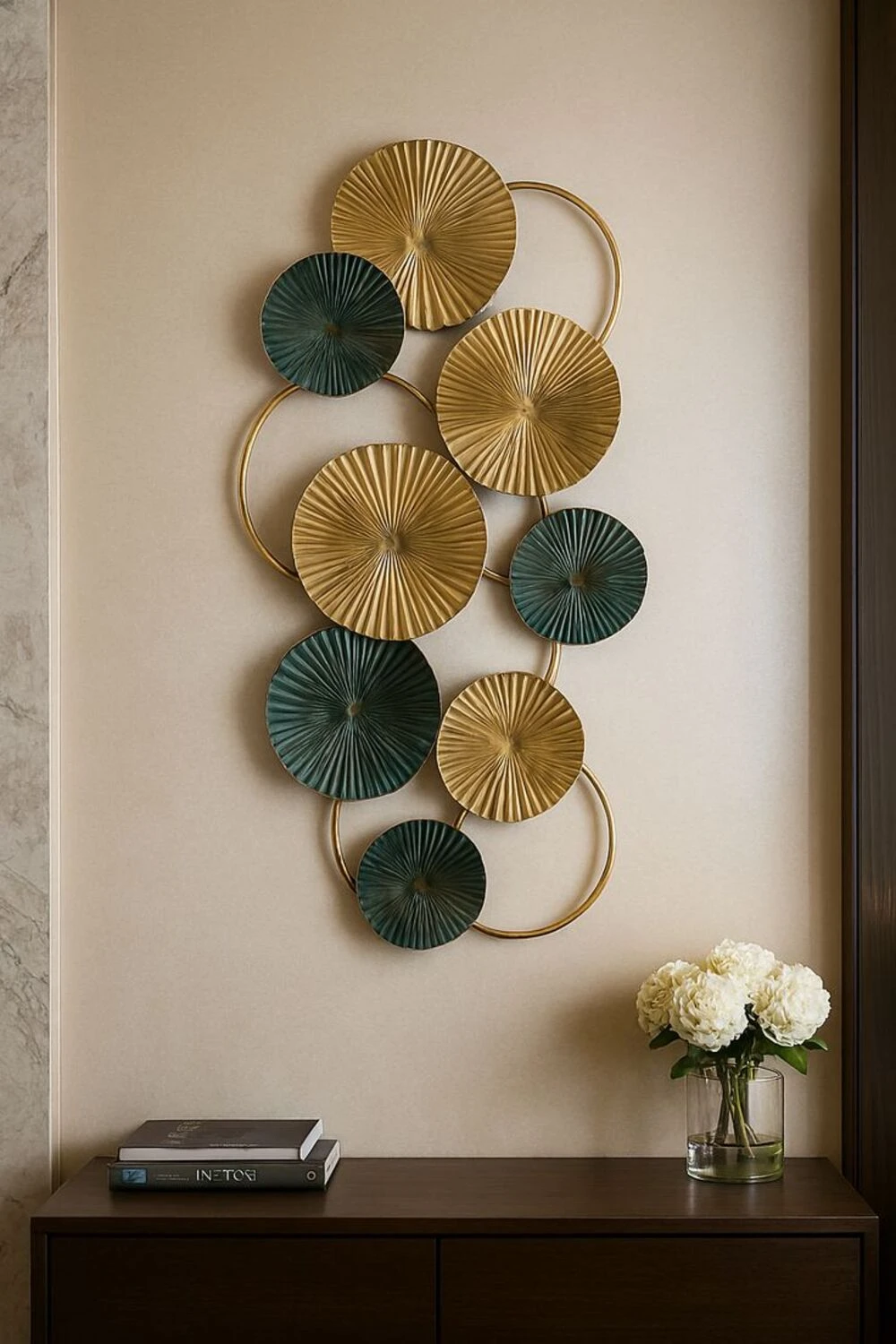
Idea 19: Abstract Metal Wall Sculptures
Ditch the canvas and go three-dimensional. Large, abstract metal wall sculptures (think swirling wire, geometric brass plates, or oversized kinetic rings) add a sculptural element that casts interesting shadows throughout the day.
Idea 20: Triptych Canvas Sets (3-Piece)
For guaranteed visual symmetry, use a triptych—three equally sized canvases arranged side-by-side. Stick to abstract designs in muted grays, charcoals, and whites to keep the space looking serene and uncluttered.
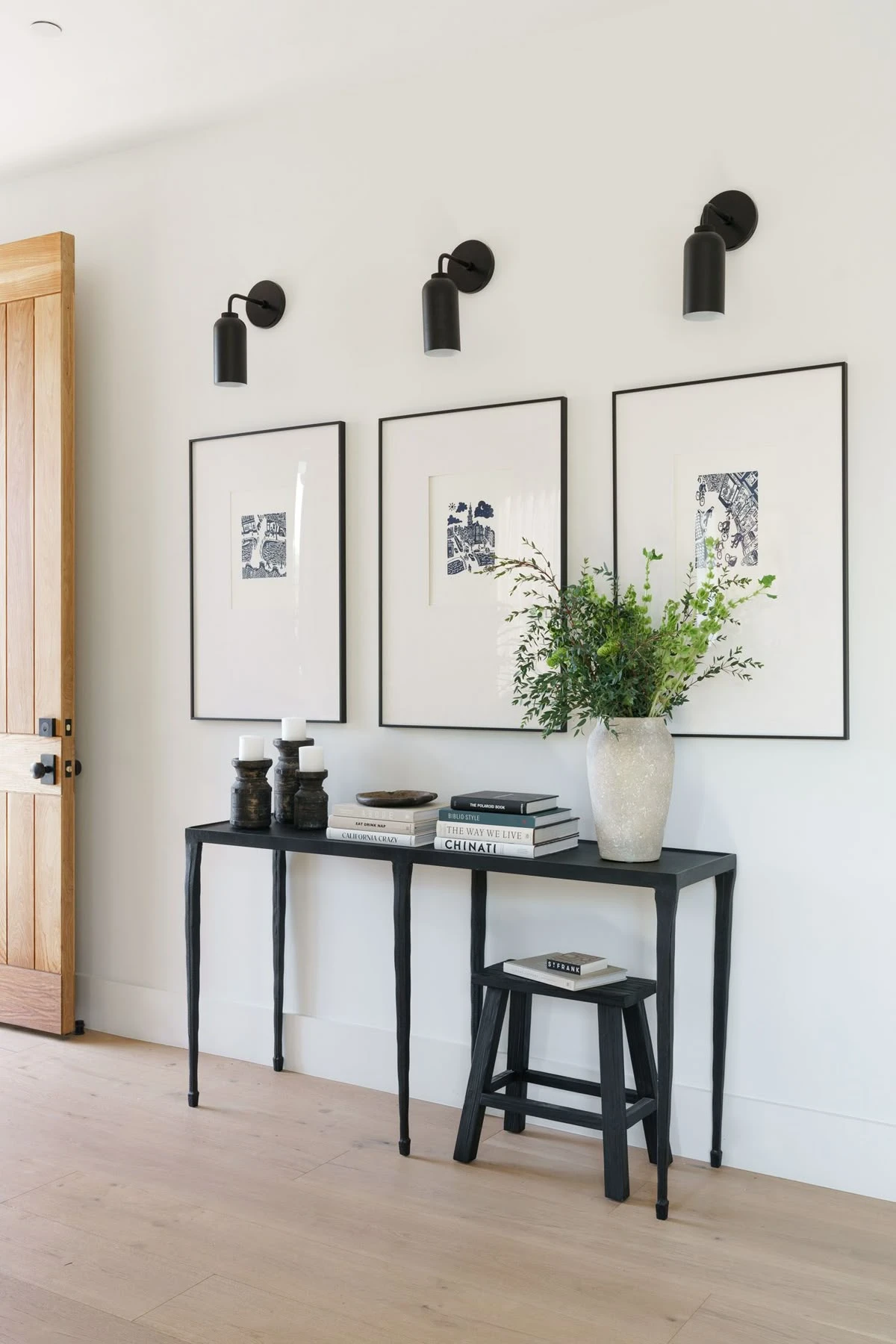
Idea 21: Framed Minimalist Line Art
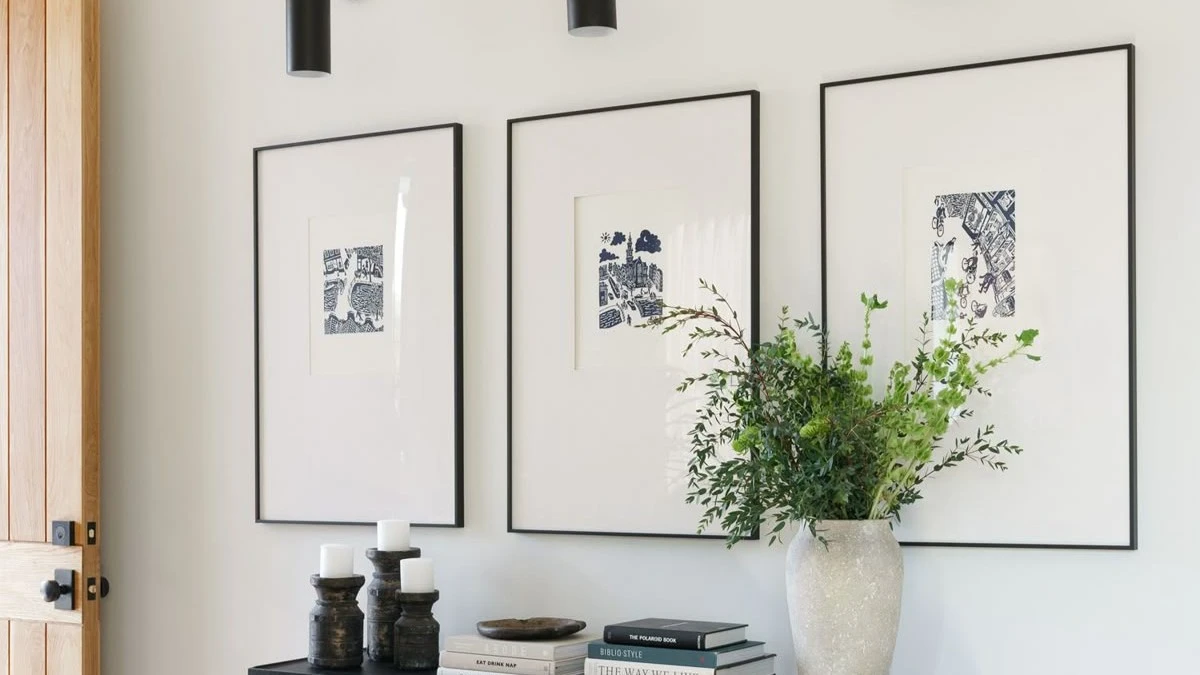
Simple black ink sketches on a bright white background are the epitome of modern sophistication. Choose line drawings of faces, abstract shapes, or vases. Use extra-large white mats with thin, black metal frames to make the art feel museum-quality.
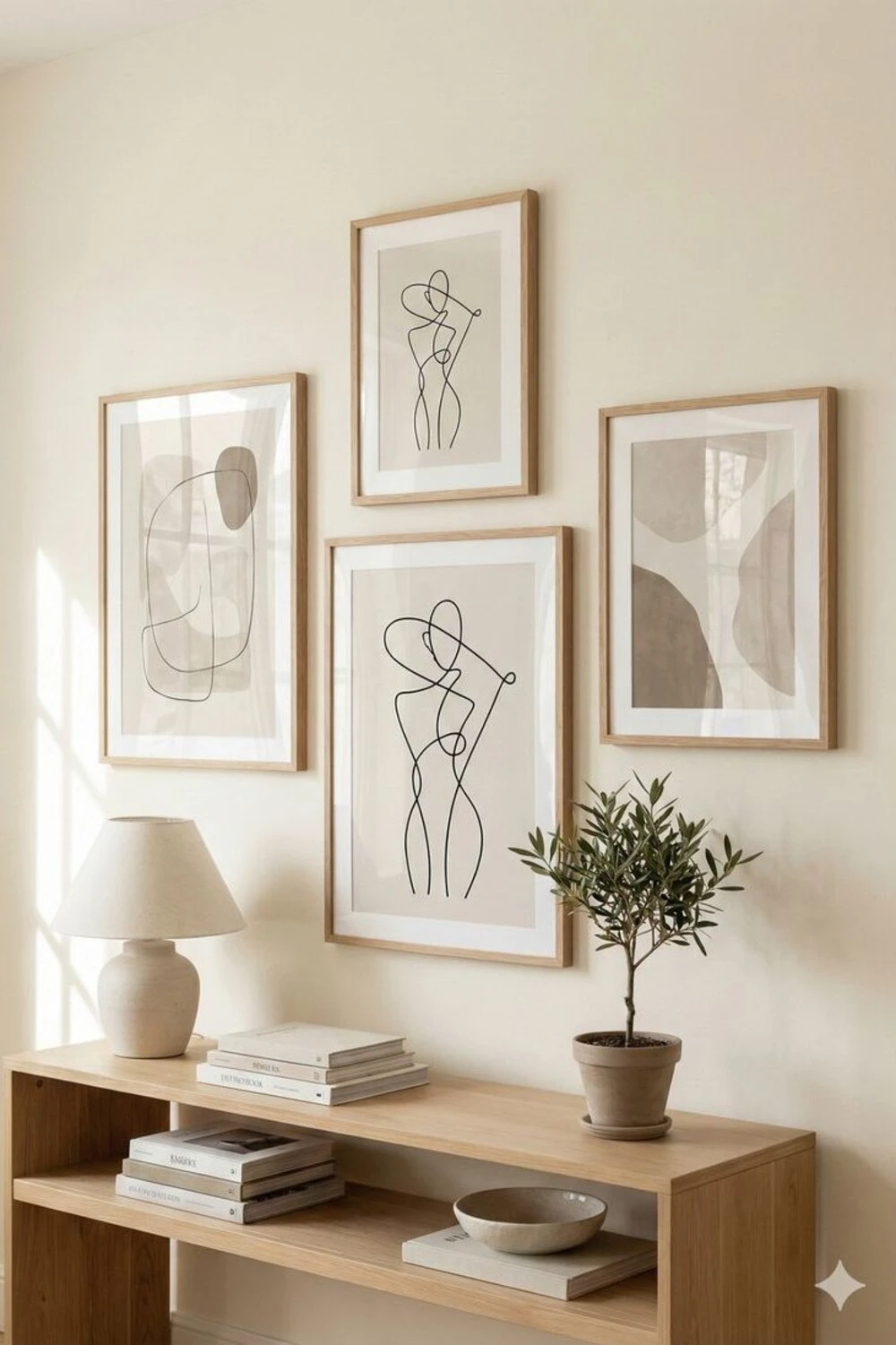
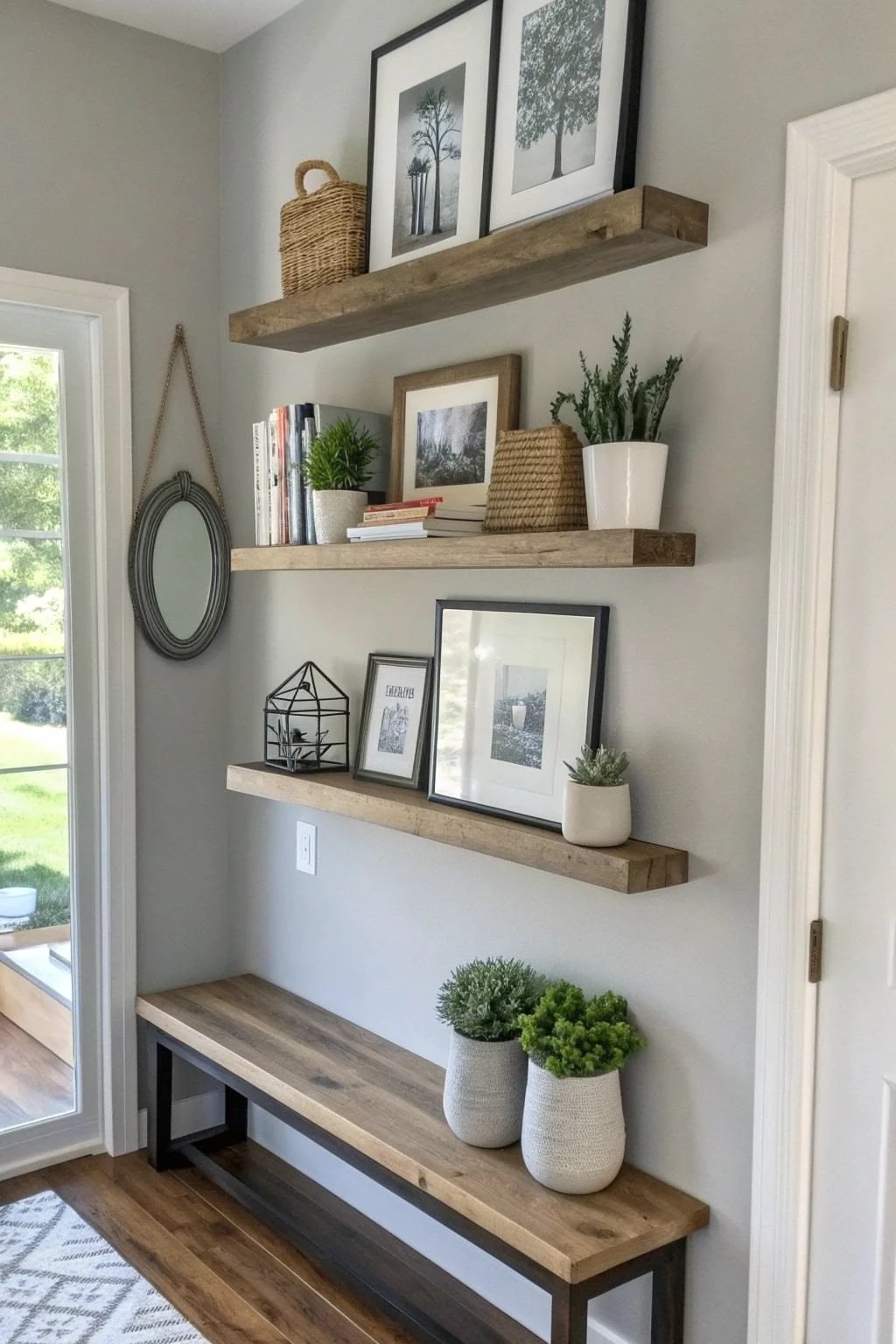
Idea 22: The “Shelfie” Wall
Take your floating shelves to the next level. This isn’t about photos; it’s about objects. Style shelves with a curated collection of ceramic vases, marble bookends, geometric bowls, and a single sculptural bust. The wall becomes a minimalist art installation.
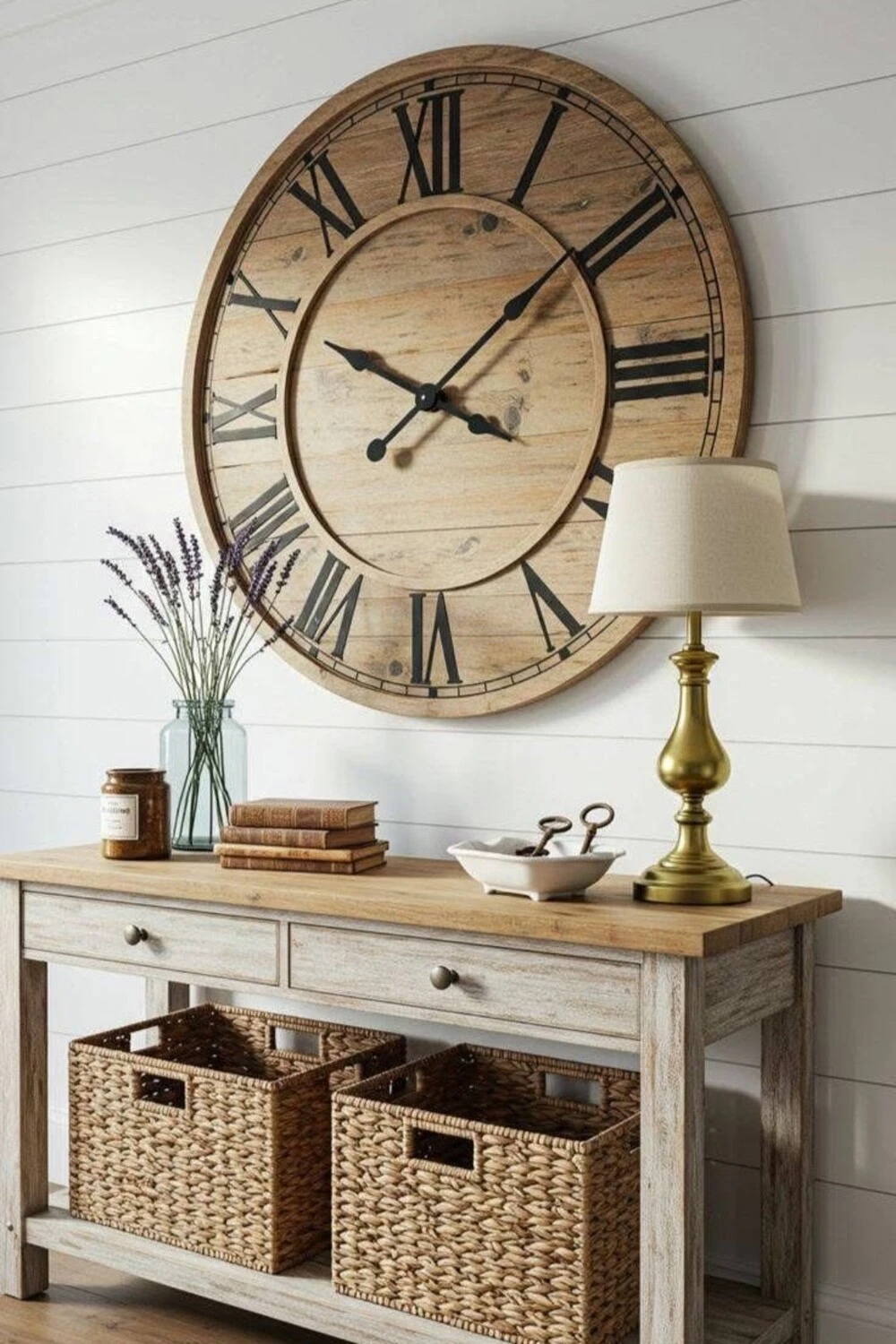
Idea 23: Oversized Wall Clocks
Combine function with artistic flair. An extra-large, mid-century modern wall clock with clean lines and no numbers acts as a huge focal point. Opt for a simple gold or black frame to match the contemporary aesthetic.
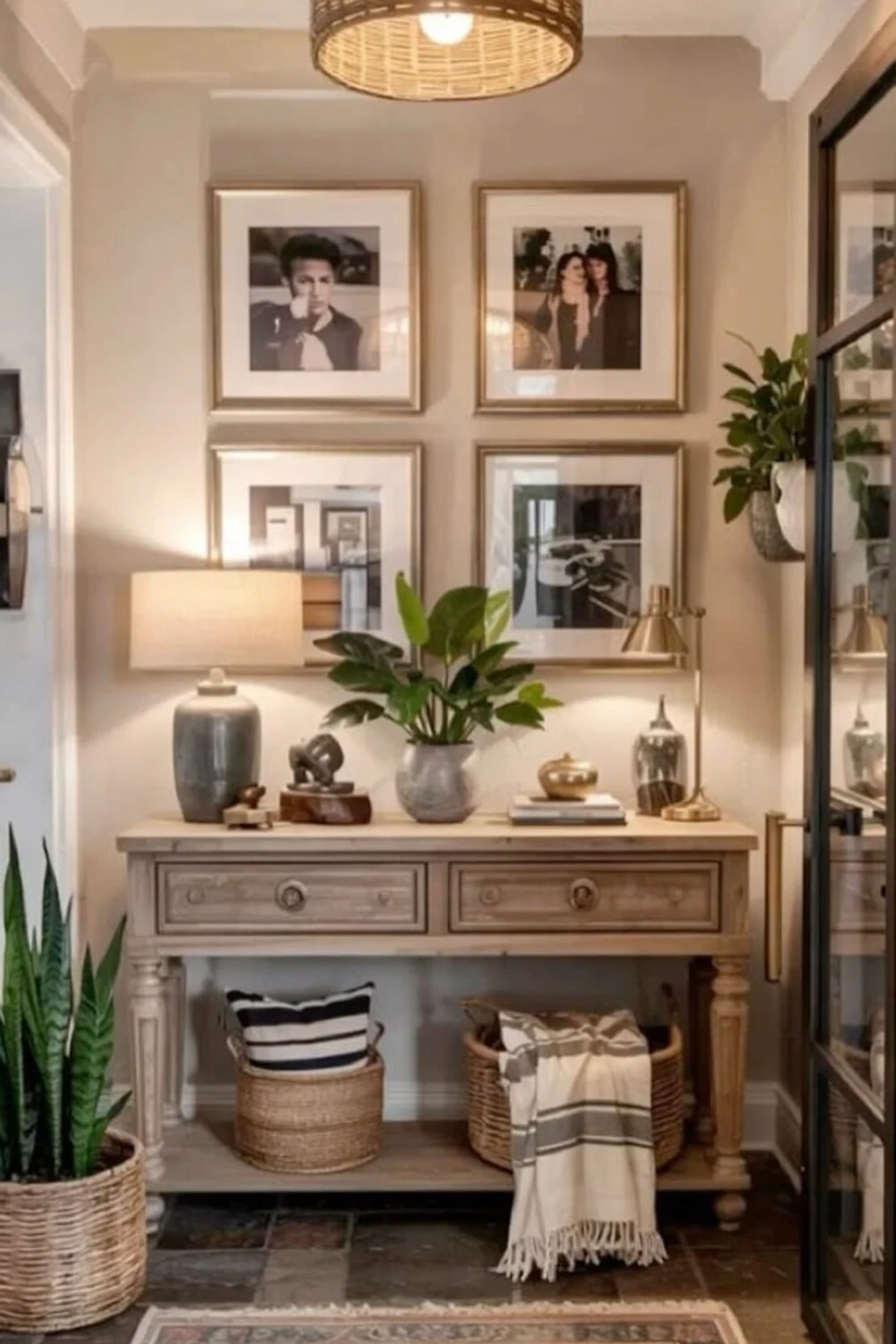
Idea 24: Grid-Style Frame Arrangements
If you want a gallery wall but hate the “messy” look, go for a perfect grid. Use 4, 6, or 9 identical frames (same size, same mat, same black wood) arranged in a symmetrical pattern. This is modern art meets math, and it looks incredible.
Category 5: Functional Drop-Zone Walls (Ideas 25–30)
Real-life solutions for busy families who need to store jackets, bags, and mail without sacrificing style.
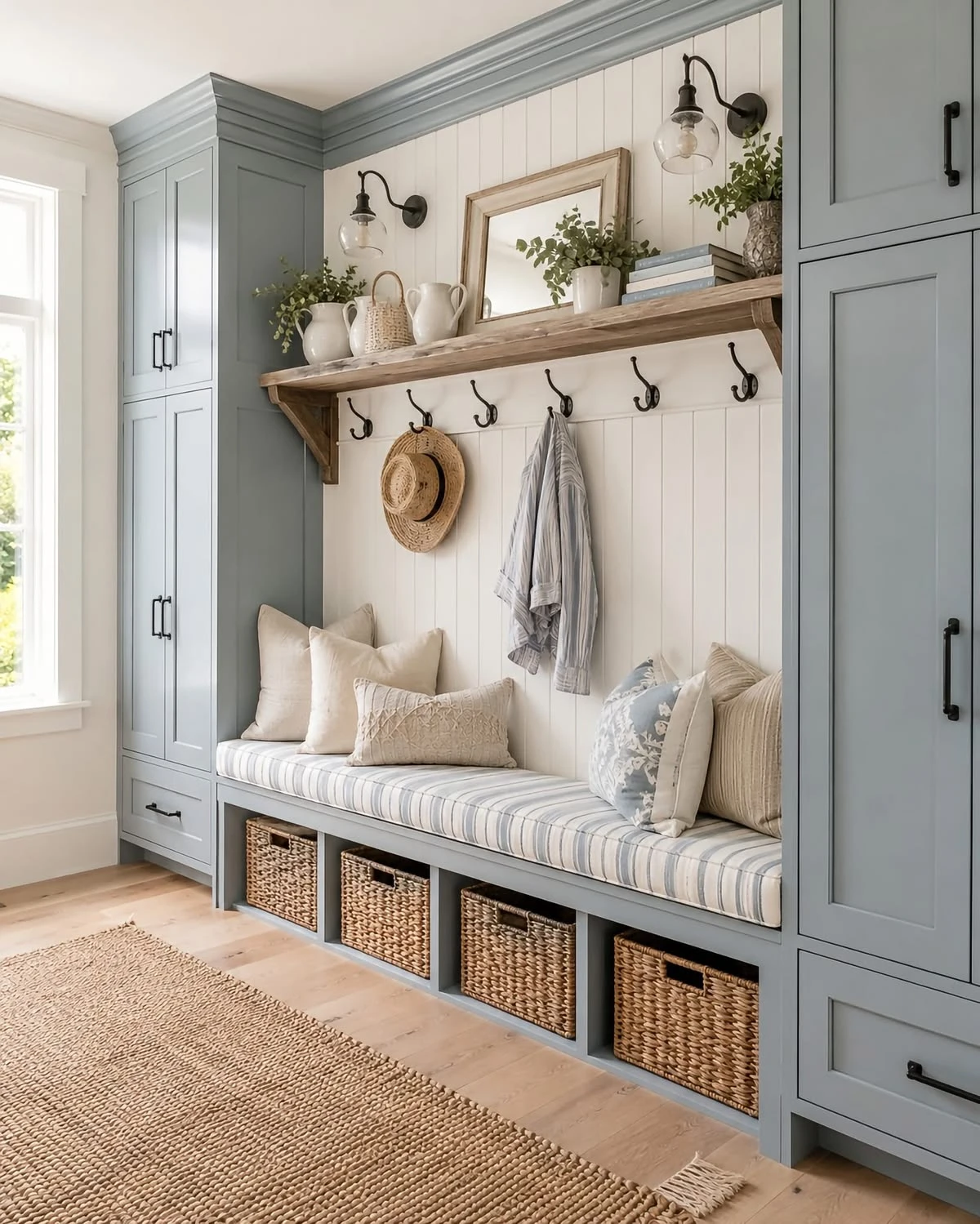
Idea 25: The Mudroom Locker System
If you have a wide wall, build (or buy) a DIY locker system. Create individual cubbies for each family member with their own hook, shelf, and basket. Paint the backing of each cubby a different muted color and mount nameplates above them. It’s organized chaos made beautiful.
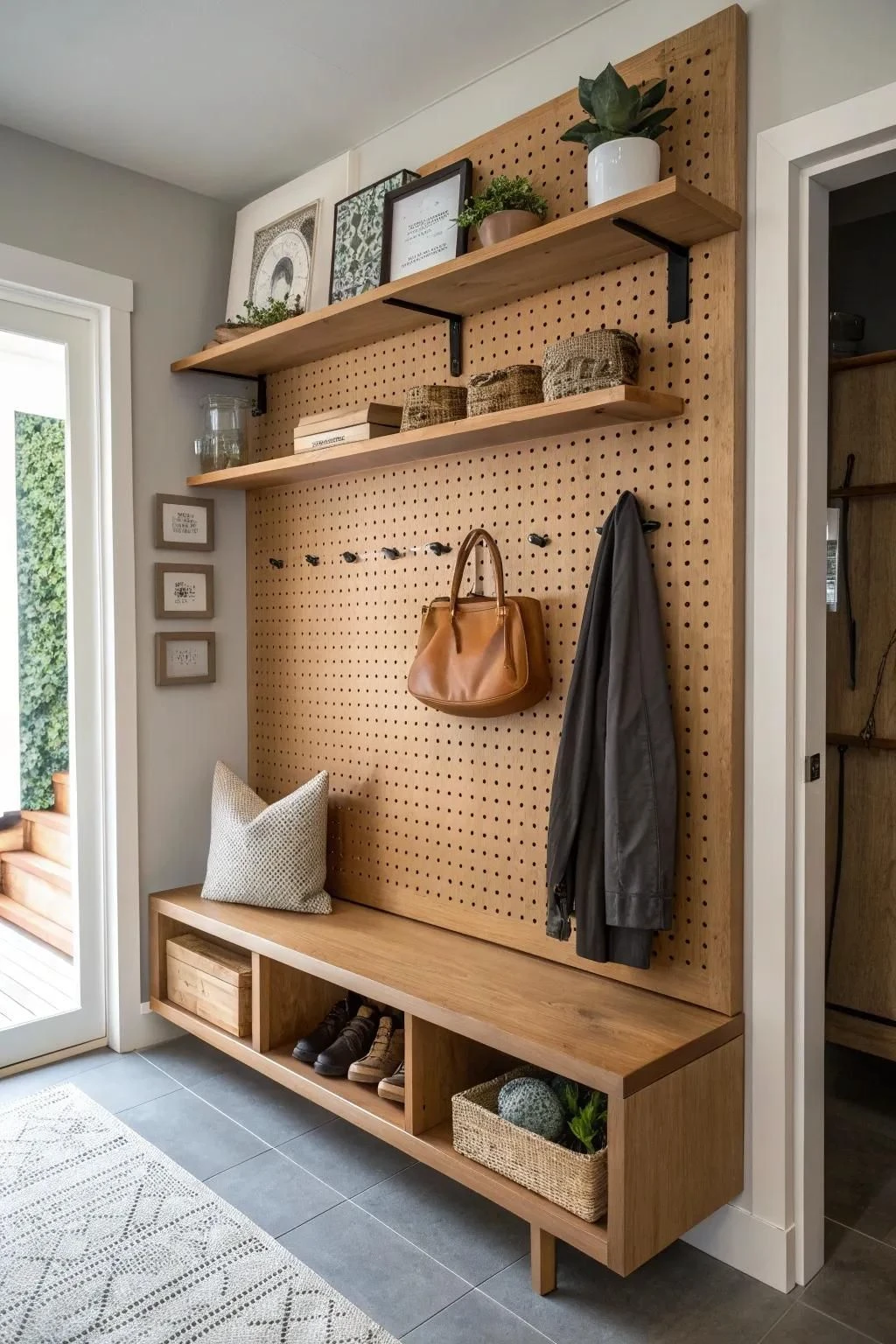
Idea 26: Pegboard Organizer Walls
Pegboard isn’t just for the garage anymore. Mount a large piece of pegboard, paint it the exact same color as your wall (so it blends in), and add wooden pegs and small shelves. You can hang hats, scarves, dog leashes, and even small planters for a customizable, eye-catching wall.
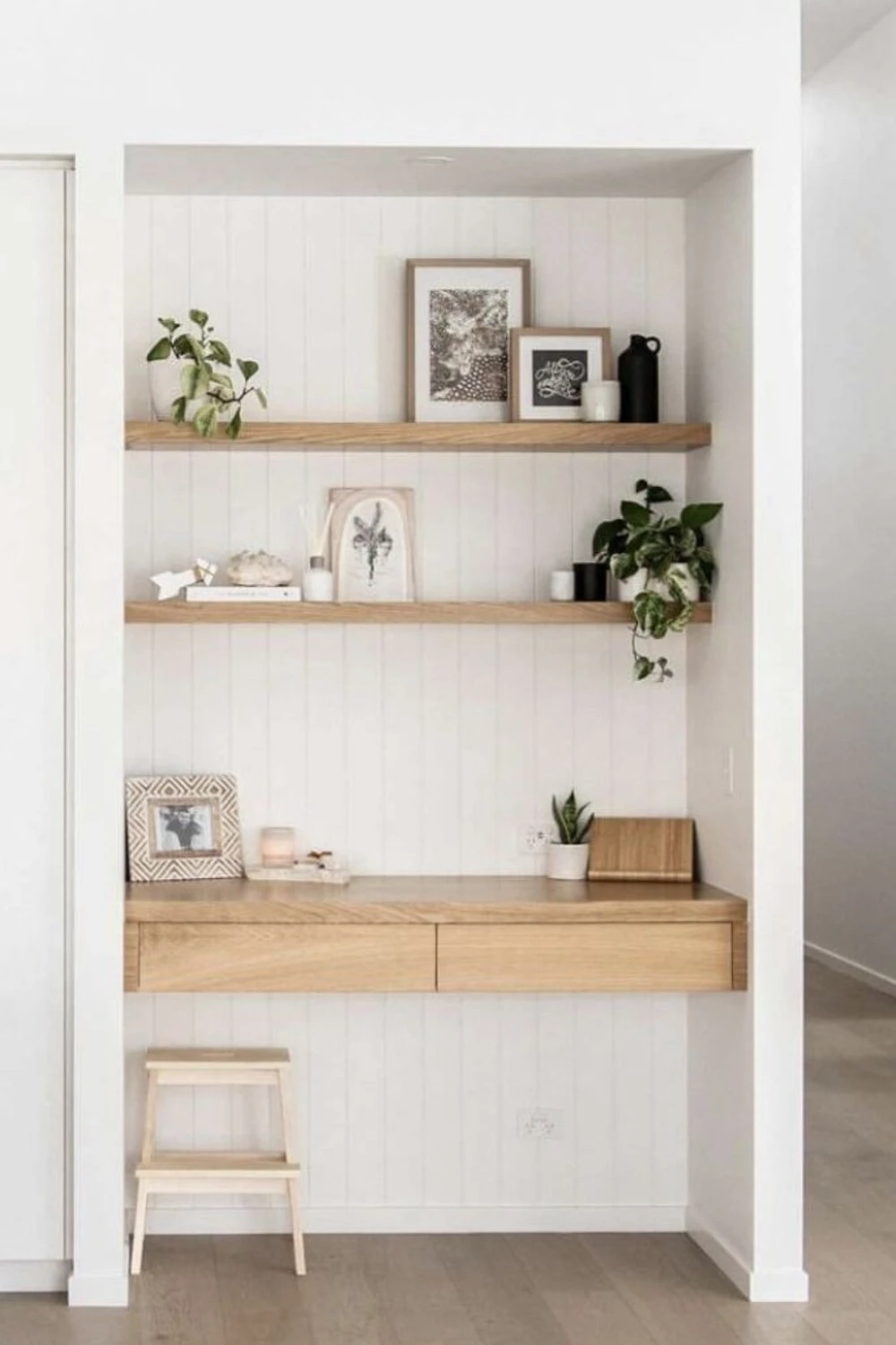
Idea 27: Floating Desk + Wall Art Combo
Space is tight, so combine the entryway with a tiny workstation. Mount a slim floating desk to the wall with a sleek chair. Hang a large, inspirational quote print above the desk. This gives you a landing spot for a laptop, your mail, and your keys.
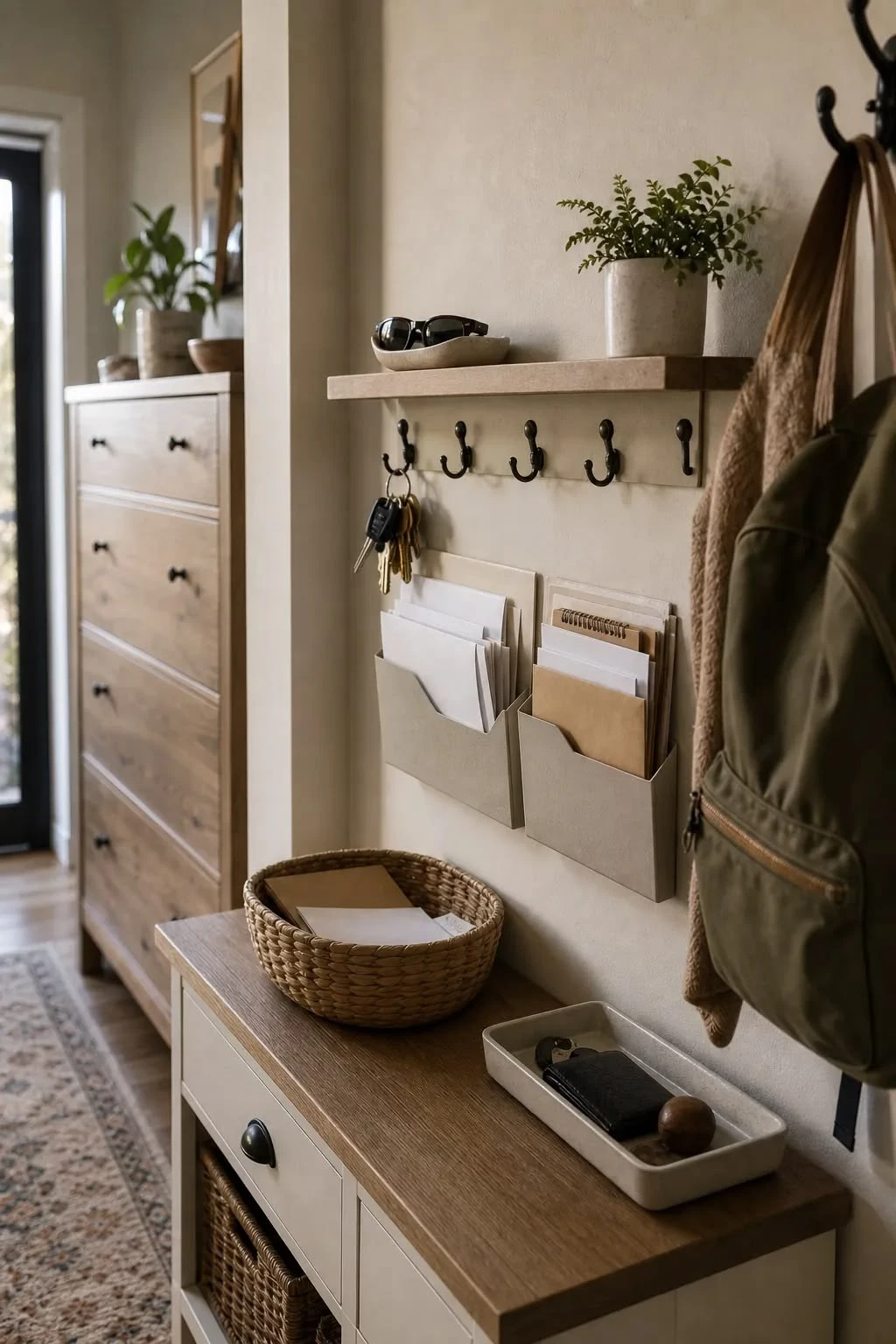
Idea 28: Key & Mail Organizers with Built-In Art
Skip the boring plastic organizers. Look for decorative magnetic boards or brass wire racks that are designed to look like art. Mount one near the door with small hooks underneath for keys. Keep a decorative bowl on the shelf for loose change so the clutter is contained.
Idea 29: Stair-Step Shelving
Instead of flat, horizontal shelves, install staggered (stair-step) shelves on your wall. Put wicker baskets on the lowest tiers (for bulky gloves and shoes) and framed art or plants on the higher tiers. This maximizes storage without making the wall look crowded.
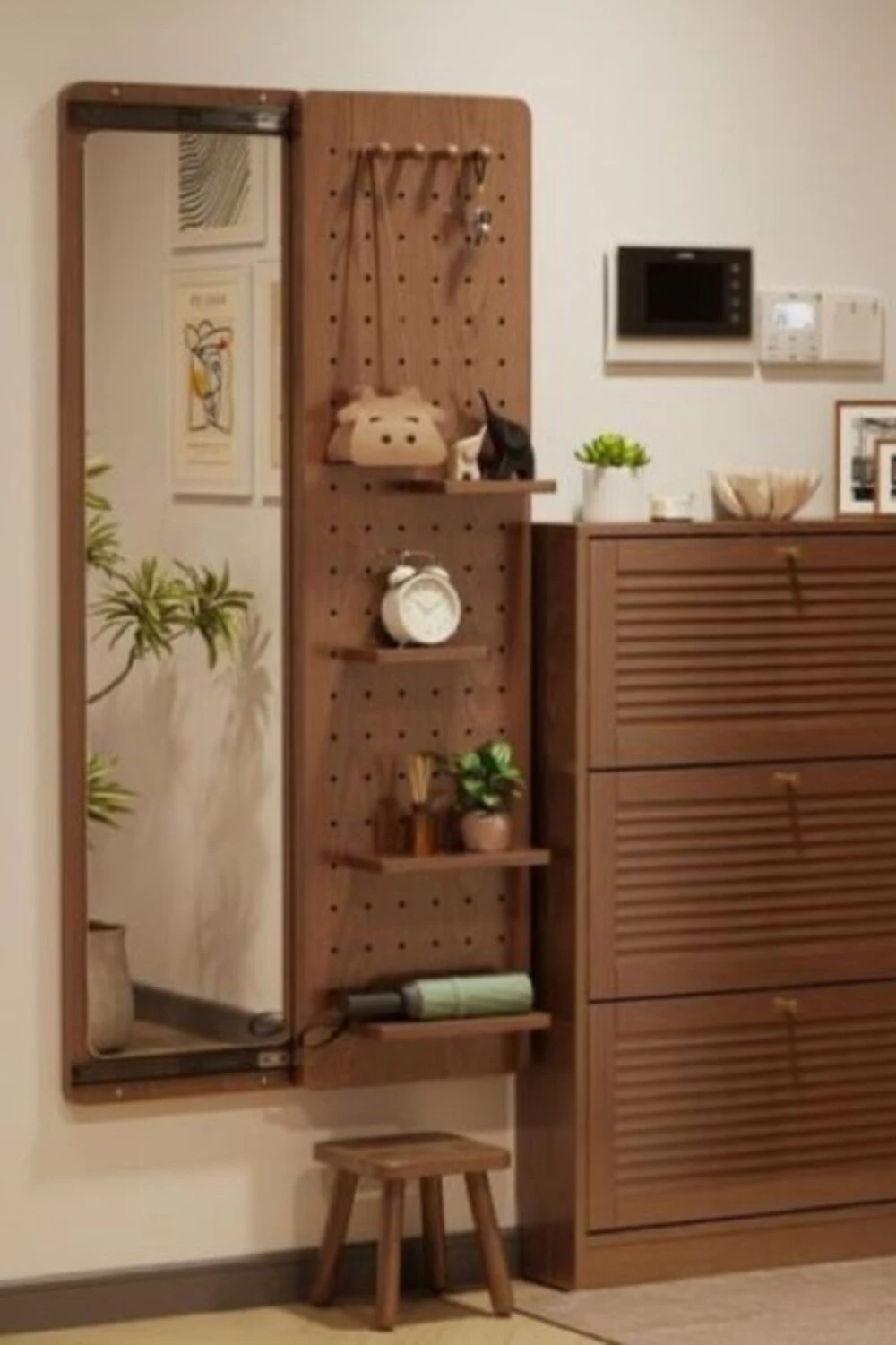
Idea 30: The All-in-One Full-Length Mirror with Shelf
This is the holy grail of functional wall decor. Purchase a standing, full-length mirror that has a built-in shelf and coat hooks on the sides. It requires no floor space (it mounts to the wall), gives you a place to hang your bags, and acts as a getting-ready station.
Conclusion
Looking back at my project photos, the entries I’m proudest of aren’t the grandest—they’re the ones where the client sent me a text weeks later saying, “I actually smile when I walk in now.”
That’s the only brief that matters.
You don’t need to do all 30. Pick one that speaks to you. Try it this weekend. If it works, great. If it doesn’t, tweak it—that’s what design actually is.
Frequently Asked Questions
What is the best color for an entryway wall?
Lighter colors (white, beige, light gray) make small entryways feel airy and open. If you have a large foyer with plenty of natural light, don’t be afraid to go dark with moody hues like navy blue, forest green, or charcoal gray to create a dramatic, sophisticated “jewel box” effect.
How do I decorate a large empty wall in an entryway?
A large wall needs a large statement piece or a clustered gallery. Avoid hanging one tiny 8×10 frame. Instead, use one massive canvas, a large sculptural mirror, or a well-planned gallery wall consisting of 9 to 15 varied frames to fill the visual weight.
Should entryway wall decor be matching or mismatched?
It depends on the style. For a modern, minimalist look, keep it matching (identical frames, same matting). For a bohemian or eclectic look, mismatched frames and styles are encouraged—just make sure they have a unifying theme (like all black-and-white photos or all wood tones).
How do I make a narrow entryway look wider?
Use a large mirror on the wall to reflect the opposite side of the room. Avoid bulky furniture and opt for slim, wall-mounted shelves. Keep the wall color light and use vertical stripes (or vertical art arrangements) to draw the eye upward rather than across.