
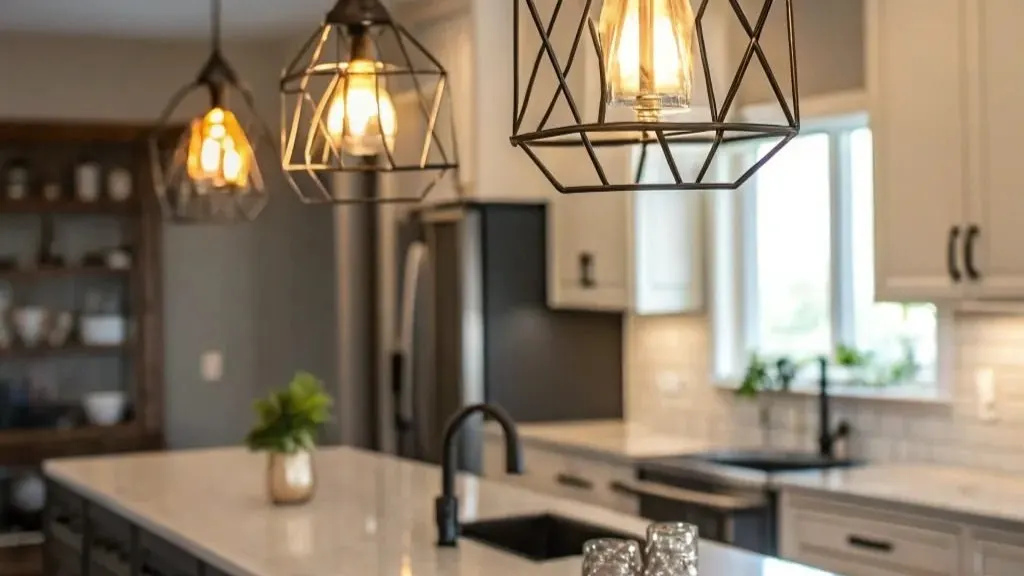
Kitchen island lighting does more than brighten a countertop. It creates a focal point, improves visibility for everyday tasks, and helps set the mood for the entire kitchen. But with so many styles, sizes, and finishes available, choosing the right fixtures can feel overwhelming.
As interior designers, we believe the best kitchen island lighting balances function and style. When we work on a kitchen design, we consider everything from the island’s dimensions and ceiling height to the homeowner’s daily routine. The goal is to find lighting that looks beautiful while making the kitchen more comfortable to use.
Here is how we approach choosing the best lighting over a kitchen island.
1. Consider the Size of Your Kitchen Island
Before we choose a lighting style, we always look at the size and shape of the island. A long island can easily accommodate multiple pendants or a linear fixture, while a smaller island may look better with one or two compact lights.
Proportion is essential. If the fixtures are too small, they can disappear into the space. If they are too large, they may overwhelm the countertop and make the kitchen feel crowded.
For a long island, we often recommend two or three pendant lights, depending on their size and the available space. For a compact island, a single statement pendant can be enough.
Our advice is simple: measure the island first, then choose fixtures that complement its proportions.
2. Choose a Lighting Style That Matches Your Kitchen
Kitchen island lights should feel connected to the overall design rather than looking like an afterthought. We usually consider the cabinet style, countertop material, hardware, and other finishes before making a decision.
Here are a few combinations we particularly like:
- Modern kitchens: Minimalist pendants, slim linear fixtures, and geometric designs.
- Farmhouse kitchens: Simple metal pendants, lantern-style lights, and warm finishes.
- Traditional kitchens: Classic glass shades, elegant chandeliers, and timeless metal details.
- Scandinavian kitchens: Natural materials, soft shapes, and understated fixtures.
- Industrial kitchens: Black metal, exposed bulbs, and clean, functional designs.
In our experience, the most successful designs do not necessarily match every finish perfectly. Instead, we look for materials and colors that complement one another. For example, black pendants can create a striking contrast against white cabinets, while brass fixtures can bring warmth to a kitchen with natural wood.
3. Get the Hanging Height Right
Even beautiful lighting can look awkward when it hangs too high or too low. Height also affects how comfortably we can work at the island and see across the kitchen.
As a general guideline, we recommend hanging pendant lights approximately 30–36 inches above the countertop, measured from the countertop surface to the bottom of the fixture.
However, this is not a rigid rule. We also consider ceiling height, pendant size, and the height of the people using the kitchen. Larger fixtures or higher ceilings may call for adjustments.
One thing we always check is the view across the island. The lights should illuminate the work surface without blocking sightlines between people sitting or standing on opposite sides.
4. Decide Between Pendant Lights and Linear Fixtures
Two of the most popular options are individual pendant lights and linear fixtures. Both can work beautifully, but they create different effects.
Pendant lights offer flexibility in style, shape, and arrangement. We often choose them when we want to introduce decorative details or create a balanced focal point above the island.
Linear fixtures provide a more continuous, streamlined appearance. We particularly like them in contemporary kitchens with long islands, simple cabinetry, and clean architectural lines.
When choosing between the two, we consider the kitchen’s layout and the look we want to achieve. If the island is a major design feature, individual pendants can add personality. If we want a quieter, more minimalist result, a linear fixture may be the better choice.
5. Select the Right Number of Lights
How many lights do you need over a kitchen island? The answer depends on the island’s length, the size of the fixtures, and how much illumination they provide.
For many kitchens, two or three pendants work well above a medium-to-large island. Smaller islands may need only one or two, while long islands may benefit from a linear fixture or a carefully spaced arrangement of additional pendants.
We avoid placing fixtures too close together because the arrangement can feel cluttered. At the same time, lights that are too far apart may leave uneven illumination.
Rather than choosing a number based on appearance alone, we consider the entire layout and make sure the lights provide sufficient coverage across the countertop.
6. Choose a Comfortable Light Color
Light color has a significant effect on how a kitchen feels. A fixture may look perfect in a showroom but create an entirely different atmosphere at home if the light is too cool or too warm.
For most residential kitchens, we often recommend bulbs in the 2700K–3000K range. This warm-to-soft-white light creates a welcoming atmosphere while remaining practical for everyday use.
If the kitchen is designed around crisp white surfaces and a more contemporary aesthetic, a neutral white may also work well. We always consider how the light will interact with cabinet colors, countertops, and natural daylight.
We also pay attention to color rendering, especially when homeowners prepare food on the island. A high color rendering index (CRI), ideally 90 or above, can help food and finishes appear more natural.
7. Think About Brightness and Everyday Tasks
Kitchen island lighting needs to look good, but it must also perform well. We consider how the island will be used before deciding on the brightness and type of fixture.
If the island is primarily a food preparation area, we prioritize clear, even task lighting. If it doubles as a breakfast bar or social space, we look for a combination of useful illumination and a softer atmosphere.
We also consider whether additional lighting is needed from recessed ceiling lights or under-cabinet fixtures. Pendant lights alone may not provide enough light for every task.
A layered lighting plan allows us to create a kitchen that works well throughout the day rather than relying on one source of light.
8. Choose Finishes That Complement Your Materials
The finish of a light fixture can make a noticeable difference to the overall design. We usually begin with the kitchen’s existing materials and look for opportunities to create contrast or continuity.
Black fixtures work well with white cabinetry and contemporary hardware. Brass and bronze can introduce warmth, while chrome and polished nickel often suit brighter, more reflective spaces.
We also love combining metal fixtures with natural materials such as oak, stone, or textured glass. These combinations help a modern kitchen feel inviting rather than overly polished.
Our recommendation is to avoid introducing too many competing finishes. A consistent palette makes the kitchen feel more considered and visually balanced.
9. Install Dimmers for Greater Flexibility
One feature we regularly recommend is a dimmer switch for kitchen island lighting. It is a relatively simple addition that can make the space much more versatile.
During food preparation, we may want brighter illumination. During dinner or relaxed conversations, softer lighting can create a more comfortable atmosphere.
We generally prefer island lights to operate independently from the main ceiling lights. This gives homeowners greater control over the room’s ambiance.
Before installation, we make sure the bulbs, fixtures, and dimmer are compatible. Not every LED bulb works with every dimmer, so checking compatibility helps prevent flickering and uneven dimming.
10. Avoid Common Kitchen Island Lighting Mistakes
When planning kitchen lighting, we pay attention to a few common issues that can affect both appearance and functionality.
- Choosing fixtures that are too large: Oversized lights can overwhelm a small island.
- Hanging pendants too low: This can interfere with sightlines and make the space feel crowded.
- Ignoring brightness: Decorative fixtures may not provide enough task lighting on their own.
- Mixing too many finishes: Too many competing materials can make the design feel disconnected.
- Forgetting maintenance: Fixtures above cooking areas can collect grease and dust, so we consider how easy they are to clean.
- Overlooking glare: Exposed bulbs or poorly positioned lights can be uncomfortable, especially when sitting at the island.
We find that a little planning at the beginning can prevent many of these problems later.
Final Thoughts
Choosing the best lighting over a kitchen island is about more than selecting a beautiful fixture. We need to consider the island’s size, ceiling height, lighting requirements, materials, and the way the kitchen is used every day.
Our approach is to start with function, establish the right proportions, and then choose a style that complements the rest of the space. Whether we prefer minimalist pendants, elegant glass fixtures, or a sleek linear light, the best choice is one that feels natural within the kitchen.
When all these details come together, kitchen island lighting becomes more than a finishing touch. It helps create a space that is practical, welcoming, and beautiful to live in.