A large kitchen island is one of the most valuable features in a modern home—but decorating it can be harder than it looks. Leave it empty, and it feels unfinished. Fill it up, and it quickly becomes cluttered and impractical.
The secret is finding the right balance between function and style. With a few intentional choices, your island can look polished while still working for everyday life.
Start with Function First
Before thinking about decor, take a step back and consider how you actually use your kitchen island. For some households, it’s a prep station that needs to stay mostly clear. For others, it doubles as a casual dining spot or a place to gather when guests come over.
Instead of decorating the entire surface, it helps to think in zones. One area can stay open for prep work, while another can hold your decor. If you have seating, that side should remain clean and unobstructed. This approach keeps your island practical while still giving you room to style it beautifully.
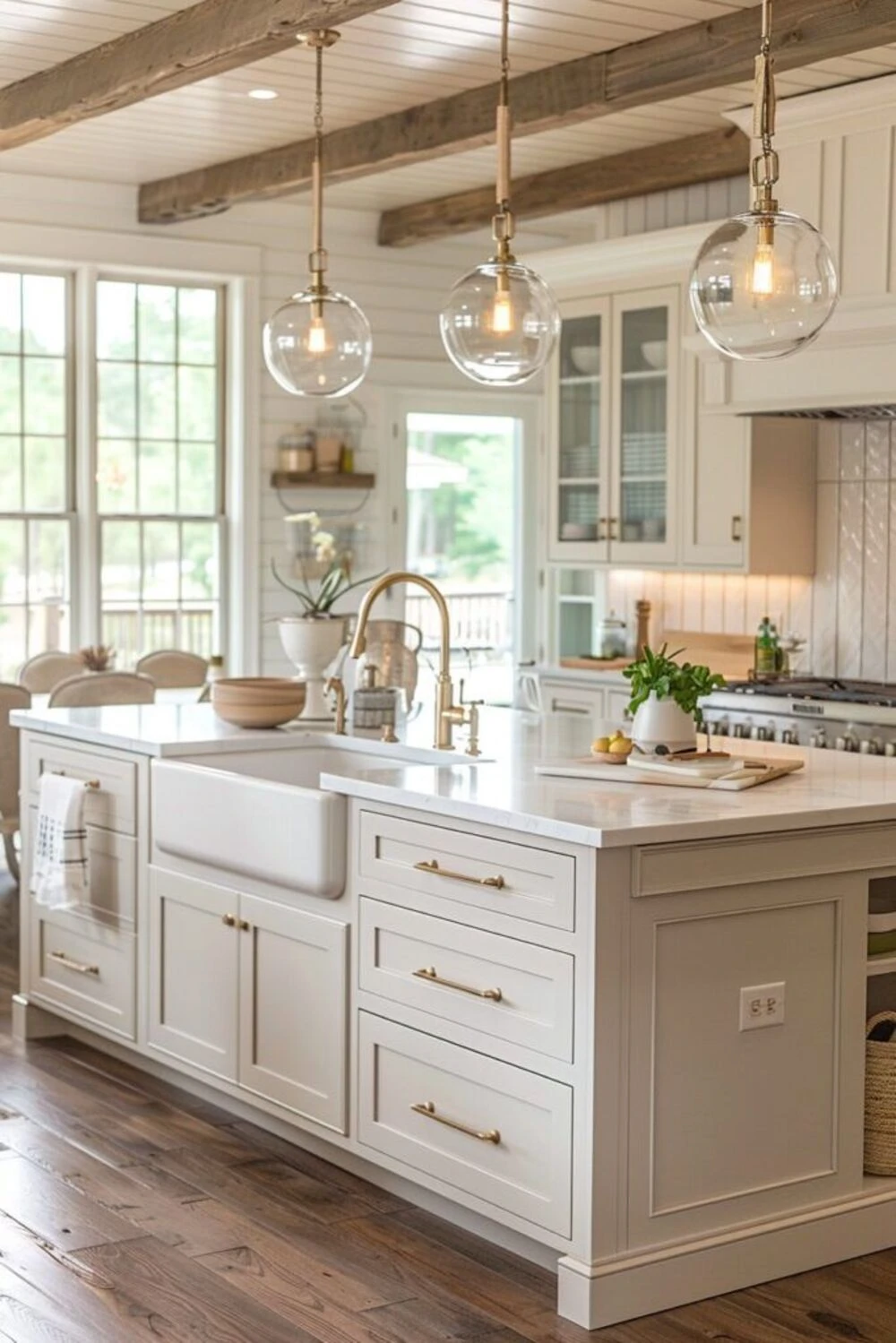
Use the Rule of Three for Effortless Styling
If you’ve ever wondered why some spaces just “look right,” it often comes down to balance. One of the simplest tricks designers use is the rule of three.
Grouping a few items together—rather than spreading them out—creates a more natural and intentional look. For example, you might pair a tray with a vase and a candle, or combine a bowl with a small plant and a stacked cookbook.
The key is contrast. When items vary in height, texture, and shape, they feel layered rather than flat. This small detail makes a big difference, especially on a large surface like a kitchen island.
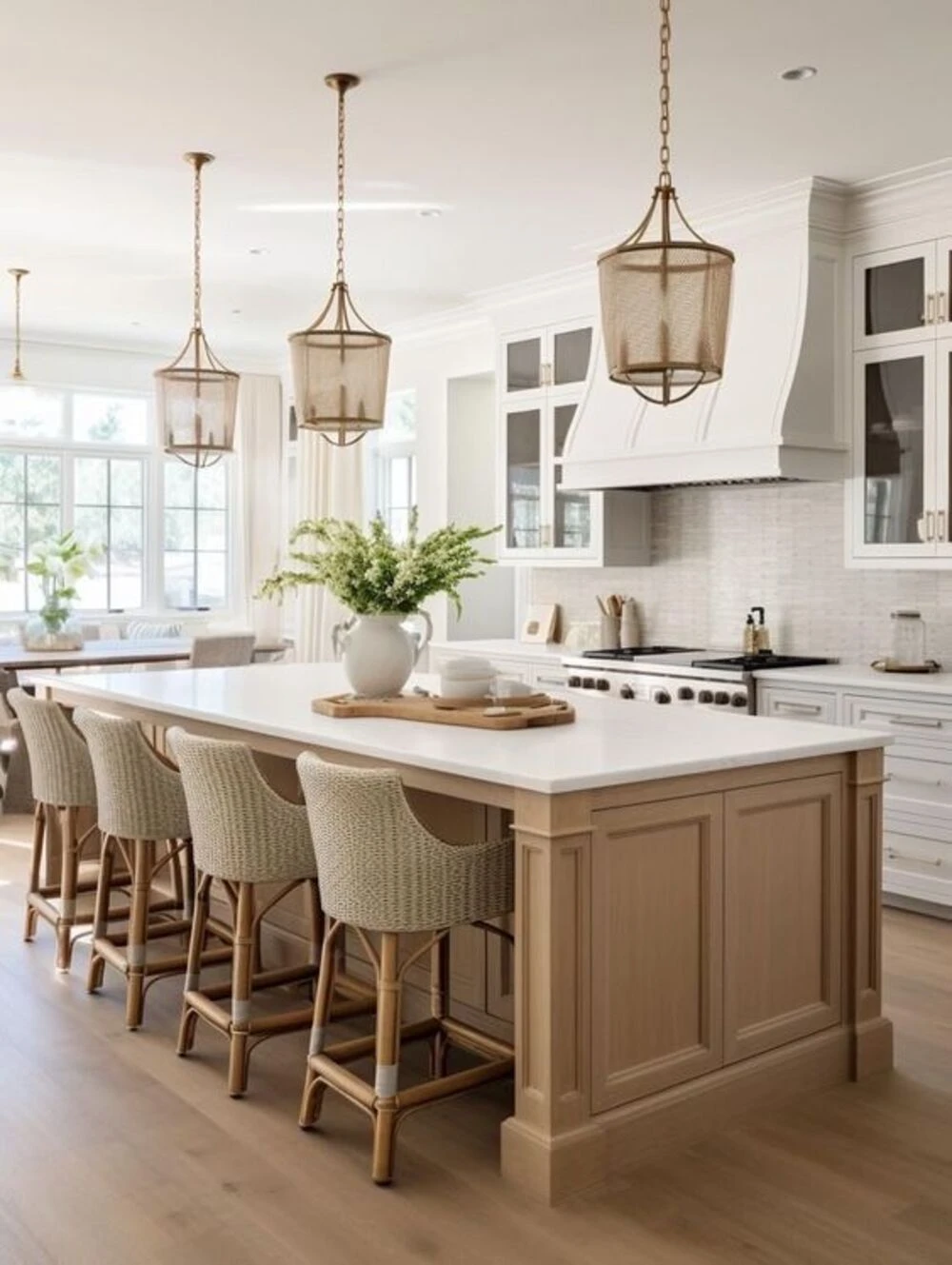
Anchor the Space with a Statement Piece
Because your island is large, your decor needs enough presence to match it. Small objects tend to get visually lost, which can make the space feel empty even when it isn’t.
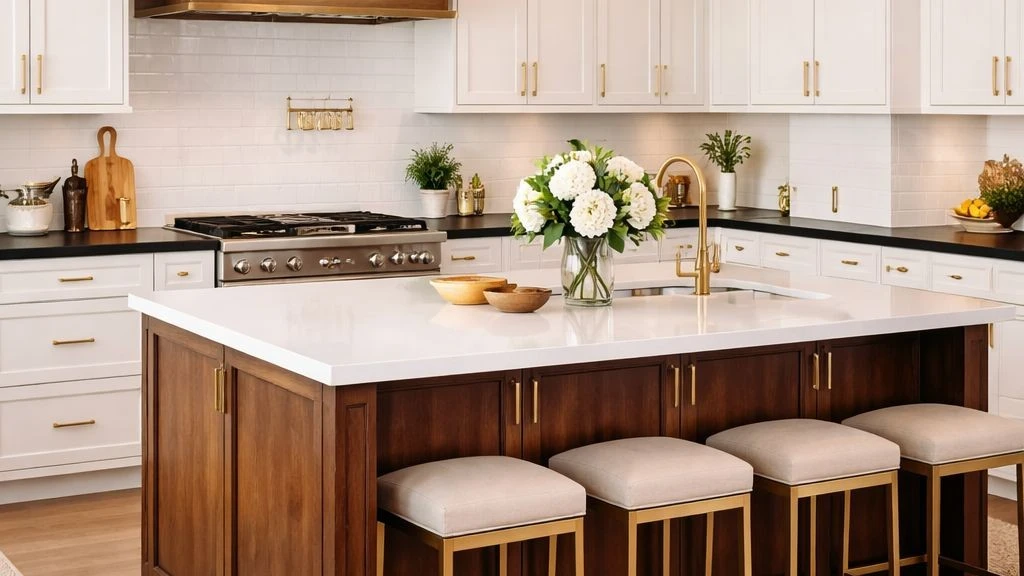
That’s why it helps to start with a statement piece. A large vase filled with greenery, a generous fruit bowl, or even a sculptural object can instantly ground the space. Once you have that focal point, everything else can be styled around it more naturally.
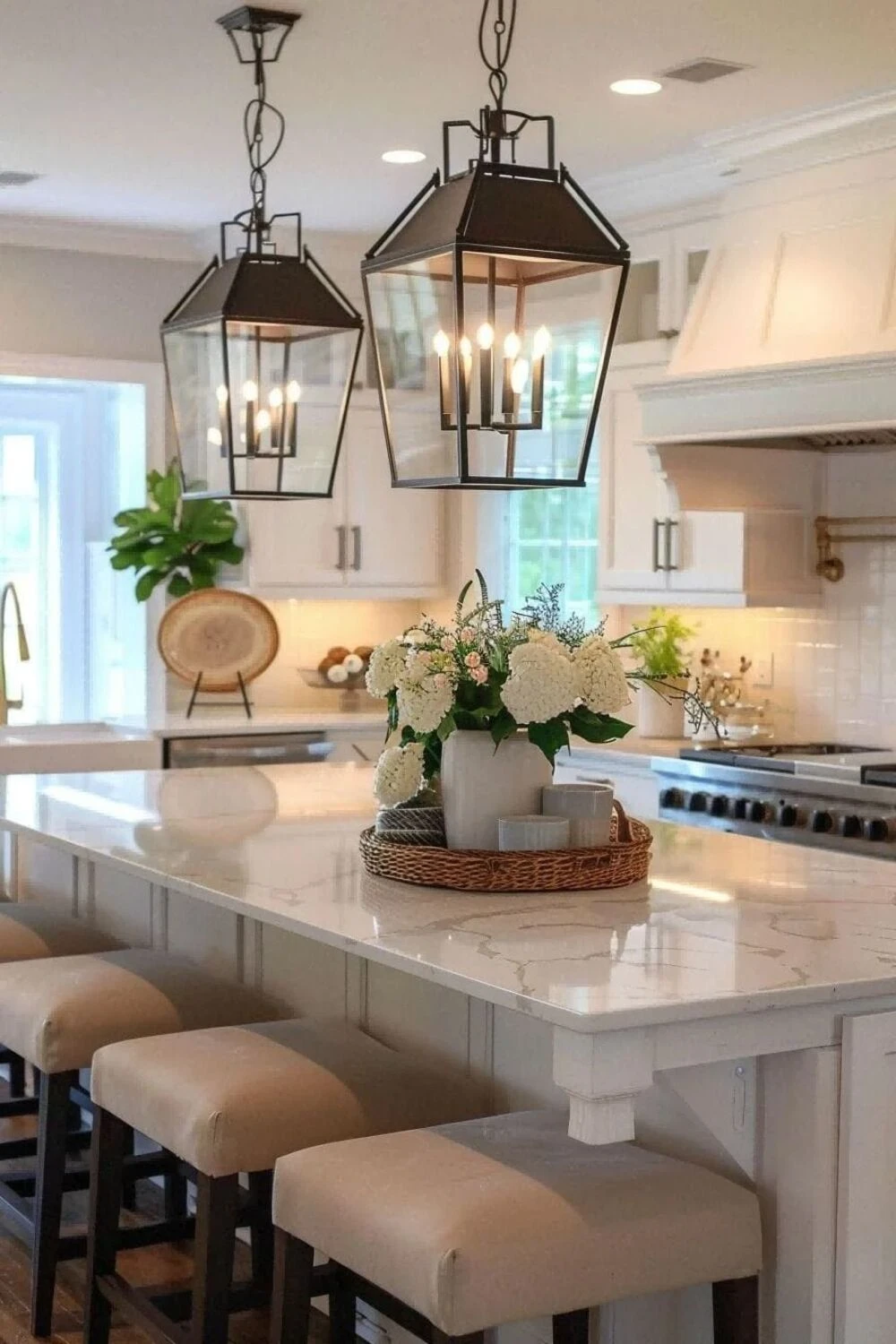
Add Functional Decor That You’ll Actually Use
In a kitchen, decor shouldn’t feel forced. The most successful setups often include items you already use every day—they’re just styled with intention.
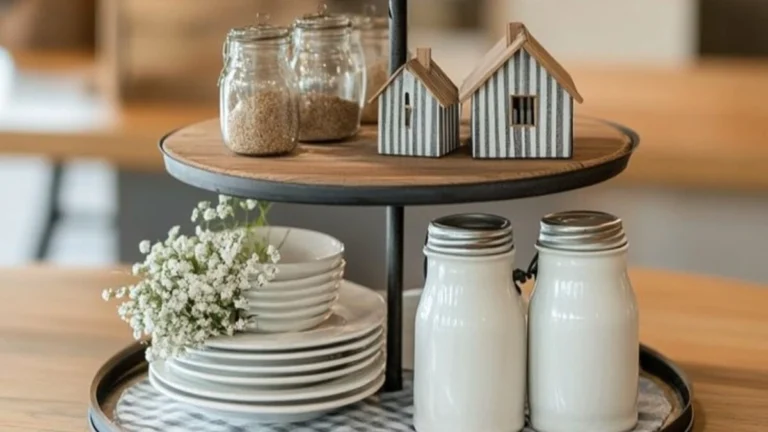
Things like cutting boards, salt and pepper mills, or a simple utensil holder can double as decor when they share a consistent look. Materials like wood, marble, or ceramic work especially well because they add texture without overwhelming the space.
When everything feels cohesive, even practical items contribute to the overall design.
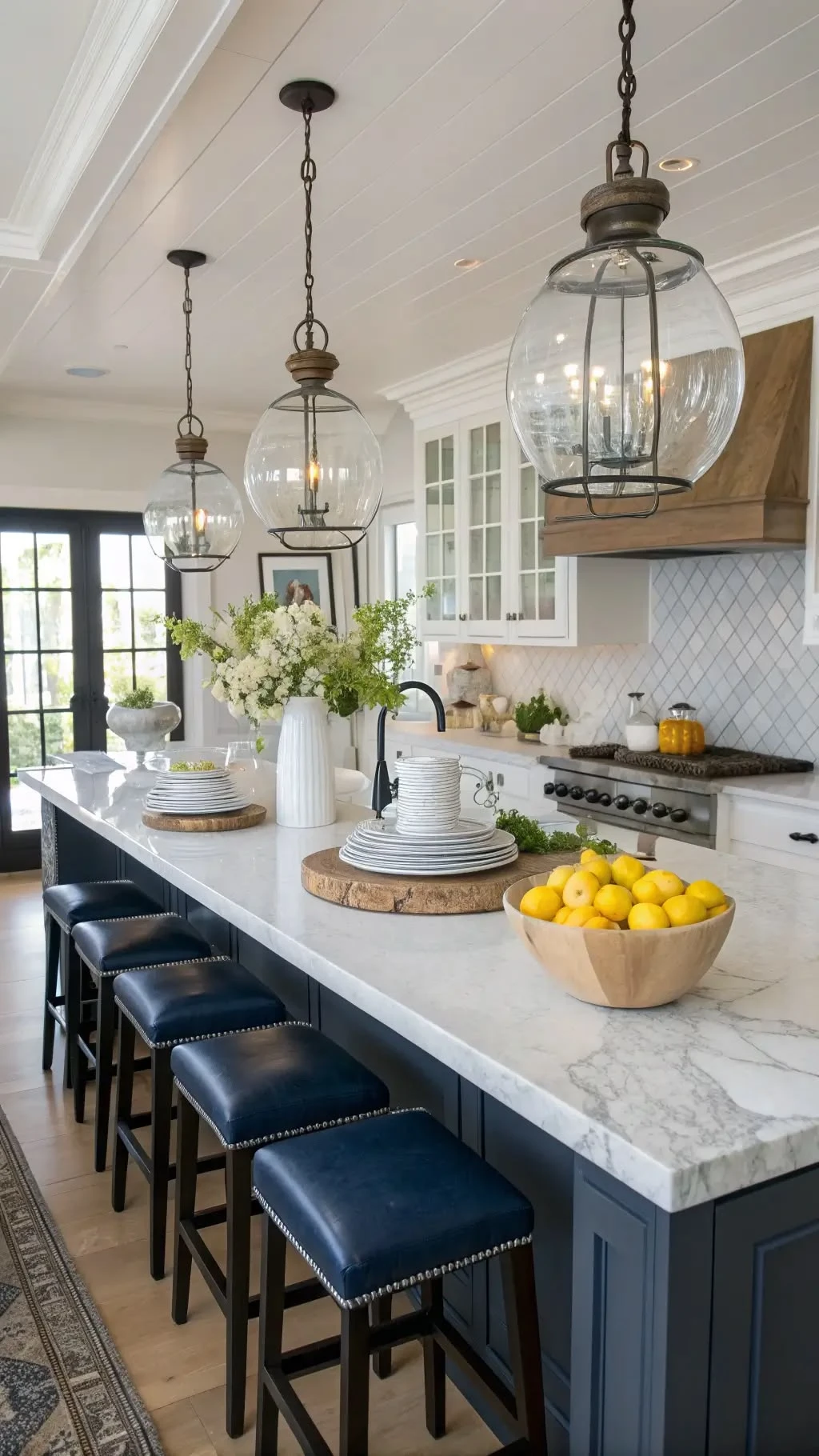
Bring in Natural Elements for Warmth
Large islands, especially those made of stone or quartz, can sometimes feel a little cold. Adding natural elements softens that effect and makes the space more inviting.
A vase of fresh flowers or a small pot of herbs can go a long way. Even something as simple as a wooden bowl introduces warmth and contrast. If you like to switch things up, seasonal greenery is an easy way to refresh the look throughout the year without changing your entire setup.
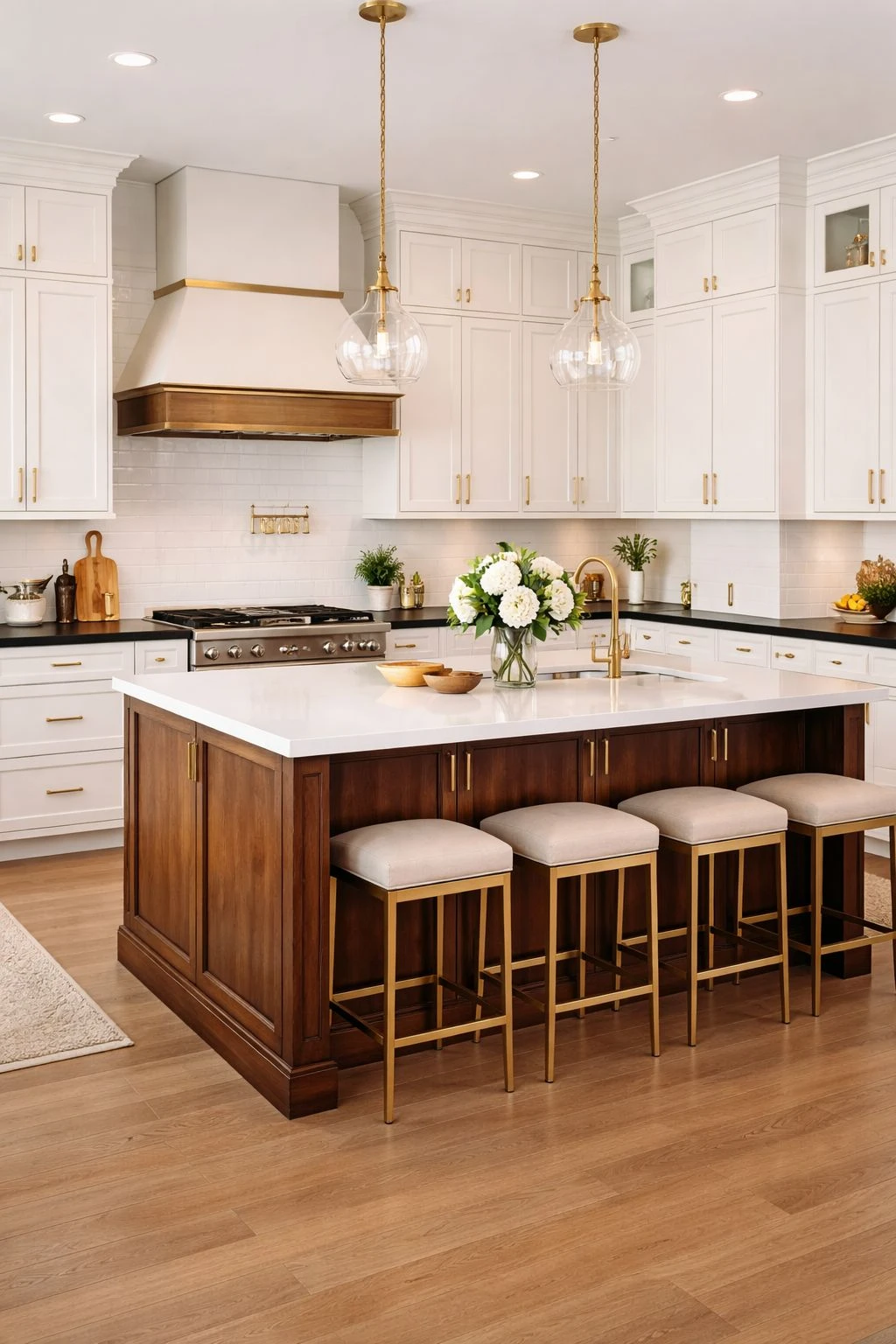
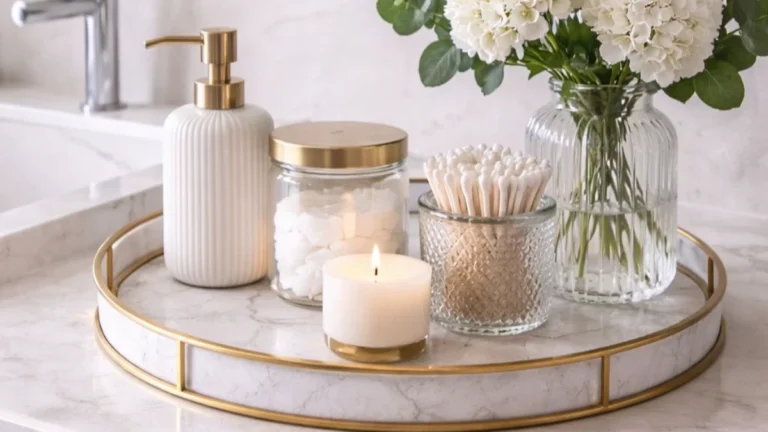
Use Trays to Create Structure
If your decor ever feels scattered or unorganized, a tray can instantly pull everything together.
Instead of placing items directly on the countertop, grouping them within a tray creates a clear visual boundary. It also makes your island easier to clean and rearrange when needed.
A simple layered setup works well:
- A tray as the base
- One or two medium-sized items
- A smaller decorative piece or greenery on top
This keeps everything contained while still looking relaxed and natural.
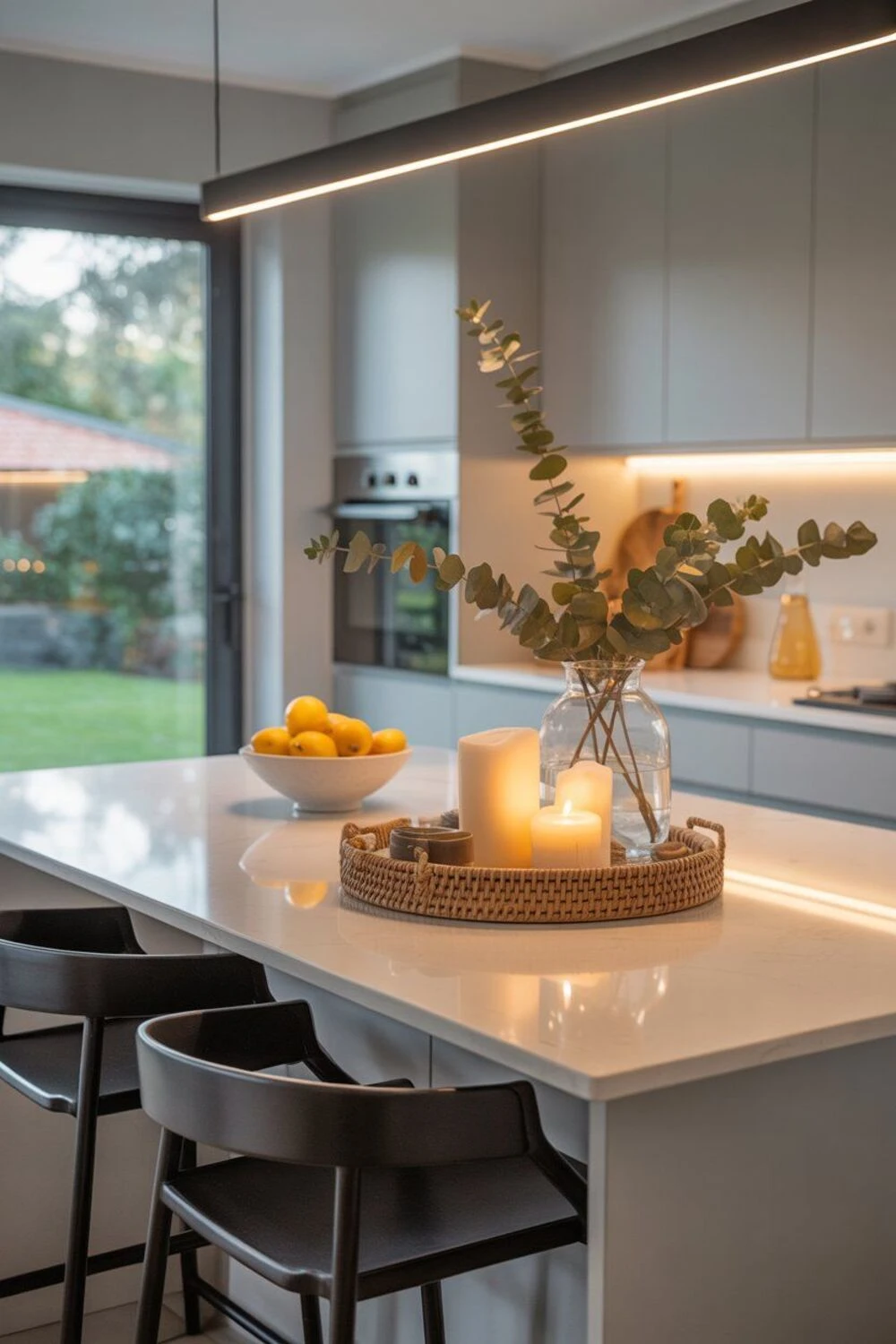
Create Balance Across the Island
With a larger surface, balance becomes more noticeable. If everything is placed on one side, the island can feel visually off.
You don’t have to make both sides identical, but the overall weight should feel even. Sometimes that means centering one large piece. Other times, it works better to create two smaller groupings spaced apart.
The goal isn’t perfection—it’s making the space feel stable and intentional from every angle.
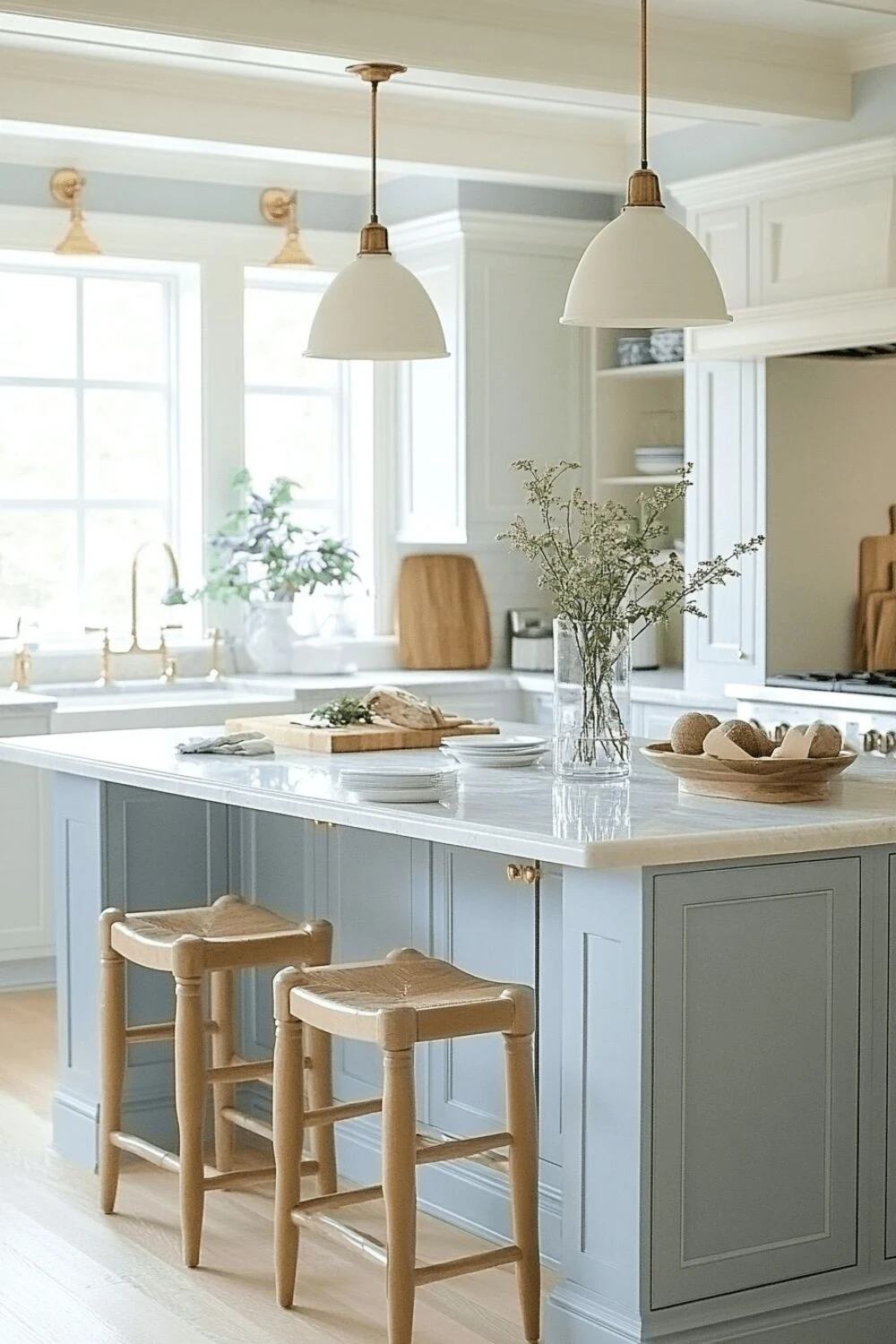
Let Negative Space Do the Work
One of the most underrated design elements is empty space. It might feel tempting to fill every inch of your island, but restraint is what gives a kitchen that clean, elevated look.
Leaving part of the surface open allows your decor to stand out more. It also keeps the island functional, which is ultimately what matters most.
If something feels “off,” try removing an item before adding a new one. Often, less really is more.
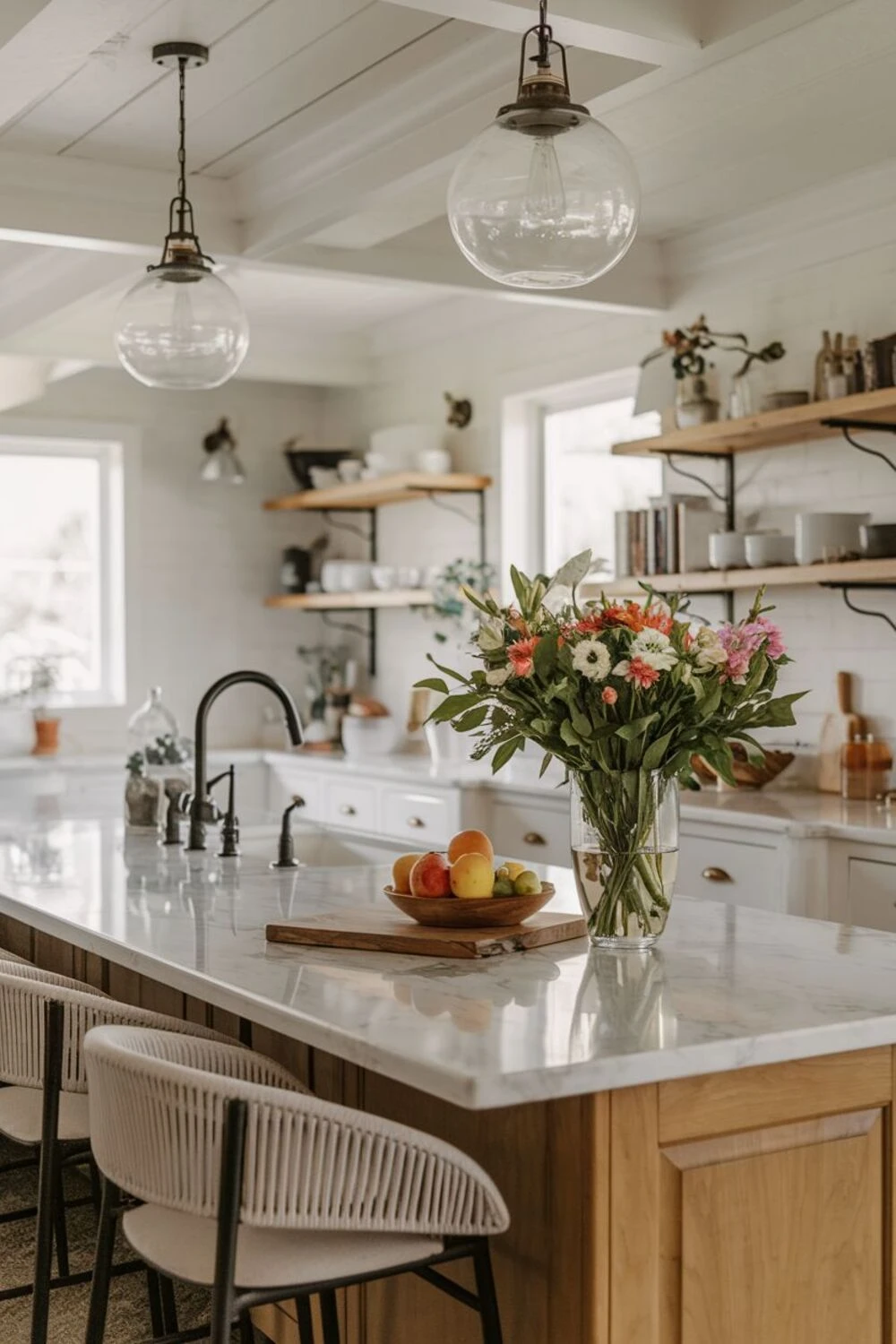
Adjust Your Styling for Everyday Life and Entertaining
Your kitchen island doesn’t have to stay the same all the time. In fact, it works best when it can adapt.
For everyday use, a minimal setup with just a few functional pieces is usually enough. But when you’re hosting, it’s easy to elevate the space by adding a serving tray, a charcuterie board, or a few extra decorative touches.
This flexibility keeps your kitchen both practical and ready for special occasions.
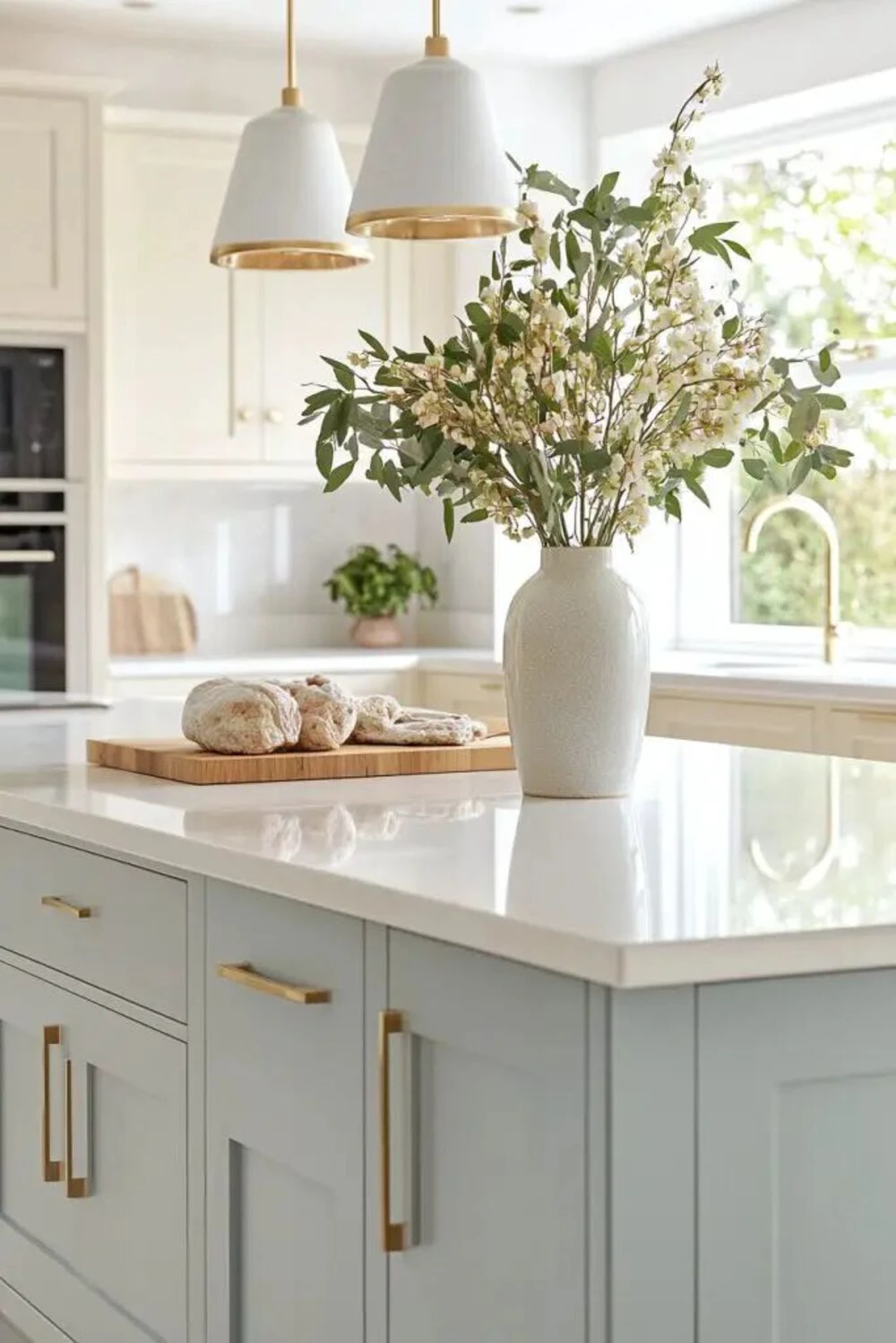
Don’t Overlook the Impact of Lighting
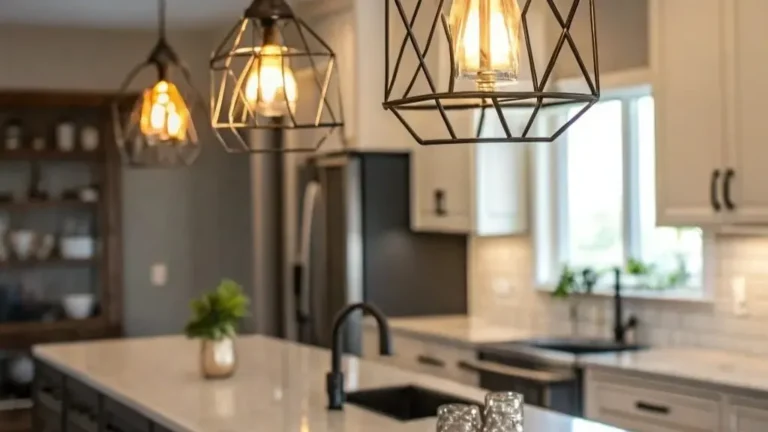
Lighting and decor go hand in hand, especially with pendant lights hanging above the island. These fixtures already draw attention, so your decor should complement them—not compete.
If your lighting is bold or oversized, you may need less on the countertop. On the other hand, simpler lighting allows your decor to take center stage. Keeping finishes and tones consistent helps tie everything together into one cohesive look.
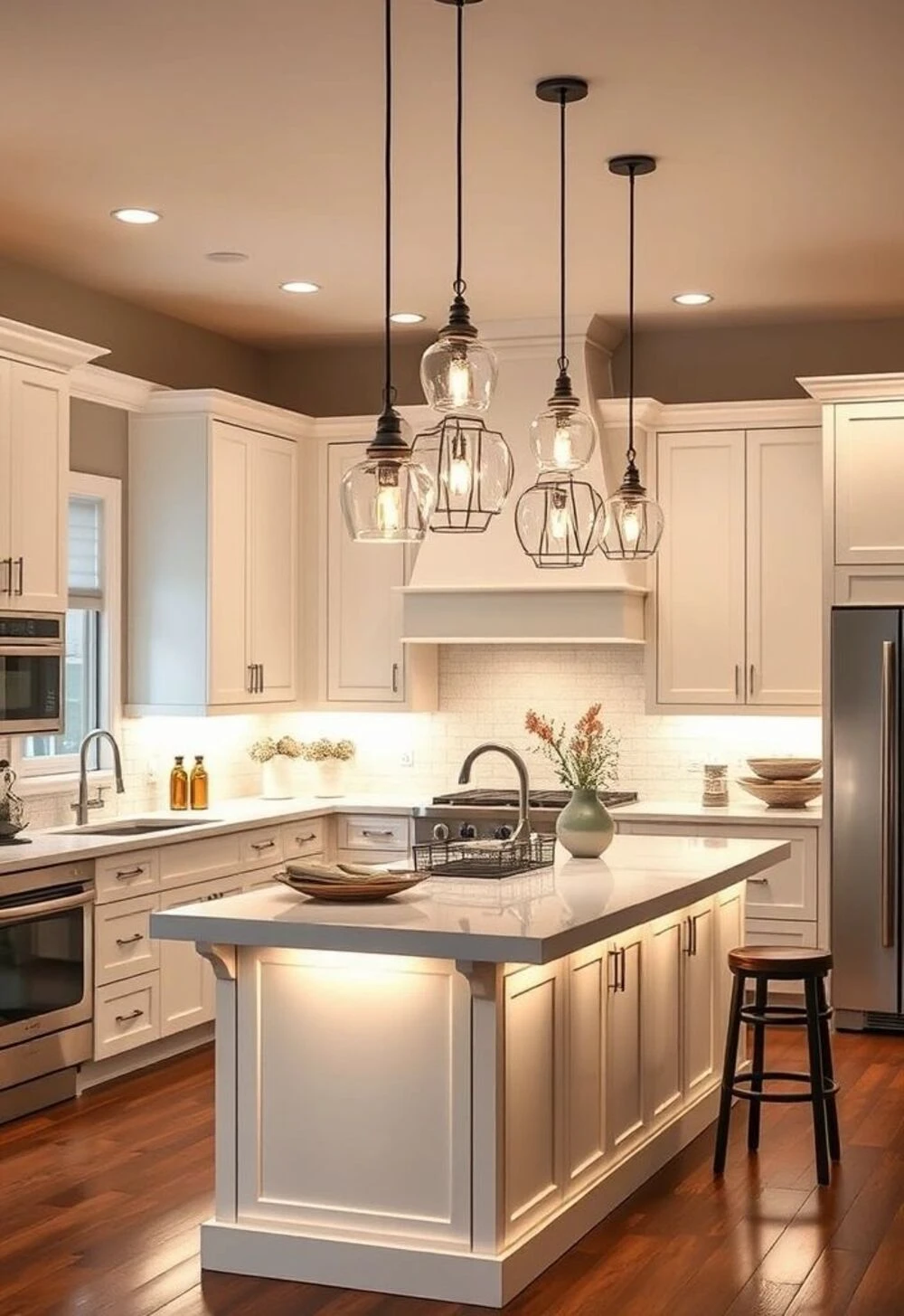
Common Mistakes to Avoid
Even a well-designed kitchen can feel off if the island is poorly styled. A few things to watch out for:
- Overcrowding the surface
- Using decor that’s too small for the scale
- Blocking functional areas like seating or prep space
- Mixing too many unrelated styles
Keeping your approach simple and intentional will always give you better results.
Final Thoughts
Decorating a large kitchen island is really about balance. When you combine practical use with a few thoughtfully chosen pieces, the result feels effortless rather than overdesigned.
Start with how you use the space, build around a focal point, and leave room to breathe. From there, small adjustments can completely transform how your kitchen looks and feels.