
Tiered trays are one of the easiest ways to decorate small spaces like kitchen counters, coffee bars, and entry tables. But if you’re a beginner, it can be surprisingly hard to know what to put on a tiered tray without making it look cluttered or random. The good news is you don’t need a lot of decor or design experience. With a simple styling formula, you can create a balanced, stylish tiered tray using just a few intentional pieces that match your theme, space, and season.
What Is a Tiered Tray and Why Use One in Home Decor?
A tiered tray is a multi-level decorative tray designed to display small items vertically, making it perfect for compact areas that still need visual interest. You’ll commonly see tiered trays styled on kitchen counters, coffee stations, dining tables, and entryway consoles because they add height without taking up much surface space.
One of the biggest reasons tiered trays are so popular is their flexibility. You can easily refresh them for different seasons, holidays, or everyday decor without redecorating an entire room. For beginners especially, they offer a low-pressure way to experiment with styling while still achieving a curated, put-together look.

The Easy Tiered Tray Styling Formula (Beginner-Friendly)
If you’re not sure where to start, the easiest way to decorate a tiered tray is to follow a simple formula: choose a theme, place a focal piece, add height, layer smaller accents, and finish with texture. This method keeps your tray from looking overcrowded and helps every item feel intentional rather than random.
Step 1 — Start with a Theme or Season
Before placing any decor on your tray, decide on a clear theme. This could be seasonal, such as spring florals or cozy fall accents, or it could be lifestyle-based like a coffee bar or neutral everyday decor. A defined theme instantly creates cohesion and makes styling decisions much easier.
Beginners often mix too many colors, textures, or styles at once, which can make the tray feel visually chaotic. Instead, stick to a simple color palette of two to three complementary tones. This small decision alone can make your tray look more polished and professionally styled.

Step 2 — Choose a Focal Piece First
Every well-styled tiered tray needs a visual anchor. A focal piece is typically the largest or most eye-catching item and sets the tone for the entire arrangement. This could be a mini sign, a small potted plant, a seasonal figurine, or even a decorative mug if you’re styling a coffee station.
Placing the focal piece on the bottom tier or slightly off-center creates natural balance and draws the eye without overwhelming the display. Once this main item is in place, it becomes much easier to build the rest of the tray around it in a cohesive way.
Step 3 — Add Height with Vertical Elements
Height variation is what transforms a tray from flat and basic into layered and visually interesting. Incorporating one or two taller elements, such as a small vase, candlestick, or mini frame, creates dimension and prevents everything from blending together.
When all items are similar in height, the tray can look crowded and unintentional. By mixing taller and shorter decor pieces, you guide the eye across different levels and create a more balanced composition that feels thoughtfully styled.
Step 4 — Layer with Fillers and Small Accents
After placing your focal and taller pieces, the next step is filling the gaps with smaller accents. These items should support the theme rather than compete with it. Subtle decorative elements like beads, small bowls, mini books, or seasonal icons work especially well because they add charm without taking up too much visual space.
The key is to avoid overfilling. A tiered tray should feel curated, not stuffed. Leaving small areas of open space allows each piece to stand out and gives the entire display a cleaner, more intentional appearance.
Step 5 — Add Texture for a Styled, Cohesive Look
Texture is often the detail that elevates a simple tray into a designer-looking display. Mixing materials such as wood, ceramic, metal, fabric, and greenery adds depth and warmth, even if your color palette is neutral.
For example, pairing a ceramic mug with wooden beads and a faux plant creates visual contrast without making the tray feel busy. Even minimalist trays benefit from layered textures, as they prevent the arrangement from looking flat while maintaining a calm and cohesive aesthetic.
What to Put on a Tiered Tray (Beginner-Friendly Ideas)
If you’re unsure what decor to use, start with versatile items that work year-round. Small plants or faux greenery are a great foundation because they instantly make the tray feel fresh and lively. Candles, decorative jars, mini signs, and small framed prints also work well for everyday styling and can easily transition between seasons.
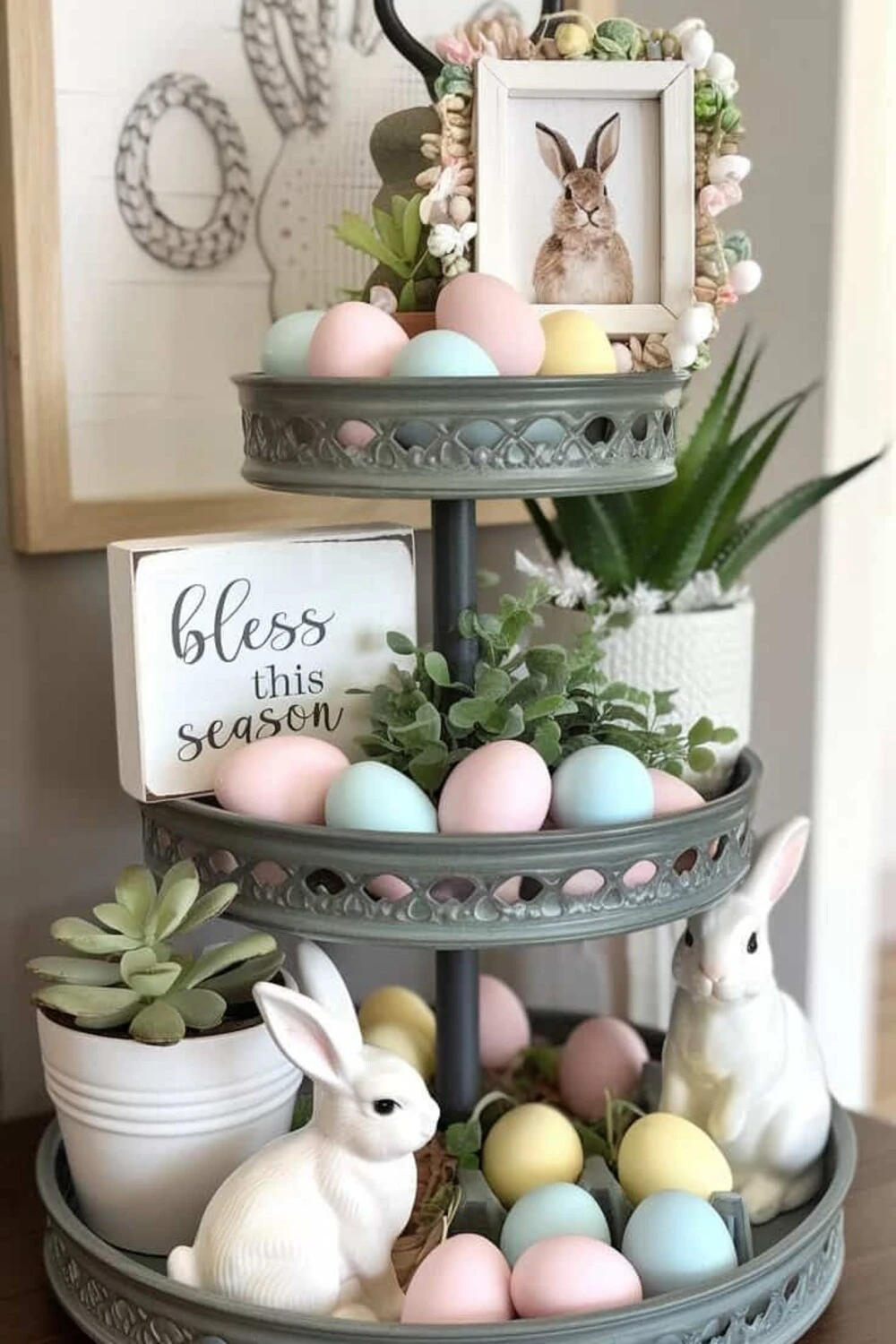
Seasonal decor is another simple way to keep your tray feeling updated throughout the year. In spring, you might use florals and soft pastel accents. During summer, lighter colors, citrus decor, or coastal-inspired pieces create a bright and airy look. Fall styling often includes mini pumpkins, warm tones, and rustic textures, while winter trays can feature mini trees, cozy neutrals, or subtle holiday accents. Rotating just a few small items can completely transform the tray without requiring a full redesign.
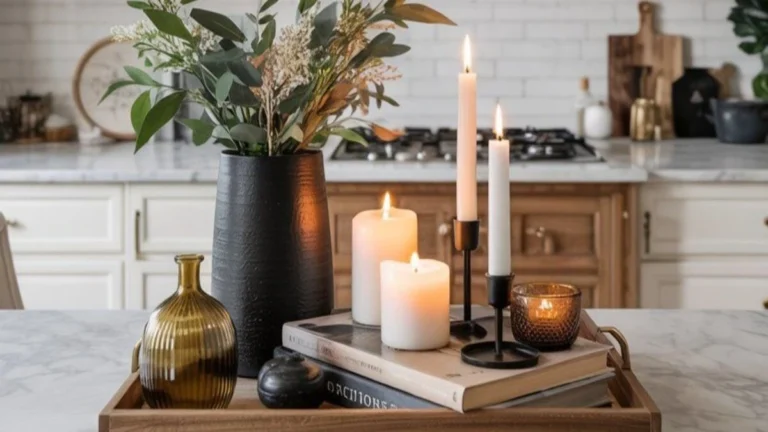
You can also combine functional and decorative pieces, especially in kitchens or coffee bar setups. Items like mugs, sugar jars, tea tins, coasters, or small containers add personality while still being practical. This approach makes the tray feel purposeful rather than purely decorative.
How to Decorate Each Tier (Top vs Bottom Tier Guide)
Understanding how to distribute items across each level is essential for a balanced look. The bottom tier should generally hold larger and heavier items, as it acts as the visual foundation of the tray. This is the ideal place for your focal piece, taller decor, or layered combinations that create structure.
The top tier, on the other hand, should feel lighter and simpler. Smaller decor items work best here because they prevent the tray from looking top-heavy. Keeping the top tier slightly more minimal also creates breathing room and allows the overall styling to feel more refined and intentional.
Common Tiered Tray Styling Mistakes to Avoid
One of the most common mistakes beginners make is overcrowding the tray with too many small decorations. While it may seem like more items create more visual interest, it often has the opposite effect and makes the display look cluttered. Choosing a few meaningful pieces usually results in a more elegant outcome.
Another mistake is using decor that is too large for the tray’s scale. Oversized items can overwhelm the tiers and disrupt visual balance. Mixing too many themes or colors is also a frequent issue, especially when seasonal decor is combined with everyday pieces that don’t match. Maintaining a consistent theme and palette helps the tray look cohesive instead of chaotic.
Finally, ignoring spacing can make even beautiful decor look disorganized. Leaving small gaps between items allows the arrangement to feel intentional and visually pleasing.
Minimalist vs Farmhouse vs Modern Tiered Tray Styles
Your home’s existing decor style can guide how you style your tiered tray. A minimalist tray typically features neutral colors, fewer items, and clean spacing for a calm and uncluttered look. Farmhouse styling leans toward warm tones, wood textures, rustic signs, and cozy accents that feel welcoming and relaxed. Modern trays often incorporate sleek ceramics, simple color palettes, and sculptural decor pieces for a more refined appearance.
For beginners, neutral or farmhouse styles are usually the easiest to execute because they are more forgiving and flexible when mixing decor pieces.
Quick Styling Ideas for Different Spaces
In the kitchen, a tiered tray can be styled with mugs, greenery, and small jars to create a functional yet decorative focal point on the counter. On a coffee bar, themed signs, coffee accessories, and compact containers can make the space feel more personalized and inviting. A dining table tray can function as a centerpiece by incorporating candles, seasonal decor, and layered textures. In an entryway, a tiered tray styled with a small plant, a decorative bowl, and minimal accents creates a welcoming first impression without overwhelming the space.
Final Thoughts: Keep It Simple and Style with Intention
Decorating a tiered tray doesn’t have to be complicated or expensive. By following a simple formula—theme, focal piece, height, accents, and texture—you can create a display that looks cohesive and thoughtfully styled, even as a beginner. Start with a few core items, avoid overcrowding, and refresh your tray seasonally to keep your space feeling updated with minimal effort. Over time, you’ll develop a styling rhythm that makes decorating your tiered tray both easy and enjoyable.
FAQ
How many items should I put on a tiered tray?
A good guideline is to use about three to five items per tier so the tray looks balanced without feeling overcrowded.
Can I use a tiered tray for everyday decor?
Yes, tiered trays are ideal for everyday styling. Neutral decor, greenery, and functional items like mugs or jars can create a timeless display that works year-round.
How to make a tiered tray look less cluttered?
Stick to one theme, vary item heights, and leave intentional empty space between pieces. This creates visual balance and makes the tray look more curated and stylish.